Showing posts with label Gratitude. Show all posts

Don’t Wait Too Long

Ben-Melton-1998As I mentioned in my last post, my father died last month. The last few weeks I’ve become obsessed about writing family stories while digging through genealogy material and old pictures. I’m finding dozens of dots I never noticed before and discovering new insights with roots that reach beyond the Civil War.

One of the most touching things I’ve found is this emailed letter from my father that’s been lurking in my files for a couple of years. He must have memorized this piece. He recited it, almost verbatim, with a few new embellishments, the last time I talked to him, shortly before he died. I’ve been wishing I’d thought to turn on my phone recorder that day, but no matter. Turns out, I already had the transcript. I don’t think he’ll mind my sharing it as a tribute to him with a message for all of us.


Reflections on my life
Ben Melton, June 25, 2015

The most beautiful woman I ever met (1943):
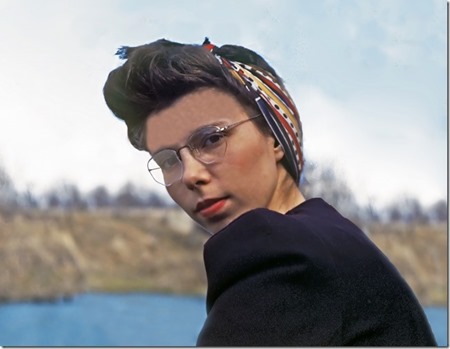
Marjie in scarf

The most beautiful (the same one) woman I ever met, with me, 50 years later:

Ben & Marje, 50 years later

I’ve led a wonderful life. 

I married the prettiest girl. My children, my grandchildren and my great grandchildren are good-looking, good-natured and brilliant.

I’ve had, and have some wonderful friends.

In a multi-faceted career, I’ve had some exciting, interesting and rewarding jobs.

I’ve shot the biggest deer I ever saw, caught the biggest salmon I ever saw, flown the hottest (in my day) bomber, and the biggest bomber, and done acrobatics in a fighter plane.

I’ve survived multiple encounters with the grim reaper in the air, on the highway and in the operating room.

Fortunately, I’ve had a few dull moments to round out the spectrum.

My life doesn’t owe me a thing.  It has already delivered more than I could possibly ask for.

Why am I telling you all this?  Because if I wait too long, I’ll lose the opportunity to express my awe and gratitude for a richly rewarding life!

Love,

Ben sigBen's Snoopy Plane

gDad


In that recent phone call he added, “I’ve done everything I was ever afraid to do except jump out of an airplane. I didn’t do that when I had the chance because I’d hurt my foot and was afraid I’d break my leg when I landed.” Reality-based fears like that are worth respecting!

At 187 words, this letter is a clear example of a mini or micro-memoir with a theme of gratitude. It’s also a love story and a celebration of life. It hints at obstacles overcome. It touches on triumphs with faint whispers of shadows, which he did not dwell on.

He wrote other stories too, but this is his capstone. It could have been his obituary if we’d remembered we had it. What a wonderful legacy he has left. I’m in tears all over again.

I hope this can serve as an example that less may be more. Pay special attention to his last words:

 Why am I telling you all this?  Because if I wait too long, I’ll lose the opportunity to express my awe and gratitude for a richly rewarding life!

It doesn’t need to take a lot of words. Now, get those fingers flying and write on!

Shifting Rhythms

Music blue
It’s too soon to draft a  memoir about our move, but it’s not too soon to begin reflecting on my sense of things. As I sat in a glorious state of almost forgotten peace and relaxation earlier today, I realized that (speaking only for myself) we’ve entered a new phase, and not a minute too soon.

That corner was actually turned the day we were told that the photographer who would make our house look amazing on the web needed to arrive three days early. Before that I’d been in a total panicked frenzy, wondering how on earth we would ever possibly meet our self-imposed deadline for listing. But right on schedule, birds sang, bells rang, and angels descended. Only one room remained out of bounds for the photographer.

Tension drained.

Then, a few hours before we were scheduled to fly to Austin to find a house, that last room clicked into alignment, ready for showing. We flew off to Austin a few hours later. For three days we looked, well-prepared with seven months of web research. We did find a home, holding our breath until a previous negotiation fell through at exactly the right time. We never needed our backup choices.
 
Once that contract was signed, life became large, calm and amazing. Pondering the shift, I noticed some similarity to a symphony. Each movement has a different rhythm and tone. So it has been with us. Our transition symphony seems to have :

Deciding to do it. This was the beginning. We’ve talked for years about relocating. Our three children are widely scattered. We can only be near one. Which one? Or maybe suit ourselves and go somewhere else? We lived in a state of paralysis by analysis for a few years. Slowly, a decision emerged from the fog.

Public announcement. We “came out” in Austin last winter at a huge party at our daughter's home. Through the course of the evening, “We’re thinking about moving here” morphed into “We’re planning to move here.” We called a real estate agent and began our search.

Big shift!

Delaying phase. We both had commitments in Pittsburgh that had to be completed. Although listing around the first of April would have been ideal, it did not work out that way. I stayed mellow and loose through this time. 

Big shift!

Pressure phase. When not much had happened around the first of May, I got nervous. I got tense, fretful, even bitchy. I lived in a state of chronic fear and anxiety, dreading the thought of yet another winter here, and even more, the loss of time to dig in down there. As much as I’ve loved the time we’ve spent here and all our friends, it’s time to go! My clock is ticking louder every day. Productive years could possibly be counted on fingers. No time to waste! Committing to a listing date amplified that pressure several fold. Then, Ta Dah! We were done.

Big shift.

Transition. From the time that final room was vacuumed through the time when we signed our offer, was an intense transition, packed into a very few days. As I said earlier, signing the contract was an enormous relief. Time to kick back for a day or two. Intense or not, it was different from the previous phase.

Packing up. That’s where we are right now. Things may not stay mellow. Pressure is sure to increase.

Projected big shift.

Moving. Driving two cars from here to there and getting all the loose ends in place at our new house is bound to be intense.

Projected big shift.

Settling in. I’m hoping that after the first few days,  settling in will be a relaxed affair. No need to rush. This will be the end of this story.

I can’t tell the story yet, but I can see the plot. I see tension arcs within each of these phases, or movements. I think I see the thread holding it all together, but that’s another post for another day.

Write now: Think of a period of time when you went through a transition. Jot down some thoughts about turning points or Big Shifts as the transition evolved. Can you map out a story along that path? It may be a large story or a shorter one. Give it a try.

Clear the Haze from Pictures and Memory

clearing-the-pictureThe pictures above have deep meaning for me, and I think they are likely to strike a chord with most viewers, evoking memories of their own. I want my stories to have that effect. I want readers to see themselves in my words, finding new ways to see old situations and become more fully themselves.

I recently found this left-hand picture from 1973 in a pile I was sorting through. Something in it stirred me, though haziness dimmed my response. I decided to try restoring it.

I scanned it with my Epson V600 scanner using Professional mode on the scanner interface. I used the Color Restoration tool and the Unsharp Mask tool set to high. That produced over 90% of the result you see on the right, but I wanted more. I cloned out spots on the pillow and sharpened the picture a bit more. Then I added a warming yellowish tone to approximate the wall color I recall.

The crisp, haze-free result makes me feel like I’m “back in the picture,” especially when I view it full size and zoom in on details.

I used an ancient version of Photoshop for this, but Paint.net does almost as much as Photoshop and it’s free. Picasa, another popular free choice, is easy to use. Most scanners should have some semblance of the  Epson’s capability. My husband’s 12-year-old Epson can do this, just not as fast.

Once I got a clear view of the photo, I sat with it until I sank into the feeling of having those tots around full time, and gratitude I felt. I thought about how different they were from each other. I looked at our clothing and recalled the joy of sewing. George is on the left. I made his jeans. I made Susan’s shirt to match one I made for myself. I made John’s trendy fake vest shirt. Sewing with knits was big in the seventies. I’m surprised to realize that my shirt and pants both came from stores. Nearly everything in my closet was my own creation.

I remembered the challenge of reupholstering the tattered Goodwill sectional my mom was tired of. Fake animal fur was affordable and trendy. It was a perfect fit for the shag rug in our brand-new home. When we bought new living room furniture, this old stuff went down to the family room. On the right side you see the crewel embroidery project I was working on. That huge picture perfectly matched the carpeting. I put it away years ago. I may rehang it yet.

Oh, the hair – where did it all go? This was my Involved Earth Mother phase: PTO, League of Women Voters, Republican Women, bridge club and more.  I also recalled feeling overwhelmed at times, and wondering just where I fit into the larger scheme of things. Mostly it was a time of settling into house and community and keeping those lively youngsters and their daddy fed, clothed and happy.

I made a list of memories I can use in stories spawned by that picture:

  • Shag rug: hard to live with! Vacuuming flattened it, and I used a garden rake to restore it to fluffiness. Needless to say, I did not do that on a daily basis.
  • Bare feet. I lived in bare feet in the house. I still do in the summer.
  • Making things. I loved crafting enhancements for our home. Repurposing “found objects” was my specialty. I hope to get back to that soon when we move into another new-to-us home.
  • Informality: Our life style was and still is informal. What you see there is no formal pose. It’s typical.

The list goes on, but you get the idea.

My final thought is that stories are like that these pictures. I liken the left one to an early draft. A robust round of editing clears the haze, letting the story shine through. A few more tweaks enhance detail. The final version conveys the sense of the situation so well that readers feel “in the picture,” much as I do with the finished version on the right.

Write now: Find an old picture that’s hazy and indistinct. Play with settings on your scanner and use Paint.net or Picasa to touch it up. Zoom in on details in the finished result and look for stories everywhere.

How and Why to Write about JOY

Talking-about-problemsThis advice to talk about our joys struck home with me when I saw it the other day. Not surprisingly, I immediately thought how it applies to writing – specifically to life writing – and how happy stories spread joy.

In The Heart and Craft of Lifewriting, I discuss the way many people tend to shy away from discussing success and joy.

“I don’t want to sound like I’m bragging,” some people say. “I don’t people to envy me,” or “I don’t want them to think I think I’m better than they are,” or “I don’t want to make people sad because they missed out.”

These are valid concerns. Compassion for the feelings of others is important. But let’s look at the flip side, at what is lost if you soft-peddle success and happiness:

You are only writing part of your truth. If you are writing for posterity, or for the world at large right now, your success is part of who you are. Surely it’s something you’re proud of. Let them know.

Happiness keeps your story authentic. People who know you’ve achieved something, financial or business success, a happy marriage, or some other positive state will know something’s missing if you downplay the sunshine in your story. It tends to come across as false humility and lack of trust. This is, of course, assuming you were happy. Not all stories are, though we do hope for a glimmer of happiness by the end. Add it where you can.

Reading about how you achieved success, happiness and joy inspires others. We hear and read about gloom, doom and suffering constantly in the media. We need to hear good news. It gives us hope!

People can learn from your example. Explaining in more detail or less how you managed to achieve your fortunate condition may provide a clue for others to follow your example.

Writing about happy things is good for YOU! A quick web search will verify that simple lists in gratitude journals help dispel or fend off depression (in at least some cases) and generally improve your state of mind. They help you stay positive and foster creativity. You don’t even have to share the contents or turn them into story to get these benefits.

Have I convinced you to write some joy? Hopefully into your story? Follow these guidelines:

Include shadows with the sunshine. Everything brilliant emerges from some sort of struggle or stretch. Tell of the tribulations and challenges you encountered along the way. Report feelings of fear, doubt, or dismay. Don’t leave out your concern about not wanting to brag.

Be honest about jubiliation. Who would believe you weren’t popping champagne corks, real or figurative, when you got that big promotion?

Give credit where credit is due. Nobody scales Mt. Everest without a team of Sherpas. Give your Sherpas credit.

Use humor. Poke fun at yourself. This doesn’t mean putting yourself down, but keep both heart and fingers light.

My latest book, Adventures of a  Chilehead, is the story of my life-long love affair with hot chile. It’s full of humor and joy, and I had a ball writing it. The capsaicin in chile releases endorphins. Writing about those happy memories released more. So remember some joy, write yourself happy, and share that good stuff with the world.

Write now: write about a happy experience you shared with at least one other person and write that story in an email or letter. Send it to that person. You’ll both feel happy you did.

Busting Buttons

We-Feed-Each-OtherIf there’s anything as satisfying as laying eyes and hands on the first print copy of a book I’ve written, it’s having the same experience with a friend’s book. Especially when I know how hard that friend struggled to make the book happen. Thus I whooped with joy last week when Ellen Dehouske handed me a copy of We Feed Each Other: Nourishment through Friendships, her “memoir of sorts.”

Joyful tears filled my heart as I beheld this substantial volume with the strikingly gorgeous cover and lovely layout. I had witnessed many of the labor pains preceding the birth of this book.

I first met Ellen about three years ago when she took an Osher Life Long Learning class I taught at the University of Pittsburgh on writing description. Subsequently she began attending the Life Writers group that meets at the Monroeville Public Library twice a month.

I’ve known for a couple of years that Ellen had resolved to write this book, but I did not fully comprehend what she had in mind. I only knew it was a tribute to the vast network of loyal friends who have stood by her through trials and triumphs. She brought dozens of component stories to the writing group, seeking and receiving input on how to make them better. I’d seen her writing transform from awkward to amazing in the process.

I’d also known that food was a theme and she was asking each friend to contribute a favorite recipe. To my astonished delight, she asked me for a picture and a recipe.

What I didn’t realized was how those isolated snippets would weave together to give such a comprehensive view of Ellen. This volume is a tightly focused memoir with dual threads of food and friendship highlighting her personal transcendence.

Gratitude for friendship shines through bright and clear, framed within roles friends played in her life. She grew up without a typical family. Her father died before her memory kicked in, and when Ellen was three, her mother began a thirteen year stay in a mental hospital. Ellen and her younger sister were raised by a succession of emotionally distant relatives.

Thanks to a scholarship, she graduated from Duquesne University in Pittsburgh, later earning a PhD in early childhood development. She retired as Professor Emerita from Carlow University. That was not a smooth path. Ellen was hospitalized four times with mental disorders. With the support of friends, she found legal counsel and retained her job when Carlow laid her off after she was hospitalized.

A combination of talk therapy and psychotropic drugs have kept her stable and productive for decades now, and she shares her story as witness that mental illness is just that – illness, much like heart disease or diabetes. It isn’t contagious or scary, nor is it a reason for avoiding contact with the afflicted. Her story is a beacon of hope to mental health patients and their families. Hopefully Ellen’s testimony will build bridges of understanding.

Her story is not a sermon. It’s a carefully crafted journey beginning with a bleak girlhood that nevertheless had rays of happiness penetrating its pallor. It continues through turbulent seas of four melt-downs, ending with profound professional and personal success.

Ellen did not accomplish the miracle of this book on her own. She honed writing skills in classes and groups. She learned to streamline sentences, substituting precision words for rambling phrasing and rearranging awkward sequencing to make them flow. She streamlined stories and used an ingenious menu content to shape her story arc.

She paid for editing and layout help and commissioned an artist to do that brilliant cover. Not only is it gorgeous and eye-grabbing, it’s powerfully symbolic. The significance of the spoon seems obvious at a glance, next to the title of the book: We Feed Each Other. The overlay of tiny icon photos makes sense: this is a book about a friendships. As soon as you begin reading, in the second paragraph of the preface (which you can find in the Amazon preview), she tells of a Jewish allegory of Heaven and Hell, using spoons as the determining element.

One of the most poignant features is that even with all the editors and feedback, Ellen’s unique voice shines through, ringing loud and authentically true.

Write now: click this link to Amazon and read the allegory in the Preface to Ellen’s book. Then ponder myths, legends and tales that might crystalize the essence of an element of your life in a similar way. Free write or journal to get clear on what that element is. Find a writing group, take a class, do something to firm up your resolve to write YOUR story.

Bride Price: Cannibals, Witch Doctor and Hope

Bride Price, by Ian MathieIan Mathie, author of Bride Price and three (soon to be four) other African Memoirs, is the only person I know who has personally witnessed cannibalism. He put this horrifying event in context as I interviewed him across five time zones and one ocean recently. You can watch the video on YouTube or in the frame below and read the book to find out whether he actually ate any of that man.  

Each of Mathie’s memoirs is unique in structure as well as content, but besides the fact they are all set in African countries, they all share one other feature. While Mathie is definitely telling the story in the context of his own experience, he is telling the stories of people he grew to know, respect and admire. He documents cultures and a way of life that’s all but disappeared in the ensuing thirty years, and his stories are a tribute and reminder that wisdom, love and compassion transcend time, place and culture.


I’m reminded of the works of Margaret Mead I read in cultural anthropology classes way back when. Like Mead, Mathie was a participant observer, by circumstance rather than intention. Though he was in the villages as a water engineer to help build safe water supplies, he kept copious notes and sketches in many languages about the people and his experiences. Like Meade’s, his books should be on the reading list in all schools. The world would be a better place if more diplomats made use of his insight.
 
I read a sweet short story last week that told of the author’s experience ordering breakfast at MacDonald’s. On the surface, what could be more ordinary and less-noteworthy than that? I found the story remarkable. I smelled frying bacon and heard it sizzle in the background. I heard children laughing. And I heard people grumble and complain when the the biscuit supply ran out. I also felt the warmth of a chance encounter and the joy of a day gone right.

Her deft depiction of human nature touched me deeply. Without a word to this effect, she challenged readers to adopt an attitude of gratitude. All this in about 700 words. That little story brightened my day. It’s a gem. In fifty years, it will shine even more brightly as a reminder of life back in 2013.

She and Mathie both focus on others, sharing life through their eyes as a way of expressing love for the people they know and see, and their own joy in life, while indirectly challenging us to choose the way we view life and respond to it.

Documentary stories such as the two I cite expand our vision and awareness. I appreciate both, and strongly encourage you to watch the video, then read Bride Price!
Learn more about Ian Mathie and his books on his website. All four books are available in both print and eBook format. Kindle format is on Amazon, and other formats on Smashwords.

Write Now: Write a story about an ordinary day, whether that’s today or once upon a time. Include your thoughts about the situation and people involved. Let future generations know what life was like from the inside and how it affected you.

Writing Compelling Description

frontcover 600The Heart and Craft family of fine publications has expanded. Today marks the official debut of The Heart and Craft of Writing Compelling Description.

Chapters in this book may sound familiar to some. Each of the forty-eight chapters appeared as a post on this blog. Many may wonder why I published this book when all the content is available online. Here’s the story.

I already had a short anthology of description-related posts that I’ve used in various ways over the past few years. One gray January day, I whimsically decided to transform that document into a $.99 Kindle short. I thought it might take … maybe three hours. That was three months ago!

Many of my favorite posts were missing, so I sorted through nearly six hundred posts. Forty-eight made the cut. Next I shuffled them into some semblance of order, checked for dead links, and double-checked permissions for graphics. Sharing on a blog  the public can read for free is one thing. Using images in a for-profit publication is another. Some had to be changed. The posts needed more editing than I realized. A volunteer team of friends and writing group buddies offered  remarkable suggestions and the quality improved.

As I struggled with the introduction, I had an epiphany about the entire process of writing description:

Description is anything that shapes the reader’s perception of your message or story.

That insight blew out the walls of  my boxed-in concept of description as adjectives, similes and metaphors, opening a universe of creative options I had not previously noticed in those posts as I wrote them.

As the collection grew, friends convinced me this project had outgrown the original $.99 intention. They wanted to have a collection of those posts at their fingertips where they could easily refer to them, so I crafted a print version and turned to Amazon’s free CreateSpace publishing service as my printer and distributor.

During the ensuing weeks, various cheerleaders, with Gutsy Sonia Marsh at the fore, held my feet to the fire to develop a cover everyone was happy with. Writing group friends helped with content edits. Thanks especially to Elizabeth Kim, Carol Broz and Tom Imerito. How I valued their help with the book description! Who thinks about these aspects of publishing?

Hillary Clinton coined the phrase “It takes a village.” That phrase is equally true of publishing. Anyone can write a book, but it takes a village to ensure it’s a solid, well-written, well-crafted book the world can benefit from. I especially appreciate enthusiastic “beta readers” who have (or soon will) post reviews. I can’t begin to describe the sense of elated humility I feel as I read those reviews and personal comments.

The biggest differences between publishing this book and The Heart and Craft of Lifestory Writing (released seven years ago) is that this time I made final decisions on everything, and I control the business end. Even that book was a non-traditional experience. Although the earlier cover was professionally designed, it built on my concept, and I did all layout – an unheard-of arrangement when working with a traditional publisher. I love doing layout!

Controlling graphics for eBook conversion had a steep learning curve. I’ve now tamed that beast, and I can save you a lot of time if you ever need to know the secret.

Thanks again to all who have helped along the way, and I hope everyone else finds as much value in this new volume as you have!

Write now: I invite you to click over to Amazon and use the “Look Inside” feature to read the introduction to The Heart and Craft of Writing Compelling Description, and skim the reviews. Then either buy a copy of this new book and write a review. Or find a book you’ve recently enjoyed and review it. Reviewing is the best way to find hidden insights you missed on the first reading and milk even more goodness from the volume. It builds community with other readers, past and potential, as well as the authors.

Entering the Next Age

Broken-CalendarA few hours ago the Mayan calendar reset. We are officially in a new “age”, at least according to the Mayans.

Nobody I know was surprised to wake up this morning to find the world unchanged in any discernible way. I heard reports that some were stockpiling Doomsday kits of food and survival gear, just as they did for Y2K thirteen years ago, but this event has had far less hoopla in the media or public attention.

I’ve been contemplating its possible significance for at least four years, never expecting anything dramatic to happen, but watching trends and listening to thought leaders who point out that change has become dramatic and global since about the end of World War II. They also point out, for whatever it may be worth, that the Women’s Movement has occurred in waves of about forty years from the first Suffragette efforts, to the Consciousness Raising of the 60s and 70s to now.

These gurus opine that the trends they discuss have brought us to a tipping point where change must and will occur. They express no doubt that this change will be positive, escalating mankind to new levels of awareness and collaboration, but they don’t promise it will come about smoothly, without a certain degree of pain and suffering in the interim.

Their intriguing theories boil down to one thing: Stories are changing. Stories shape collective awareness, collective perceptions and judgments. On one level, our individual stories have become so fragmented that at least in the USA, even those who claim strong allegiance to ethnic, religious, professional or other groups tend to feel isolated within those groups.

On the other hand, collective stories about things like political correctness, individual rights, and such things abound. The challenge is that we have numerous collective stories at work that compete with each other. Which is right, my story or yours?

Anyone writing life stories and memoir is well aware of perceptual and conceptual differences on a small scale, for example within families. It’s only a matter of degree to see it on the level of an entire society, even globally.

How does collective Story change? Just as personal stories are an accumulation of memories and scenes that may change as we explore, question and examine them, scenes that may be linked together in an infinite variety of ways, collective Story is a compilation of individual stories. Thus collective Story evolves as personal ones do.

My part in bringing about the change I hope to see in global Story is to continue writing and revising my own story, seeking ever increasing transformation from fear, resentment and worry to one of loving acceptance, peace, and gratitude.

While this may seem a small, perhaps insignificant contribution, reports continue to pour from the media indicating that “writing peace” into our lives is a skyrocketing trend. I’m part of this trend, part of what Jerry Waxler calls “The Memoir Revolution.” Watch for his forthcoming book on this topic.

In prophesies about the turn of this age, the ancient Mayans never predicted Doomsday. They pointed to this pivotal point as a time of decision for mankind. Depending on our decisions, we may plunge into chaos and possible annihilation, or we may shift into that promised age of universal peace and prosperity.

That decision rests on the stories underlying decisions at every level. My story and yours can help spread healing and peace or perpetuate violence. My hope is that you will join me and keep working on your contribution as we transform to a new Story of love and peace, worldwide.

Write now: write a story about change in your life. For example, has your thinking changed over time about volatile topics like same sex marriage or gun control? How has your understanding of your own relationships changed? Be brave. Be brutally honest with yourself and burn your writing if you don’t want anyone to read it. And be open to new ways of looking at what you find.

The Story of Every Thing

In a frenzy of activity to clear my space for the New Year, I whip out my dust rag and go to work in the living room. How I'd like to get rid of this clutter, I think, dusting away. For a moment I seriously entertain the thought of getting a big box from the garage and … what?

That thought stymies me. What could I do with this stuff? I ponder the hand thrown pottery vase. Mother gave me that for my birthday one year. It's gorgeous. It's exactly the kind of pottery I most love, natural earth colors. I feel the potter's love each time I glance at it. I feel connected to earth and to Mother. She's long gone, but her spirit lingers in that vase.

Likewise with the pewter-washed copper candelabra next to it. It's a cunningly crafted item, old, hand-worked, slightly off-balance. I don't even remember when I got that. Did she give it to me, or was it part of the loot I scored when Daddy cleared out her stuff? I recall that trip, packing boxes, stabbed with the knife of sorrow, knowing she'd never be home again, that life had turned one of those irreversible bends,

Seashells? They nestle so nicely on the small shelf in the bookcase Hubby built when we moved into our first house. My mind wanders off to that long-ago day when we were young and getting acquainted with life as parents and contributing members of society. Ah, the stories.

The Japanese tea set, a gift from Mitsui when Hubby visited his home in Japan all those years ago. It's such a thing of beauty, deep cobalt blue. What about the Gurkha knife, the Buddhist prayer wheel,  remnants of Hubby's trek in Nepal, or the soapstone cats from our trip to Egypt or the grandfather clock and family Bible and tree. Our roots are in this room.

I look around the room, recalling the trips to Pendleton to order the custom-built sofa and loveseat and a later trip to the Fabric District in Philadelphia for new upholstery. I remember sitting in the dark chair with nursing babies, which reminds me of the time Phyllis came to visit after Susan was born and how she seemed to freak out when I handed her that tiny person to hold for “just a minute.”

Each of the lamps has a story, especially the one I found in Seattle — another hand-thrown pottery piece in earthen tones. Aside from books, every item in this room is hand-crafted or customized. Each item has a story, and its acquisition is part of my story. This room documents much of my life.

My thoughts turn back to Stuff. I don't want to get rid of this clutter. It's part of me. It connects me to my Story. If someone else wants this stuff someday, it will become part of their story. A fragment of mine may be woven into it, as a fragment of Mother is part of a few objects in here. Hubby's mom is here too, and his ancestors.

I feel connected to family, to continuity, to the world in this house, and most of all to Story. I live in the midst of deep, ongoing Story. The Story of Every Thing. Simply walking into this room connects me with my Story and I'm grateful for that. I celebrate my stuff!

Write now: look around a room in your house. Jot down story ideas that come to mind as you eye moves from one item to another. Notice how one story links to another. Consider the effect of telling the story of one item compared to telling about the whole collection of objects. What is your connection with the object? Let your mind run wild and write about your thoughts. How are you connected to your Stuff?

It's All in How You Look at Things

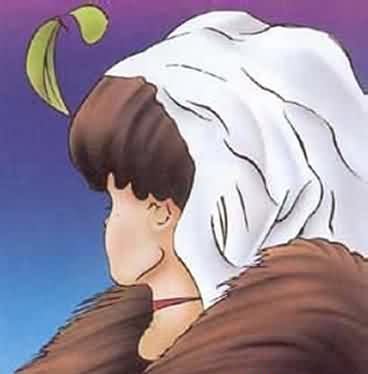
Old woman or young girl?
You know how sometimes the same information keeps coming at you from all sides? The classic illusion puzzle illustrated above has taken over my life lately. It began as I wrote in my journal yesterday morning and realized that I could look at a situation from 180º around for a point of view my  more to my liking, then I could clearly see both points of view. "It's all in how I look at things," I wrote.

That reminded me of another favorite illusion, and rather than finding it elsewhere, I made my own. Notice how the bars and word look shaded? Click the image for proof they're not. 
Click and wait 4 seconds for alternate view
Within the next twenty-four hours, I noticed references to this sort of reframing several places. Unfortunately, the notes I made on the sources were mental, and like most great story ideas that aren’t written down, they vanished. (Note to self: write things down!) One was in a book I read. Another was in a blog, and the third in an email newsletter. I even found a link to a webpage with some amazing illusions, and video explanations. You can explore it on your own.

The relevance for us is that things are not always as they seem, and in many ways, everything we see is an illusion. We can often choose how to view it, and these choices can lead to inner peace and healed relationships. That isn’t always easy, and sometimes assistance like you’ll find on the Yoism website is the only way you’ll be able to make the shift.

Here are a few tips to use while you write in your journal or ponder a knotty question in a story. Look at a specific aspect of a situation and ask:
  • “Is this true?”
  • “How else could I explain things?”
  • “What is the hidden gift here?”
  • “How might (the other person) see this situation?”
  • “What can I learn from this?”
In each case, write your answers down. Don’t be disappointed if you don’t experience an immediate shift in outlook or attitude. You may need more data or practice at alternate view and explanations. Whatever the case, you’ll get some great mind exercise and keep your mental muscles limber and lithe. You may find this exercise is a lot of fun, and even humorous. It may yield a story idea or few. You may feel more creative as a result. You may even become a more forgiving, grateful and accepting person.

Write now:
if you’ve ever had a dramatic reversal of attitude write a story or essay about that event. If you haven’t think of a puzzling situation and use freewriting or your journal to practice looking at it from different angles, using one or more of the questions on the list above.

Q & A About Keeping a Journal


Photo by Julie Jordan Scott

Journaling is one of the most intensely personal activities you can indulge in and one of the most powerful self-care ones, plus it's a gold mine of material for memoirists. Because it is so personal, there is no right way to do it, but many beginners still have questions. Below are a few of the most common.

Do I have to write by hand?

No. There is some evidence that writing by hand slows your thinking to an orderly pace, giving meditative-like benefits, but the edge is slight. If you are able to catch the gush of your thoughts better on a keyboard, go for it.

How should I choose a journal?

It doesn’t matter if you use a hand-bound volume covered in Italian leather, a composition book from the Dollar Store, a folder full of loose paper, software like LifeJournal. or a basic text editor. What does matter is that you choose something you feel comfortable with, and then use it.

When is the best time to write?

Many people prefer to write first thing in the morning, but that doesn’t work for everyone. Write when you can — during coffee or lunch breaks at work, on the bus, after dinner ...

How often should I write?​

To get the most meaningful results, you should write at least several times a week. In her multi-million copy best-seller The Artist’s Way, Julia Cameron advises writing three pages, first thing, every day, and millions of people around the world follow this advise. She does not specify page size. If you skip a day or few for whatever reason, Just pick it back up and keep going as soon as you can.

How much time should I spend?

As stated above, Julia recommends three pages. That may take ten minutes or an hour. Write for as long as you feel the urge and have the time.

What should I write about?
Anything at all. You can keep a log of the weather, record your comings and goings, rant and rave. You can keep a gratitude journal. One key to using it for enhanced health and enlightenment is to focus on feelings, emotions and reactions. The more you get your inner thoughts on paper, the more self-aware you become, the more alternate perspectives you’ll find, and the more stress you are likely to relieve.

Should I share my journal?
That’s a personal choice. If you think others might read it, you’ll filter what you write. You’ll gain the most insight if you keep it private. Hide it or keep it elsewhere if you don’t trust people you live with. Then always write the Truth as you know it, and watch that Truth transform.

What other tips should I know?
Two key questions have generated huge pay-offs of insight for me: “Is this true?” and “What can I learn from this?” After I write one of those questions on the page, I just write down the answer without serious thought. Writing dialogue with people from the past — or even imaginary people — is also powerful for surfacing hidden thoughts and wisdom.

Another tip is to write as fast as you can without concern for punctuation, grammar or even making sense. Just get it on the page and don't let your inner critic stop you!

Do I need lists of topics to write about?

No. But using them can seed some amazing essay material.

What if I lapse?
My advice about writing in your journal is the same as writing life stories: Anything you write, anything at all, is better than writing nothing. Even if it is just a few paragraphs a couple of times a year.

Where can I find more information?
My favorite websites about journaling:
     International Association for Journal Writing
     Writing Through Life
     Center for Journal Therapy

My favorite books
about journaling:
     One to One, Christina Baldwin

     Journal to the Self, Kathleen Adams.

Write Now:
if you don’t have a journal, find some paper or open a new file and start one. If you do have one. pull it out and write an entry.

Aunt Paul Remembered

Few people think of funerals as a time for gathering family stories, but that may be one of their prime functions. Pittsburgh Post Gazette columnist Sally Kalson underscores this aspect of an otherwise grim event in today’s column, Family lore: There's no time like a funeral for remembering the good stuff as she commemorates her aunt, Paula “Paul” Ruth Mitchel, who was buried last Monday.

Sally’s column is full of fun, like the story about the time Aunt Paul put a dent in her husband’s brand new car. Within the column are enough snapshot stories to fill an entire volume about Aunt Paul and her whole delightful family. Between peals of laughter as I read, several thoughts crossed my mind:
  • It’s refreshing to read something positive and amusing on the OpEd page of the paper best known for critical, negative and generally less than uplifting content. I’m grateful to Sally for sharing the shining example of her aunt’s life.
  • Anyone inclined to write about family history should always have a thick notepad and pen handy at funerals few events are richer in story content, and your story idea list will swell.
  • If we write stories about our loved ones ahead of time, we’ll be ready to present a eulogy with less stress when the time comes.
  • For a landmark birthday some time ago, a friend presented me with a story she had written about me that she instructed me to put with my will, because she wanted it read at my funeral at some time in the distant future. Being several years older than I, she does not expect to attend. I was stunned and touched, and I’m reminded now of my intention to return the favor.
Wherever you live, I suggest you click over to Sally's column and read it as a fine example of a way to commemorate the highlights of a whole tribe of relatives. It would work equally well for a celebration of friends, community members, or long-time colleagues, and you don't have to wait for a funeral.

Write now: use Sally’s essay as a pattern to write a collection of snapshot stories of your relatives. If you don’t have a funeral to attend, pull them from memory. When you finish, e-mail your story to everyone in the family.

Life Lessons from Life Writing

Punji Pensive, by Indi Samarajiva
Jamie’s sick, so I’ll have to fix a casserole to take over.

This is such a simple and typical thought — the type that generally passes unnoticed, or at least unquestioned. Lately I’ve begun to notice these thoughts and question them. Increasingly often as such thoughts begin to form, I pause and rethink the situation.

Is that true? Do I have to (fix a casserole, do the laundry, write a blog post) now?

Generally, the answer is No. I don’t absolutely have to do that. But I want to. Usually I’ll simply go ahead and do whatever it is, but because I stopped to think about it, I realize I do have a choice, and I do the task with more awareness and presence. Any hint of resentment fades. My life has gradually become more peaceful, more joyful, and less stressful as a result. For that I am enormously grateful.

What does this have to do with life writing? I’m convinced this powerful thought-habit sprang from journaling. This isn’t anyone’s fancy system. I’m a self-taught journal writer,  just “doing what comes naturally.” What comes naturally is to ask myself questions when I feel out of sorts or whiny about something.

“Is that true?” is my favorite one. “Are things really that bad?” “Is that so?” I write an appropriate question in third person, as if to someone else. Then I answer it. Sometimes I write two or three questions before I feel finished. It’s amazing what I’ve discovered. This technique works equally well for current things I’m whining about today, and things I’m still whining about fifty years later.

Once I got in the habit of using this technique in my journal, it began to seep out into my thoughts at other times, and you’ve read about the results. If I weren’t already convinced of the value of life writing in all forms, the results of this inadvertent experiment would prove it to me. Try it. You’ll like it!

Write now:
promise yourself to spend ten minutes each day for the next ... week (or more — just keep it believable) writing about whatever is irritating you or causing you stress at the moment. You’re likely to get your best results with smaller things first while you build mental muscle. Whine your heart out on the page. Then write “Is that really true?” Think carefully, and write your answer without preconceived notions. Maybe it really is true! If it is, write “How else can you handle this?” or “What are your options?” Don’t wear yourself out. You don’t need to solve all the world’s problems. You are simply training yourself to think differently. To question your “have to” statements. I promise that if you stick with it, you are going to see some dramatic results in your thinking. You may not change your behavior, but you’re going to feel a lot happier about what you’re doing.

The Ants of Peace

Will Argentine ants take over the Formicidae world? It sounds possible. I was reminded of the lyrics of a children’s counting song, The ants go marching one by one ...  as I read an item in the December 2009 National Geographic about Argentine ants. They are gaining dominance around the world by their ability to get along well with one another. They are forming genetically consistent “super colonies” that enable an ant from one nest to mingle freely in another, preventing competition among queens and internest wars. Apparently this proclivity for peace allows them to solidly expand their territory, crowding out native ant species and interfering with local ecologies. I'll leave it to you to read more about this peril.

How strange, I thought as I read this. If ants can dominate by peaceful behavior, could humans do the same? If people with a peaceful mindset link up and live from a center of love, peace and gratitude, will we eventually overwhelm and crowd out greedy war mongers? Does this fit with what increasing numbers are coming to view as the shift in human consciousness toward global awareness and unity?

I find such questions rich fodder for journaling as I explore my thoughts and beliefs about peace, spiritual growth, and what’s going on in the inner and outer world. As I journal I’m increasingly able to catch myself at the onset of agitation and consider alternative perspectives. I’m increasingly able to remind myself that in a week, month or year, whatever is consuming my attention today will be a distant memory, and let it go.

Besides exploring my psychic navel lint, I write my visions — or fantasies if you prefer — of how life could unfold. I write visions of people all over the world joining in brain and heart waves of love and peace. I see the power of love-waves canceling out the clanging raging, turmoil of life was we know it today, as surely as ocean waters sooth and level the scars of wind, weather and human intrusion on beaches.

As I write about love, peace and gratitude, I reinforce this state within myself and become more peaceful. As I become more peaceful, others around me are able to remain more calm and peaceful. Hopefully, as I write publicly about love and peace, thought-seeds will germinate, like when I read about Argentine ants. The spread of peace among people is far more powerful than the peace of ants, because it will result in abundance for all rather than elimination and destruction of some as is happening with the ants.

The ants go marching ten by ten ... the end!

Write now: about love and peace. Write an essay with your thoughts on why, when and how you think world peace will occur — or why you believe it never can. Or write about your progress in achieving personal peace and serenity or lack thereof. Write about your dreams of peace. You get the picture. Write your own piece of peace.

Grow Your Attitude of Gratitude


A few days ago my daughter told me about accepting a “Thankfulness Challenge.” She’s posting tiny “I’m thankful for ...” statements on Facebook at least once a day. After she told me this, I took a look. The instructions are simple:

Every day this month until Thanksgiving, think of one thing that you are thankful for and post it as your status. "Today I am thankful for..." The longer you do it, the harder it gets! Now if you think you can do it then repost this message ......as your status to invite others to take...the challenge, then post what YOU are thankful for today....

Then I checked her posts. They are tiny indeed. Typical ones include:

  • Today I am thankful for deodorant.
  • Today I am thankful for sarcasm.
  • Today I am thankful that others have louder voices than mine.
  • Today I am thankful for ear plugs ... helpful when the children are fighting over toys.
  • Today, I am thankful that my husband did not die on mile 24 of his marathon -- no matter how much he thought he was going to.
I am taking the challenge too, though I’m doing it via Twitter and somewhat behind.

Rather interestingly, as Susan told me about the challenge, she remarked that one of her friends thought she’d have trouble finding enough things to be thankful for. Part of Susan’s purpose is to demonstrate to that friend and the world that thankfulness/gratitude can become a frame of reference for viewing the world, and we can be thankful for tiny little things. We can be thankful several times a day. Several times an hour. Almost constantly in fact.

Recording gratitude is not a new idea. Information about Gratitude Journals abounds. Sleepydust.net explains: “A gratitude journal is like a diary - but you're only allowed to write positive things in it. ...“

The Happy Guy interviewed expert Doreene Clement for advice on how to keep a Gratitude Journal and posted her detailed instructions here.

Reviewing a Gratitude Journal, or even gratitude posts in a regular journal, can brighten dreery days and lift us out of the doldrums. Recording gratitude strengthens the habit of thinking that way. It can even improve your health! Sharing gratitude with others, especially in tiny, credibly little bites like Susan is doing, infects others with a grateful spirit. The more of us doing that, the sooner the whole world will be wrapped in Gratitude, and that has to be a powerful thing.

I’m grateful that my daughter is spreading gratitude, and I’m grateful to Google for making free blog space available to the world. And (drum roll) ... I'm thankful for those who read my blog!

Write now:
in the spirit of the season, make a list of things you are grateful for. Aim for at least a dozen off the top of your head, and look beyond the obvious. Make it a habit to jot down grateful thoughts at least once a day, and share them with the world at least now and then.

Tribute to a Mentor

Earlier today I read a review of a book, Muses, Mentors and Monsters, by Elizabeth Benedict. The book features a collection of tributes from thirty writers to mentors who  changed their lives. I immediately thought of the mentor who changed my writing life by kicking it off.

Lacking the opportunity to put this into a book, I'll pay tribute here to Larry Sparks, my main mentor while I was an off-campus grad student in the psych department at Central Washington U in the seventies. I doubt I would have made it through the mazes in that program if Larry's office hadn't been available as my centering spot. This gentle balding giant with the translucent cinammon buzzcut and droopy, pale blue eyes constantly urged and teased me to set aside my wild ideas of a counseling career and settle in to write. "You are the best writer I've ever had in any of my classes. That's what you excel at, what you do best. It's something you can do at home with your kids, and you can make (I think he said something like eight or ten cents per word) writing articles."

Larry told me lots of things — taught me lots of things — about life and especially about metaphysics, as he leaned back in his favorite desk chair pose — hands locked behind his head and one foot propped on a knee. He was the one who first introduced me to the "everything matters nothing matters" concept. I always listened, I always heeded, but I was sometimes slow to act and even slower to fully comprehend. I did start writing. I began with short stories. I still have a couple. They were truly pitiful, but I had no guidance. No classes. No books on how to write. No writers' group.. I wasn't about to show them to anyone! And it was hard to knock off the crust academic and case history writers develop that makes it second nature to weasel word and document everything. No original, definitive opinions allowed. Leave your self at the door and stick to the facts.

I did keep writing, scaling my ambitions back to local rather than national publications. I turned to reporting rather than fiction and served as a major contributor and Editor-in-Chief for a friend's regional advertising-supported women's newsletter. Getting positive feedback from people I hardly knew, I gradually built up a respectable portfolio and transitioned into business writing. I began to study the craft of writing and implement what I learned.

All this while I stayed in touch with Larry. Long after my last visit to campus, my move to Pennsylvania, and his retirement, I continued to find comfort in his teasing approbation. About the time I began seriously writing, life writing, and my heart kicked into the process, we gradually lost contact. It's been about ten years since our email exchange fizzled. But his warm, loving smile and gentle chuckle always lurk near the surface of awareness. In spite of the lack of active contact, I still feel connected. I'm sure that on some level he knows what I'm up to even now, and is still smiling and chuckling as he lounges in his recliner, gazing at the vast eternal reach of the Columbia River flowing through the desert wilderness of eastern Washington.

Would I have begun writing if I Larry Sparks had not entered my life? Quite possibly not. I do believe he made that difference in my life, steered me onto what I know is "my path." I'm enormously grateful for his presence, wish him well, and thank him from the bottom of my heart for believing in me, then, now and always.

Write now: a tribute to a mentor (writing or otherwise) or any person who changed your life for the better or exerted a significant influence. If it's possible, share a copy with that person.

Watershed Memories

 Photo by Slagheap at www.flickr.com

This morning I jotted down some memories of September 11 in my journal. As I wrote, I thought of the intense fear the occasion called forth, the fear that life as we had known it had crumbled as surely as the Twin Towers. 

That triggered a related memory of a day a couple of years later when I experienced a blinding flash of the obvious, realizing in an instant that hate is not the opposite of love, FEAR is the opposite of love.  I felt those shackles of fear break free as divine, sublime love flowed into my being. My spirit soared in awe and gratitude. For several days I floated on a cloud of bliss, feeling free and strong, exploring the plethora of ramifications of this blessed “knowing.”

I wish I could tell you I've been 100% confident and joyful ever since. Not so. I still  get the willies now and then about one thing or another. It may be news related, like the situation in Iraq or healthcare reform, or it may be more personal, such as family illness. The onset of dread can come from any direction. But having been freed from chronic fear, I sense it early and am increasingly more able to nip it in the bud, reminding myself, “Things always work out okay in the end. Chill!”

Could I have understood this earlier in my life? I don't think so. I needed the data and experience to prepare me to understand and “get it.” But the delay in learning has made the realization that much more precious.

These memories, of the events and fear related to 9/11, and the experience of instant insight, are prime examples of watershed or landmark memories. They have had a major effect on my life, shaping it dramatically. Such memories form columns supporting the structure of memoir. I am compiling a list of these memories and arranging them on a timeline. They are transition points in my spiritual growth. Other memories about the impact of these insights and how they shaped my further life can be woven together to form walls and a roof linking all the columns together into a completed story.

That’s a long-term project. For now I’m writing short pieces about each watershed memory. That will anchor them and keep them fresh for when I’m ready to assemble the long version. And/or in case that day never comes.

Write now: list several watershed memories in your life. These may be about fear,  your spiritual development, or anything else you want to contemplate and come to grips with. Pick one or two and write a couple of paragraphs or a full story or essay. Or make a mindmap of related memories. File the material away for future use.

Joining the Uncopyright Revolution


A year and a half ago, Leo Babauta, author the the ZenHabits blog, signed on as a soldier in a revolution — the uncopyright revolution. I came upon this concept only a couple of days ago in a post entitled Grab and Run: The Great Uncopyright Experiment on Mary Jaksch’s Goodlife Zen blog. If you have any interest in copyright matters, I urge you to read both Leo’s and Mary’s posts. They may change your life.

I’ve already discussed copyright on this blog twice this year. In March, I posted an article explaining the basics of copyright law and associated ethics. That post was prompted by the dismay a friend felt after discovering that whole posts from her blog had been pirated and reposted by a woman she had inspired to begin blogging, and whom she considered a friend.

Two weeks ago I wrote about the resulting fiasco after Amazon arbitrarily pulled George Orwell’s works out of all accessible Kindles that had purchased the work. At bottom, that mess resulted from violation of copyright law. Orwell has been dead for nearly sixty years, and his works are in the public domain nearly everywhere else in the world. Animal Farm was written in 1945 and Nineteen Eight-Four in 1949, shortly before his death. You can download the text of either book from the Internet, but not legally in this country.

I won’t go into those legalities other than to say they make me nuts! I think it’s insane that if 49 years after I die, someone picks up something I wrote, finds it inspiring, and wants to share it with the world, they can’t do it, because it's still protected by copyright. Even my kids are likely to be gone by then, maybe even my grandchildren, but my estate is still protected. Whoopee! Who are the winners here?

Furthermore, I have long believed that all inspiration comes from the same Source, and there is nothing exclusive about it. I’ve learned and benefited enormously from the works of others, incorporating their thoughts into my own and building on them. I’ve always believed that I “owe back to the pot” at least to the extent I've been fed from it; that the world will be a richer place if creative people cross-pollinate by freely sharing ideas, even to the extent of copying; and that if I become protective and proprietary about whatever small amount of wisdom I may have accrued, the creative part of my mind will soon be Saharan.

Please do not take this to mean that I advocate copying. The exercise involved in putting your own spin and personal touch on ideas you value helps cement them in your mind and keeps your brain healthy. I don’t even share links to things without adding a few words to explain why I find them valuable. But if you sincerely believe you don’t have any value to add, by all means, pass material along — with a link back, please.

So when I read Mary’s post and tracked back to find Leo’s, I thought Oh yes! That’s IT! I’ll do that too. Like them, I declare my blog Public Domain. As you'll see from the notice in the left sidebar, I've taken that step. You are welcome to copy, adapt, and build on articles found in this blog as you wish. That being done, I hope that if you do copy or adapt from it, you’ll link back and identify the source. Crediting source material publicly affirms your integrity and generates good karma. And I hope you’ll let me know so I can smile with grateful satisfaction, knowing yet more people are finding my work valuable and inspiring.

Write now: about your feelings around copyright and ownership of words and ideas. Do you feel proprietary about your work, or welcome others to share?

It's Five O'Clock Somewhere

You’ve heard the saying “It’s five o’clock somewhere” used to justify an early cocktail hour. Likewise, on any given day, it’s somebody’s birthday. If you happen to read this on your special day,

HAPPY BIRTHDAY TO YOU!
I shall use your occasion to talk and write about birthdays and writing about them. Anyone who has a few years on their timeline has some birthdays that they remember more fondly than others. The fond memories may include parties — surprise or otherwise, special gifts, special celebrations. The not-so-fond ones may include passing dreaded milestones, generally ages ending in zeros. These occasions are worth writing about, as essays or stories.

One of my best birthdays was the year I turned 18 and my parents turned an ordinary gathering of friends into a really special event with a huge surprise: an ice cream birthday cake from Baskin Robbins.

Turning 21 was a real non-event. I had German measles. Besides, I was already married to a grad student, and we hardly had an extra nickle to celebrate, even if I hadn’t been sick.

On birthday 23, I decided to quit having birthdays. By late afternoon, nobody but my hubby had even wished me a happy one. No cards, no phone calls. (Not that anyone outside the family knew what day it was.) Just as I was imagining lighting a million candles on my pity party cake, my mom and brother drove up with a huge split leaf philodendron plant and redeemed the occasion. I made a resolution not to ever again let the absence of recognition spoil my birthday.

When 30 rolled around, I knew I was supposed to start feeling old or angst-ridden, but I couldn’t convince myself anything had changed, and hardly noticed. 40 was a different story. I’d always assumed that by the time I turned 40, t
he full extent of my astonishing wisdom would become appreciated. I expected all sorts of new respect and red carpets. To my horror, the day came and went, and not a thing changed. I was fell into a black pit of disappointment that lasted for weeks.

On number 41 I threw a dinner party for nearly 20 people, knowing it was the last year our family would all celebrate together for a long time, and my last chance to celebrate with friends in Richland. Nine days later we bought our house in Pittsburgh was accepted.

I threw my own party again to celebrate half a century. The next day I hopped on a plane and flew off to Seattle to meet our first grandchild.

Number 50 found me at an Elderhostel at the Volcano Center on The Big Island, joking that I was now old enough to be there unescorted.

I spent birthday number 60 in Austin with our daughter and her in-laws and moved on to celebrate Fiesta in San Antonio.

Last year I began celebrating my birthday high above the North Pole, arriving in Beijing before the day was over.

That
s the short list of my Big Birthday Moments story idea list. To do them justice will require pages and pages, with plenty of narrative to interject the meaning they held and hold for me as a time of transition, a season of beginnings and endings, and an occasion for gratitude. And then I shall decide whether to continue celebrating or swear off.

It's five o
clock somewhere, and somebodys birthday to boot, and what a great excuse to celebrate now!

Write now: jot down a summary of your memorable birthdays, both good and bad. Include as many details as you can remember, food, drink, friends. Or maybe you spent some alone. Did you enjoy them or hate them? How d you feel about your age now? Let it all hang out. Then pick one specific birthday and write a proper story about it.

Hitting the Bullseye


For most of my life I’ve thought of my father as a background person in my life. He was always around, eating dinner with the family every night, taking us on picnic and camping trips, and occasionally directing my sister and me to clean up the kitchen on nights my mother may not have bothered. He was handy to have around for help on math homework in high school.

But he was not much of a conversationalist, and much of our interaction took place through the filter of my mother. For example, she would tell me, “Your father doesn’t like thus and such,” or “Your father thinks you should do this or that.”

As I wrote The Albuquerque Years, I recalled all sort of things I did with my daddy as a very young girl. I “helped” him irrigate and tend the garden. I watched as he killed chickens for Sunday dinner. I rode in the basket of his bicycle to get fruit from the stand up the road. I rode on his shoulders. I learned how to take pictures. I tricked him with a fake yoyo on April Fool’s Day. I regretted that these memories of direct involvement seemed to taper off as I grew older.

A few minutes ago I began skimming a free pdf version of Paulo Coelho’s book The Way of the Bow that I downloaded from his website. As I read the description on page nine of Tetsuya stringing his bow, I recalled the long-forgotten yellow bows and arrows my father gave my sister and me when I was nine or ten. I don’t remember the occasion, but I do remember spending hours and hours over a period of years trying to perfect my aim.

With that memory dozens more came pouring forth, and suddenly I’m suffused with the most delightful realization that although he may not have shown it openly, he always loved me more than I would have imagined. I never doubted that — I was just not fully aware of the extent of it. This memory hit a bullseye in my heart! I’m simply aglow with gratitude and joy.

I doubt I ever would have stumbled across this discovery if I hadn’t spent so much time writing and thinking deeply about various memories. Individual stories were a good way to start this process, and I’m finding that going on to the next step of integrating those vignettes into a more comprehensive overview is deepening the results and insights.

When I first began what I now recognize as the practice of life writing, I had no idea that it would be come a lifelong pursuit. I thought I could just write a few stories — maybe even one hundred
and be done with it. I can no longer count the number of stories I've written, but the last time I did, the total exceeded seven hundred, and I've just begun to write. Now I realize that the longer I stick with it, the deeper I write and see, and the happier and more peaceful I feel. The positive effects reach every corner of my life, and I can’t imagine not spending time at least several days a week on this ongoing exploration.

Write now: make a list of memories of happy times spent with a special person in your life. Use this to write a paragraph or two or longer story about each memory, or as journal prompts.