Showing posts with label Death. Show all posts

Don’t Wait Too Long

Ben-Melton-1998As I mentioned in my last post, my father died last month. The last few weeks I’ve become obsessed about writing family stories while digging through genealogy material and old pictures. I’m finding dozens of dots I never noticed before and discovering new insights with roots that reach beyond the Civil War.

One of the most touching things I’ve found is this emailed letter from my father that’s been lurking in my files for a couple of years. He must have memorized this piece. He recited it, almost verbatim, with a few new embellishments, the last time I talked to him, shortly before he died. I’ve been wishing I’d thought to turn on my phone recorder that day, but no matter. Turns out, I already had the transcript. I don’t think he’ll mind my sharing it as a tribute to him with a message for all of us.


Reflections on my life
Ben Melton, June 25, 2015

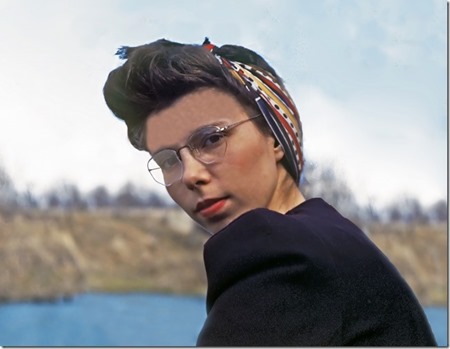
The most beautiful woman I ever met (1943):

Marjie in scarf

The most beautiful (the same one) woman I ever met, with me, 50 years later:

Ben & Marje, 50 years later

I’ve led a wonderful life. 

I married the prettiest girl. My children, my grandchildren and my great grandchildren are good-looking, good-natured and brilliant.

I’ve had, and have some wonderful friends.

In a multi-faceted career, I’ve had some exciting, interesting and rewarding jobs.

I’ve shot the biggest deer I ever saw, caught the biggest salmon I ever saw, flown the hottest (in my day) bomber, and the biggest bomber, and done acrobatics in a fighter plane.

I’ve survived multiple encounters with the grim reaper in the air, on the highway and in the operating room.

Fortunately, I’ve had a few dull moments to round out the spectrum.

My life doesn’t owe me a thing.  It has already delivered more than I could possibly ask for.

Why am I telling you all this?  Because if I wait too long, I’ll lose the opportunity to express my awe and gratitude for a richly rewarding life!

Love,

Ben sigBen's Snoopy Plane

gDad


In that recent phone call he added, “I’ve done everything I was ever afraid to do except jump out of an airplane. I didn’t do that when I had the chance because I’d hurt my foot and was afraid I’d break my leg when I landed.” Reality-based fears like that are worth respecting!

At 187 words, this letter is a clear example of a mini or micro-memoir with a theme of gratitude. It’s also a love story and a celebration of life. It hints at obstacles overcome. It touches on triumphs with faint whispers of shadows, which he did not dwell on.

He wrote other stories too, but this is his capstone. It could have been his obituary if we’d remembered we had it. What a wonderful legacy he has left. I’m in tears all over again.

I hope this can serve as an example that less may be more. Pay special attention to his last words:

 Why am I telling you all this?  Because if I wait too long, I’ll lose the opportunity to express my awe and gratitude for a richly rewarding life!

It doesn’t need to take a lot of words. Now, get those fingers flying and write on!

Amy Cohen Discusses The Fountain at the Crossroads

Earlier this year I published A Humble Story Lives On, a post based on the work of Amy Cohen, a distant cousin of my husband’s. Amy has been busy over the last several months lovingly publishing a posthumous memoir written by Ernest Lion, another shirt-tail relative who survived the Holocaust at Auschwitz.

Amy asked for my guidance in preparing the manuscript for publication, and I became intrigued with her project as well as the story. In this post Amy explains how she came across the story and why she decided to publish it. I find it especially intriguing that a story written late in life with no known plans for publication could be found and brought to the world by a stranger. It just goes to show that you never know where your words may end up.

SL: Amy, how did you discover The Fountain at the Crossroads?

AC: I was researching the family of one of my Schoenthal cousins—Rosalie Schoenthal. She was one of only two siblings of my great-grandfather who did not immigrate to the US from Germany in the late 19th century. She married Willie Heymann. All but two of their many children left Germany and escaped the Holocaust. The two daughters who stayed in Germany were killed by the Nazis. In trying to learn more about the lives and deaths of these cousins, I found out that one of Rosalie’s granddaughters, Liesel Mosbach, had married Ernst (later Ernest) Lion. Although Liesel was killed at Auschwitz, her husband Ernest survived. One online source included a link to a memoir written by Ernest Lion.

I clicked on the link and printed out the 200+ page manuscript. I read it in one sitting over the course of a day, tears streaming down my face, unable to put it down until I reached the last page.

SL: What did finding the story mean to you?

AC: Although the fact that Ernest was a relative initially drew me to his book, I quickly realized that his story is the story of more than six million people. It’s the story of how the Germans tried to strip them of their humanity and lives. But Ernest, like countless survivors, refused to surrender his humanity or dignity. The narrative brings you into his experiences and also his mind, allowing the reader to understand the reality of life at Auschwitz and perhaps even more importantly what it was like to survive during and after that experience.

This book reveals both the darkest and best of human nature. Ernest’s ability to persist, to escape, to build a new life in a new country, to find love and purpose is inspiring and deeply moving.

SL: How did you decide to publish it?

AC: After reading the book, I felt strongly that it needed to be read by others. But aside from a few links to the rough manuscript, there was no way for people to find this 200 page manuscript. And with no chapters and crude formatting, it was difficult to read.

So I decided to see if I could get permission to edit and publish the manuscript to make it more readable and publicly accessible.

SL: What challenges did you face?

First, I had to find out who had the rights to the book. I knew Ernest was deceased and that he had a son, but I had no way to contact him. Ernest had acknowledged a number of people in the book, including Randall Wells and Suzanne Thompson, his writing instructors at Coastal Carolina University. Through the university, I got in touch with them and got contact information for Ernest’s son Tom. I soon learned that Tom was the sole heir to Ernest’s estate and thus owned the book’s copyright.

Tom liked the idea of making his father’s book more accessible, so I began editing the manuscript. Wanting to preserve Ernest’s voice and leave content intact, I did nothing but add chapter headings, fix typos here and there, and reorganize one section so the chronology flowed more smoothly.
 
The second greatest challenge was figuring out how to publish it. That’s where you came in, Sharon, with advice on how to create a professional looking format. Your important suggestion that I use CreateSpace made the process of getting the book on Amazon in both print and Kindle format relatively easy.

SL: What are your hopes for this volume? 

AC: I hope that a multitude will read the book. We set the price low to keep it affordable. Our hope is that readers will gain a deeper understanding of the Holocaust and human nature.
 
I am hoping that schools and libraries will put the books on their shelves. I am hoping that the book will be reviewed in places where it will draw the attention of history buffs. We need help spreading the word.


Fountain at the Crossroad is available on Amazon in both print and Kindle versions. You can find them here. Whatever small profits may accrue will be donated to the United States Holocaust Memorial and Museum in memory of Ernest Lion.

For an extensive array of family history stories collected and written by Amy Cohen, visit her Brotmanblog: A Family Journey.

Hidden Treasures

Sympathy-cardI just discovered a  hidden treasure trove. I’m glad I didn’t give into the urge to purge. I almost tossed old sympathy letters unread. What relevance, I wondered, could I possibly find in condolence letters written to my now-deceased mother-in-law nearly fifty years ago when her husband died? What a surprise to find that I’m learning so much from reading between the lines.

I hardly knew my father-in-law, Ezra Lippincott. We never lived near them and had only been married six years when he died. Quite likely he found his son’s young wife as baffling as I found him. We never connected. My mother-in-law Blanche often spoke of memories involving him, but they usually included other people and things they did, and I still had little sense of what Ezzie was like.

Now I’m reading these letters, beautiful tributes from friends, colleagues and customers. “A remarkable human being.” “He was always there when anyone needed help.” “We’ll miss him terribly.” Some shared memories that I’ve never heard before. From these word scraps my dim, fuzzy picture, formed mainly from pictures and bare-bones stories, is fleshing out just a bit. He’s becoming more real.

As I read and consider, I’m reminded of three things of relevance for all of us who write:

People are naturally curious.

They want to know details. When we record the past in story form, we try our best to cover the basics and give a complete account. We may not know all the facts. We may run out of time and not finish the story. If this happens, don’t fret. Do the best you can. Someday someone may read whatever you were able to write and connect the dots, as I’m doing now. Their picture will sharpen from clues you do give.

People read between the lines.

Right now I’m filling in blanks in my image of Ezzie. I’m also reading between the lines to imagine how Blanche may have felt as she read these shimmering tributes. I did not know her well either at that time, and neither of us was good at expressing emotion. I had only a foggy notion what she was really going through, and I was too busy chasing my toddlers to give it much thought. Suddenly her loss seems poignantly real, and I grieve for that loss as I read.

Treasure artifacts.

I’m sorting because we’re preparing to sell our house and move from Pittsburgh to Austin. My intention is to lighten the load. But now that I’ve read these notes, I see that they are pieces of heart. Not only do they give a clearer picture of Ezzie, but they document the way people communicated back then – with pen and ink. They wrote and mailed deeply heart-felt messages. Only a few sent cards. I may scan the the messages in, but I’ll still save the originals. Some later generation can decide whether to continue keeping or toss.

For now, I’ll just finger my newly found treasures. Maybe later I’ll use some of these scraps in a story or few.

Write now: if you have old letters or photos, look through them. See what dots connect or how you read between lines to notice things more clearly today than you did in earlier times. Write a story about what you fine.

Little Story, Lots of Lessons

Child-Hold-Me-Cover-667x1024Closing the covers on a tale of epic proportion is merely a transition on my path of savoring a book. I may spend weeks gnawing on the bones of that book, reliving favorite scenes and savoring the way the details come together. Shorter stories may provide welcome diversion and profound insights, but seldom stick with me as long.

Michel Sauret’s memoir, Child, Hold Me, is an exception. I found the book after following a link to”How Much Does It Cost to Publish a Book?” on Sauret’s meaty blog. A blurb for the book piqued my interest:

From International Book Awards winning author Michel Sauret, “Child, Hold Me,” is a short memoir about losing a child in the womb, told through a man's perspective.

What? A man has written a memoir about miscarriage? Wow! This was new territory for me. I read on and learned that Sauret and his girlfriend were still in college and … the frank confessions in that blurb stunned me. I clicked the link to Amazon.

For less than the  cost of a cappuccino, the story flowed onto my iPad, and I dug in right away. Captivated by phrases as rich as the insights they convey, I read straight to the end. Sauret writes with his heart wide open. I’m reminded of the phrase attributed to an army of authors,

Writing is easy. You just open a vein and bleed onto the page.

Sauret’s literary blood and gutsy writing flowed straight into my heart in little longer than the time required for a physical transfusion. This memoir is short – 88 pages according to Amazon (it’s not available in print) – but lacking in nothing, and it packs a powerful punch. I’ll be chewing on this bone for weeks to come. Some of the points I’ll ponder:

Reading memoir by diverse authors broadens my insight into the human condition. I’d never stopped to think how losing an unborn child might affect a man. Suaret’s frank disclosures jolted me to attention and broadened my point of view. I never intended to limit my perspective of difficulties conceiving and carrying a child to term as strictly a woman’s concern, but I realize now I pretty much did.

What other blinders do I unwittingly wear? I shall keep reading and learn, taking them off, one-by-one.

Self-disclosure builds bonds of trust between writer and reader. Daring to disclose personal truth on the page, especially raw confessions such as Sauret makes, opens portals between people. They crack shells of indifference and preoccupation. They remind us there are people out there. People who live and breathe and bleed when they’re hurt. They snap our little lives into perspective. They breed compassion.

Longer isn’t always better. Sauret writes his tale tersely, within a small space. Yes, I was left hungry for some additional details, but he covered the essential points. In retrospect I realize that the details I hungered for are primarily trivia that’s fun to read at the time, but seldom stored in long-term memory. He stuck to the bones with just enough muscle to make them move. I read the story in two hours, but will ponder it as long as if it took two weeks.

Story transcends boundaries of gender, race, time and place. Saueret’s story reminds me that men can move beyond macho to cry, feel compassion and unbounded love. Ian Mathie’s African Memoir series reminds me that purportedly primitive people are wise in ways we may fail to fathom.  Jerry Waxler’s Memoir Revolution thoroughly explores the world of ways memoir enriches lives.

The advent of digital publishing opens the opportunity to publish a collection of mini-memoirs, much like literary Lego blocks, allowing readers to pic and choose, linking them in a variety of ways. We are freed from the pressure to crank out 75,000 words to make our story worthwhile. Hooray for that!

Write now: think of a major turning point in your life. Outline the elements, including lessons learned, and consider ways of converting that experience into a mini-memoir, writing the bones, with enough muscle to make them move. Share your thoughts about writing in smaller scale. in a comment. Is this liberating? Disappointing?

Resurrecting Memories

Coltsfoot

This afternoon I took a walk in search of the first coltsfoot blooms of the season. They usually appear on March 21, give or take a day, but this year winter has hung on longer than usual, delaying their appearance more than a week. This winter has been a difficult one, filled with reminders of our mortality. Never have I been more eager for the appearance of spring!

I was even more eager to see them today after receiving an unexpected phone call from my brother in Richland, Washington. Kathy Utz, a dear friend I’ve known for 43 years, died a couple of weeks ago. The news felt like a sandbag hitting my solar plexus. I had no idea she was ailing, and I’d planned to call her later today to wish her Happy Easter.

Since my brother knew no details, I called a mutual friend to get the rest of the story. Talking about our grief and sense of loss helped us both. Story is like that. It’s how we make sense of things, individually and collectively. I had to know more details to calm my shocked brain, and telling the story again gave my friend an opportunity to deepen her sense of it.

Going for a walk and finding the flowers helped too, in an odd way. I usually find the first blooms on the uphill side of the road on a sunny curve about three-quarters of the way along the half mile walk  to the stop sign. I found none on the bend where they always make their first appearance, confirming my suspicion that this winter will never end. As I turned around at the stop sign, I glanced down the hill on the other side and breathed a huge sigh of relief. My spirit soared as I saw them blooming in abundance in a new location, out of sight from the road. After spotting them, I continued to find blooms every few yards all the way home.

Buoyed by this discovery, I realized the need to get out of my mental rut. I began thinking again of my friend and all the adventures and we shared and plots we concocted. I determined to come home and begin writing as a tribute to her and a way of healing my grief.

I’ve already written about some of those experiences, like sitting in her kitchen feeling like a beached whale the afternoon before my daughter was born, two weeks late. I’ve written about campaigning with Kathy for the Washington State Equal Rights Amendment and going to trashy movies together as couples and trading babysitting and lobbying to bring liberal arts classes to the University of Washington extension campus in our community. A long list of other stories awaits the telling.

Although our paths diverged as she became more involved in politics and we followed separate career paths, we always stayed in touch. She’s the only one I have seen on every visit to Richland since we left in 1985.

Writing “our” story will help me cement those memories, and exploring some deeper meanings is sure to spark new insights. I will send some of the stories to her sons as a legacy. They are part of her history that she never did write.

Finding the coltsfoot in a new location inspires me to try new perspectives and look for new meanings in unexpected places as I write. I will not only resurrect those memories, I’ll turn them to gold, the color of coltsfoot.

Write now: think of the friend you’ve known the longest and make a list of adventures and experiences you’ve shared. Include simple things like chatting over coffee or talking on the phone every day. Record any disagreements or conflicts you may have had. Select a few items and write the stories around them. Include your assessment of the situation at the time, and how your thoughts and understanding have changed in the interim. Explore what this person has meant to you and how she or he affected your life. When you finish, share a story or few with your friend, or surviving family members, as the case may be.

Guest Post – Cheering for Life

Stepping-into-the-WildernessI’ve been following Susan Payne’s Blog The Water Witch’s Daughter (written under the pseudonym SuziCate) for at least a couple of years and each time I read it, I’m enchanted with the combination of breathtaking photos and heartwarming insights, touching stories and snippets of life.

Susan recently published her first book, Stepping into the Wilderness, an anthology of sixty encouraging posts from her blog. Each contains five thought provoking questions to promote inner growth through reflection or journal writing. In addition, each piece contains five writing exercises for enriching the writing experience. Each contains five thought provoking questions to promote inner growth through reflection or journal writing. In addition, each piece contains five writing exercises for enriching the writing experience, and in this post she shares a touching story with prompts for you to write about parallel experiences.

Susan_Stephanie 2“Is my letter crooked?” I adjusted the large “N” stretching across her sweater and pinned it in place.

“How about my hair? My bangs ok? My pony tail too high?”

“You’re perfect. Now, get out there and get us going!” She was beautiful, popular, and my best friend.

Her skirt flung to and fro as she swung her hips to the beat. Green and gold pompoms danced through the air as all the girls followed her lead in waving their arms above their heads. The bleachers smelled of sweat and mixed perfumes as we clapped, yelled, and stomped. She jumped from the human pyramid, long, muscular legs spread, back arched as her arms almost touched midway, and landed on her feet. She ran across the gym clapping and cheering, “Go green. Go gold!” She encouraged the football players. She encouraged us to get into the team spirit. By the end of the pep rally I was so caught up in school pride goose bumps tickled my skin and sent a chill over me.

Her damp bangs formed a ridge around her dark eyes. Her ponytail hung limp, but she bounced. She asked, “How was the new routine?”

“You performed flawlessly!” And that she did. Oh, how I wished I was wearing the short swirly skirt and toting pompoms. She tossed the pompoms to me…”Hold ‘em for a minute. Will ya’?”

“Sure.” She had no idea how I loved the times I helped carry her stuff. I thrust my arms skyward mocking her earlier movements. Problem was I jerked back and forth. I didn’t have her grace. Honestly, I didn’t have a rhythmic bone in my body. I tripped over my own feet, and my voice was definitely not the sing-song type.

Still, somehow she talked me into going to cheerleader practice camp. I flopped. She encouraged me to keep trying, telling me I’d eventually get it. I didn’t get it. I dropped out before tryouts. Though we walked our days together, she was swamped with cheerleading duties, and I was busy with my own fortes of being literary magazine editor and newspaper reporter. Still, we supported one another with our gifts. I helped her write her school papers, and she helped me develop confidence.

About fifteen years later, I told her on the phone it was going to be ok. I told her she could beat the cancer. I encouraged her to do the chemo, the radiation, go to Mexico, swim the Atlantic, to do whatever she needed to live.

She suffered, but her faith and courage proved to be as strong as her grace. I called her every week and traveled four hours to visit when I could. On the last visit, she was so weak she could barely eat or speak. “Don’t pray for me anymore. I think God is tired of hearing my name and wants you to pray for someone else. I need you to do something else for me. Will you?”

“I’ll do anything you want,” I said as I squinted my eyes to hold back the tears.

“I need you to tell my story, to encourage others to keep faith no matter what. And I want you to write my obituary.”

“There’s no need for an obituary. You’re going to be fine.” I knew I was lying but I just couldn’t bring myself to have this conversation.

“Promise me you’ll write it.” Her fingers pulled at mine.

“I promise.” I squeezed her fingers for confirmation.

A few days later I awoke about five a.m. to a cool wind sweeping across my soul. I knew before I got the call. I wrote the obituary and delivered the eulogy. As she requested, I encouraged all in attendance to keep the faith.

I never learned to dance, nor did I develop a singing voice. Still, I am a cheerleader. A cheerleader of life, that is. Through reflection of these many years I am learning my friend’s story, though it seems she knew mine all along.

As a genealogy enthusiast I write memoir. As a person who feels emotion deeply, I wrote poetry. As a hiker and canoeist, I write prose about my connection with nature. As a creative, I write fiction. From my soul, I write inspiring words to encourage others. I say this to you: Embrace this beautiful life of yours, and live your time here with passion and love.

Walking Along the Edge of the Woods:

How do you deal with loss? Do you close up and shut down? Do you face it head on? Do you rely on faith?

Have you ever been asked to something difficult but felt obligated to do it? How did you deal with it emotionally?

When have you felt your prayers or needs were not being heard? Did you remain encouraged things would get better?

Have you ever known with certainly in your soul something has occurred before receiving confirmation?

Do you have a best friend? Why is this person important in your life?

Stepping into the Wilderness:

Write a death scene. Have your character make a bizarre request of a loved one.

Write a memoir about how a non-achievement in your life became a gain in the long run.

Write a narrative about the best friends of your life. Tell us how they have changed or remained through the seasons of your life.

Write a dialogue between two people where one wishes to emulate the other.

Write a short story about someone keeping hope alive in a bleak situation. Use your setting to convey the bleakness of story’s situation.

The above questions and exercises are not in my book but are an example of those contained in my book.

Susan’s book, Stepping into the Wilderness, is available on Amazon in both Kindle and print, and you can visit her on the web at The Water Witch’s Daughter.

Not Just for Tuesdays

Tuesdays-with-MorrieI must not be a Tuesday person. Today is Sunday, but since I hadn’t read the book, it didn’t occur to me to wait yet another two days to read Tuesdays with Morrie.

When the book was first published nine years ago, I cynically thought it couldn’t possibly live up to all the hype, but was also deterred by the fact that my feelings about that name were on the cool side, and who wants to read about a dying old man? These less than admirable facts I neglected to confess. I’ve been asked dozens of times if I’ve read it and always mumbled something about it being on my list. It finally got pushed to the top of the list, and I think at just the right time. I’m certain I would not have appreciated it as much nine years ago.

The fact that I was not ready to read this book until now carries a lesson for lifestory and memoir writers. I always remind people that we should write for ourselves first, because there are no guarantees that family will ever be interested, and even if they are, your words may mean more to them later. That’s especially likely to be true of younger family members.

Back to Tuesdays. I’ve since learned that books getting rave reviews usually do live up to the hype, but even more than the message, the structure of this book means way more to me today than it would have back then. I’ve learned how to read — like a writer, that is. The first writerly thing I noticed was Albom’s superb use of words. A couple of years ago I began keeping a list of what Sheila Bender refers to as “Velcro Phrases,” so named because they stick in mind. I described this process in a previous post, “Hang onto Inspiration.” I made many new entries as I read today. Some similes I especially enjoyed include:

. . . he waved his arms like a conductor on amphetamines . . .

. . . the sagging cheeks gathered up like curtains.

ALS is like a lit candle: it melts your nerves and leaves your body a pile of wax.

I noticed that Albom uses a unique dialog convention. He puts Morrie’s words in quotation marks. His own remarks lack them. The reason isn’t entirely clear, but it appears that he mixes the drift of his remarks in with reflection and summaries of the conversation rather than using them as an integral part of an ordinary conversation. Whatever the case, it works well, and the average reader would probably not notice.

His structure also appeals to me. He uses the metaphor of a final class with a beloved professor as the basis of the book and uses the metaphor to compile the parts: background history, synopsis of characters, and class session summaries. In reality, I strongly suspect that at least in the beginning, the conversation each visit covered more than the topic of the day, and some topics may have spanned several visits. But who would want to read a transcript? The way Albom spotlights each of the thirteen themes with a session of its own highlights and clarifies each in turn.

His use of “intersession notes” prepares the reader for each visit with flashbacks and other relevant material without distracting from the discussion during the visit.

Albom has accomplished what I dream of doing. He has written a concise volume filled with timeless wisdom that slips straight through the eyes into the heart, and created a literary masterpiece in the process.

My final thought regarding this book is that he celebrates one teacher who touched his life in such an all-encompassing way. In a very real sense, books like this one are my teachers, both for the content and as an example of fine writing. I honor and celebrate my teachers by mentioning the books.

Write now: if you don’t already have a list of Velcro Phrases, use the instructions in “Hang onto Inspiration” to start one. When your list is set up, read a book and begin making entries. Add a section at the end for other notes about writing style and structure for each book you read.

Aunt Paul Remembered

Few people think of funerals as a time for gathering family stories, but that may be one of their prime functions. Pittsburgh Post Gazette columnist Sally Kalson underscores this aspect of an otherwise grim event in today’s column, Family lore: There's no time like a funeral for remembering the good stuff as she commemorates her aunt, Paula “Paul” Ruth Mitchel, who was buried last Monday.

Sally’s column is full of fun, like the story about the time Aunt Paul put a dent in her husband’s brand new car. Within the column are enough snapshot stories to fill an entire volume about Aunt Paul and her whole delightful family. Between peals of laughter as I read, several thoughts crossed my mind:
  • It’s refreshing to read something positive and amusing on the OpEd page of the paper best known for critical, negative and generally less than uplifting content. I’m grateful to Sally for sharing the shining example of her aunt’s life.
  • Anyone inclined to write about family history should always have a thick notepad and pen handy at funerals few events are richer in story content, and your story idea list will swell.
  • If we write stories about our loved ones ahead of time, we’ll be ready to present a eulogy with less stress when the time comes.
  • For a landmark birthday some time ago, a friend presented me with a story she had written about me that she instructed me to put with my will, because she wanted it read at my funeral at some time in the distant future. Being several years older than I, she does not expect to attend. I was stunned and touched, and I’m reminded now of my intention to return the favor.
Wherever you live, I suggest you click over to Sally's column and read it as a fine example of a way to commemorate the highlights of a whole tribe of relatives. It would work equally well for a celebration of friends, community members, or long-time colleagues, and you don't have to wait for a funeral.

Write now: use Sally’s essay as a pattern to write a collection of snapshot stories of your relatives. If you don’t have a funeral to attend, pull them from memory. When you finish, e-mail your story to everyone in the family.

Don't Wait Until It's Too Late

Don’t wait until it’s too late. Write now!

Every time the phone rings, my heart goes into my mouth. Is this the call? The one nobody wants to make or receive?

A dear friend will make the call. Her daughter lies at death’s door, feeling the gauzy wisps of that final veil. It’s a matter of hours or days. Two years ago she was diagnosed with glioblastoma, the same malignant brain tumor that took Teddy Kennedy’s life yesterday. 

Jen leaves behind two little girls, who just turned five and seven. Last spring, as she began having trouble finding words to express herself, she determined to write letters to each of her girls, letting them know how much she loved them, the beautiful things she remembered, the joy they have brought to her life, and her hopes for theirs. She wanted to leave them a legacy of her own thoughts and some of her memories of growing up. 

It was too late. She was unable to even begin this project, not even with a video camera instead of her laptop. 

Jen is young. She and my daughter were high school classmates. Nobody under the age of forty expects the road to be that short, and if people in those prime years think at all of writing about their lives, it’s generally in the sense of “I wish my grandparents would (have).” 

Those grandparents, if they are still living, may be intending to do that. As soon as they get around to it. Any day now. Many have died with that intention unrealized.

Today that hesitancy, that reluctance, seems especially poignant. Today as I wait for that phone call, my throat is constricted with urgency. I want to holler from the rooftops:
Pick up those pens. Don’t worry about grammar, spelling, syntax, or any of those things you learned in school. Just WRITE. Write now! It doesn’t have to be long or polished, but tell people a little about yourself, and above all, tell them you love them! Give them the gift of yourself and your memories. Before it’s too late!
To help you get started, I included a gift at the top of the page: a Round Tuit. Use it in good health. 

Write now: pick up a pen and paper. If all you can find is the back of junk mail, so be it. Start writing. Leave a few words behind, whatever comes to your mind. Don’t wait until it’s too late.

Update: The call came shortly after I posted this. By the way, if you need a Round Tuit, I stamped out the one in the picture myself, and it's my gift to you, copy-right free with no strings attached. Click on the image to get the full-size version, right-click to save, and pass it around. Everybody needs one.

Write Now — Tomorrow May Be Too Late

On September 15 I posted a message about Jeff Byers, who was in a coma following a head-on collision on September 7. On November 4, Jeff passed away, without regaining consciousness.

Yesterday I learned that a dear friend's daughter — a high school classmate of my daughter, and the mother of two small girls — has a rapidly growing brain tumor with a dire prognosis measured in months.

Life can change, even end, in an instant. At the risk of sounding morbid, I feel a strong urge to remind you that we don't always know how much time we have left to follow up on our intention to create a written legacy.

Write now: as if this is your last chance to tell future generations things you really want them to know and remember. Don't wait another month to form this new writing habit. And/or write about your experience with sudden or unexpected deaths; about comforting others or receiving comfort.

Write on,

Sharon Lippincott, aka Ritergal

He Spoke For Himself

Few people ever get to speak at their own memorial services, but my husband’s Uncle Walter did — albeit through the lips of his nephew.

Walter Stein, who died at the age of ninety-six in Margate City, New Jersey last January, was born in Tucson out in the Arizona Territory in 1910. The family later moved up to the mining town of Ray, where Walter’s father and uncles ran several businesses to supply the needs of the mining companies and residents until the mines were closed a dozen years later.

He often told people he’d had the good fortune to “live the life every boy dreams of,” and several years ago he wrote down many memories from that time, including highlights such as jumping up on the backs of donkeys and mules for impromptu rides, running water into the bathtub in the summer early to give it time to cool down enough to bath, riding hundred pound sacks of flour and potatoes down the chute into the basement of the store, and similar tales.

In keeping with Walter’s wishes that people celebrate his life rather than mourning his departure, Aunt Ruth scheduled a Celebration of Walter's Life for last Sunday, three months after his passing. Stories and laughter flowed as freely as the champagne. Most stories were recent, some as recent as the last day of his life. All were touching, humorous or both. Rather than adding to the recent memories, my husband chose to read excerpts from Walter’s own story, to the delight of the majority, who knew little about those early days.

Walter wrote his story to document the era and his own zest for life, never imagining as he wrote those words that they would be used for this purpose they served exceedingly well. Although Walter did not have this purpose in mind, many other people do. In her book, Creating Your Own Funeral or Memorial Service, author Stephanie West Allen suggests including a brief version of your own life story as part of your pre-planned service. The book includes guidelines for doing so.

In Walter’s case, his own story was short enough that there was time to read nearly all of it. Others, like me, have several hundred pages of stories, and my survivors are likely to run screaming into the night rather than face selecting a
perfect piece. I’m going to give serious thought to a way of trimming it down to a page or two specifically for that purpose. I want to have my own say in how I’m remembered!

What about you? Are you willing to leave it to others to recall the elements of your life that were most important to you? Why not start a list where you can jot these thoughts down as they occur to you over the next few months, then tie them together yourself? Be sure you let your family know you are doing this. Tell them where to find your list now. Leave your finished story with your will to make sure it isn't overlooked!

Write on,

Sharon Lippincott, aka Ritergal