Showing posts with label Guest Post. Show all posts

Guest Post: Still Me After All These Years

Still Me book coverThey say getting old is hell, but it beats the alternatives. Still Me After All These Years, Karen Helene Walker’s anthology of essays and poems on aging, written by 24 authors who know, may convince you it isn’t hell after all. It's a pleasure to be participating in the prepublication Blog Tour for this charming, funny, and enlightening collection, and I thank Karen for agreeing to answer a few questions about the book.

Karen is offering a tour-wide giveaway featuring two print copies (U.S. entries only) of Still Me and two eBook copies  (International entries). Instructions for entering are at the end of this post.

Now for the interview:

What motivated you to take on this project?

It really began when I had to care for my aging dad and then my mother-in-law. I saw what aging does first-hand and began to think about what would happen when I got older. Then an 88-year-old friend made the comment, “I don’t see me anymore when I look in the mirror.” That really stuck with me. While on retreat with a friend, it came to me that putting together an anthology about aging might be inspiring and helpful to those of us who are already seniors, as well as those caring for aging parents.

What value do you find in a variety of viewpoints?

It surprised me when I began receiving submissions that each writer chose a different aspect of aging. I’d been afraid I’d have to reject submissions because they were too similar. Other than surprise at the various viewpoints, I learned a lot from how others think about the aging process as well as how they deal with the issues.

What have you learned about life and aging from this experience?

That I’m not alone. That each and every one of us is at some point in the aging process. That aging is not a choice, but living is. That none of us knows when our time will be up, but we can choose how we use the time we have left. I’ve learned that our attitude about what life hands us is crucial to maneuvering through this process with grace and dignity.

This book seems like a huge project, from soliciting entries to editing, to laying it all out and publishing. This may be like asking a woman who just gave birth if she wants another child, but ... do you think you'd do it again? 

Sheesh. It is like labor pain where the memory of the pain diminishes with time. Working on the anthology was a very rewarding process, especially seeing the end result. There were challenges, though, especially having to reject submissions. As a writer, telling a person I couldn’t use their work was one of the toughest challenges I’ve ever faced. Would I do it again? Perhaps. If I did, the subject matter would have to overpower the reasons why I wouldn’t want to, which at this point would be mostly financial. It was costly to produce this book.

I’d like to take this opportunity to thank all the contributing authors for their hard work and diligence in making the necessary edits, but most especially for their wisdom and humor in tackling this most difficult topic. And thanks to Mark David Gerson for his wise counsel in editing and his amazing book design. And lastly, thanks to Kathleen Messmer for her wonderful photography

Do you have any thoughts in closing?

These words from Tom Clancy seem to sum things up:

Success is a finished book, a stack of pages each of which is filled with words. If you reach that point, you have won a victory over yourself no less impressive than sailing single-handed around the world.

Karen, those words are perfect, and I totally relate to them, as I know many readers will. I hope they inspire others to persist with a writing project. Thank you for taking the time to answer these questions! I hope this book will touch countless lives around the world.

Readers, after reading all the stories in this book, I deeply regret that I did not get my act together to contribute. This is an anthology I’d be proud to be included in. If you are already eligible for senior discounts or soon will be, you’ll find meat for both body and soul in these pages. Younger readers, this book will give you personal perspective and empathy for elders. Give copies to senior citizens in your life.

Still Me After All These Years is available at the following sites: Amazon (print and Kindle), Barnes and Noble, Kobo, and iTunes. Be sure to add it to your shelf on Goodreads.

Follow Karen and the other authors on their tour . Check the schedule HERE.

About the Authors:

Rev. Clara Alexander is an ordained New Thought minister who creates and performs sacred ceremonies, including unique weddings, funerals, memorial services, baby blessings and house blessings. She is also a popular speaker, inspiring groups with her talks on how we cling to our grudges, how we overuse the phrase “I’m sorry” and how we can live the life we love.

Wendy Brown recently retired from a career in wildlife biology, where she studied sandhill cranes and whooping cranes as they migrated from Idaho to New Mexico. Wendy eventually found a permanent home in Albuquerque, where she and her husband enjoy the sounds of sandhill cranes from their deck. Since retiring from state government in 2014.

Valerie Capps has bypassed the porch rocking chair to pursue her life-long passion for writing, thereby proving that in today’s world, life can begin again at 65! Valerie lives in Nashville with her husband and their spoiled-rotten Welsh Corgi. Find Valerie's books on Amazon.

Mary W. Clark retired from her law practice in 2007 and transferred her observation and composition skills to travel writing. She is currently working on a book about her father’s World War II experience flying “the Hump” from India to China over the Himalayas. Mary lives in Paris, Texas. www.maryclarktraveler.com

Fran Fischer: “I was born at a very young age and that happened 82 years ago, so I don’t remember much about it. I’ve crammed as much living into my life as possible, and I’m not through yet. I’ve traveled extensively and I even flew in the same zero-gravity plane that the astronauts trained in. I live in California with my first (and only) husband, and we celebrated our 62nd anniversary this year.”

Pat Garcia (Patricia Anne Pierce-Garcia Schaack) is an American expatriate living in Europe. An accomplished musician as well as a writer, she has been writing (and reading) since childhood.

Mark David Gerson is the author of more than a dozen books, including critically acclaimed titles for writers, award-winning fiction and compelling memoirs. Known as “The Birthing Your Book Guru,” Mark David works with an international roster of clients as coach and consultant, helping them get their stories onto the page and into the world with ease. www.markdavidgerson.com

Holly Deuel Gilster plays “make believe” for a living. In other words, she is a professional actress and musician. Holly also loves painting with words as an accomplished poet, an award-winning short-story writer and a book-reviewer for The Or Echo.

Aaron Gordon is a retired social sciences community college professor. He and his wife, Ellie, have been married for 65 years and have three children and grandchildren.

Ellie Gordon is a retired public school teacher who spent the best 20 years of her life in the classroom. A Chicago native, she now lives in New Mexico.

Karla “Rosie” Harper recently retired from teaching elementary school, freeing her to return to her early love of dancing. Today, when not helping out with her grandchildren, Rosie is taking dance lessons, spinning on a dance floor or performing in senior centers and retirement communities with Albuquerque’s Sugartime, as singer as well as dancer.

Linda Hoye is the author of Two Hearts: An Adoptee’s Journey Through Grief to Gratitude, available through major online retailers. A native of Saskatchewan, Linda currently lives in British Columbia (by way of Washington State) with her husband and doted-upon Yorkshire Terrier. www.lindahoye.com

E.V. Legters hasn’t so much retired as she has exchanged one life for another — from rewarding years with career and children (while pursuing the arts on the fly) to a life with the arts at its center. She is the author of Vanishing Point and Connected Underneath and is currently hard at work on her third novel. www.evlegters.com

LD Masterson lived on both coasts before becoming landlocked in Ohio. After twenty years managing computers for the American Red Cross, she now divides her time between writing, volunteer work and enjoying her grandchildren. Her short stories have been published in several magazines and anthologies, and she is currently working on a new novel. www.ldmasterson.com

Kathleen Messmer not only runs a film production company with offices in the UK and the US, she is an avid photographer and wildlife advocate. In the unlikely event that she ever retires, Kathleen plans to live on a ranch with draft horses and pygmy goats and vineyards and fruit orchards, somewhere near the water. Oh, and a cowboy...maybe. www.kathleenmessmer.com

Karen Norstad has worked as cashier/gift wrapper, secretary, boutique seamstress, administrative assistant, manager of employee stock options, executive assistant and budget analyst. Now retired, Karen’s life revolves around lounging about, wearing PJs until four in the afternoon, obsessing over the news, reading, fusing and slumping glass, practicing piano, keeping a small balcony garden and cooking.

Matt Nyman’s nonlinear career path has included working in the geological sciences, teaching high school, stay-at-home parenting and, currently, training tomorrow’s teachers. Poetry equently resides near the surface of his existence, occasionally erupting onto paper.

Jill Plaman was born and began aging in Milwaukee, but she has lived and worked in Albuquerque since 1977. She holds a BS from the University of Wisconsin-Milwaukee and an MSW from the University of Minnesota. Her special interests are travel, international folk dancing, reading, hiking and spending time with family and friends.

Maureen Polikoff is a clinical social worker/ therapist who has always pursued many other creative endeavors, including painting, playing music and, now, writing. A Connecticut native, she lives in New Mexico with her husband, Michael.

MaryFrank Sanborn left Boston 33 years ago, to apprentice with photographer Walter Chappell in Santa Fe. Still in love with the beauty of the Southwest, MaryFrank photographs, writes, hikes, travels, teaches yoga and meditation, makes soups on Sundays, and dreams of the ocean and whales.

Patricia Stoltey is the author of four mystery novels. The most recent is Wishing Caswell Dead. She lives in Northern Colorado with Sassy Dog, Katie Cat and her husband, Bill. www.patriciastolteybooks.com

Susan Swiderski grew up in Dundalk, Maryland, where everybody calls everybody hon and eating steamed crabs is a sacrament. Although she’s happy in her adopted Georgia, part of her heart still lingers on the shores of Chesapeake Bay, explaining the setting for her novel, Hot Flashes and Cold Lemonade. Susan is currently working on a trilogy, proof that this old gal is still a pathological optimist. www.susan-swiderski.blogspot.com

Jan Castle Walker is a retired teacher and an active artist. She lives in Davis, California with her husband, Mack. www.jancastlewalker.com

Karen Helene Walker is a novelist, memoirist and essayist and the author of The Wishing Steps and Following the Whispers. When not writing, Karen is tap dancing, folk dancing or performing with the musical group Sugartime at retirement communities. Karen is currently working on her second memoir. www.karenfollowingthewhispers.blogspot.com


This tour-wide giveaway is for two (2) print copies (U.S. entries only) and two (2) eBook copies of STILL ME … AFTER ALL THESE YEARS: 24 Authors Reflect on Aging. The giveaway will end at 12 a.m. (EST) on Tuesday, April 4.

To enter, click on this link and follow the instructions. The widget may take a few seconds to load so please be patient.

Thanks for stopping by today. Be sure to check out this charming book.

Blog tour managed by  MC Book Tours

Six Things I Learned Going from Memoir to Fiction

CB-covers

Invited guest post by Carol Bodensteiner

Long time readers may be surprised to find a post about writing fiction on this blog about life writing. While it’s true that my focus is on memoir, lifestory, journaling and other forms that draw upon actual experience to express personal truth, sometimes the freedom of fiction is more effective in conveying truth. Carol Bodensteiner found this to be true. She has successfully written in both genres and her experience moving from memoir to fiction has lessons for all.


I’d been a business writer all my life, so I was used to working with facts. Memoir was a logical first writing step. Growing Up Country: Memories of an Iowa Girl, tells the stories of my childhood growing up on a family farm in the middle of the United States, in the middle of the 20th Century.

When I finally raised my head from writing, publishing, and marketing the memoir, I looked around for what I’d write next. I turned to family-inspired fiction, which I’d never written before.  My novel, Go Away Home, which I indie published in 2014 and was acquired by Lake Union Publishing (an imprint of Amazon Publishing) later that year, is the result of that effort.

The road from memoir to fiction brought many adventures and a lot of learning. Here are six things I learned along the way.

1) A family story can be a great launching pad to fiction.

Go Away Home was inspired by my maternal grandparents. My grandfather died of the Spanish Flu in 1918. Throughout my life, I’ve been intrigued by my connection to this major world event. As someone used to writing from facts, a family story gave me a starting point: A story I cared to write and people and places that were familiar.

Writing the story as fiction was necessary for many reasons. One was that I didn’t have enough facts to write it any other way. Of course I never knew my grandfather and even though my grandmother lived until I was well into my 20s, I never asked her a single question about him or their lives together. And she was not the type to share. So though the story began with family, it is fiction.

2) Don’t get stuck on the facts

Once I got into writing the story, one of the biggest challenges was letting go of the facts. Since the genesis of this story rose from people in my family, and I knew a bit about the people, places, and events, my inclination was to use those facts. But I quickly found that the facts didn’t work for the story I was ultimately telling. They didn’t create a good story arc. There was no drama. On his website, Write the Truth, Robert McKee said, “The weakest possible excuse to include anything in a story is: ‘But it actually happened.’”  Having gone this route, I believe him.

3) Do get stuck on the facts

Since Go Away Home is historical fiction, research was critical to creating the time period accurately. Clothes, transportation, hairstyles, technology, colloquialisms. The list of topics I researched and fact checked was long. Readers of historical fiction really care about the details. Writers must, too.

Research also helped shape the story. One example: Family lore was that my grandmother went to a sewing school. Research revealed that the town in question didn’t have a sewing school, rather that young girls apprenticed with seamstresses as a way to learn an important life skill and to meet a man to marry.  The idea that seamstresses were invited to their clients’ house parties had terrific dramatic potential, so I ran with that.

Another bit of fact to fiction. My grandmother took pictures, but the whole part in the book about the main character’s work for a photographer and her relationship with him is entirely fiction.  Most of the book is that way. Tiny fact. Huge fiction.

4) Planner vs. Pantser

Writers fall into two general camps: Planners and Pantsers. I wrote my way into Go Away Home, discovering the story through countless re-writes – by the seat of my pants. I always knew the end of the story; I didn’t know how we got there. In the first draft, the story started in 1900 and my main character Liddie was 10. In the second draft, the story started in 1915 and Liddie was 19. In the published draft, the story starts in 1913 and Liddie is 16. Believe me – those changes create seismic waves throughout the story.

Having used this highly inefficient “pantser” approach once, I’m reasonably certain that I’m a “plotter” at heart and will be more plan-ful in future writing.

5) Fiction is freeing

While I thought it would be easier to start with some facts because that was what I was used to, the reality was there was great freedom in starting with nothing. As the story developed (pantser), it became clear that connections were missing. I needed a scene to show my main character’s inexperience with men. No problem. I made up a guy. I found it was great fun to let my imagination run. Over and over, I filled holes with scenes that met a plot need.

6) New craft to learn

I learned a lot about creative writing as I crafted my memoir, much of which was also applicable to fiction. Dialogue, scene development, visual characterization – all come into play in both genres. Plotting was a new challenge in fiction writing, as I noted earlier. Developing multi-dimensional fictional characters was another challenge.

I used a number of techniques that contributed to creating the real, individual people living in my novel. I visualized people I know who were somewhat like the characters I had in mind. Writing exercises helped to identify key traits and to express them in fresh ways. I used Enneagram research to flesh out the positive and negative traits of various personality types.

From memoir to fiction, from craft to research, I will always be able to learn something new about writing, and for me, that’s great fun.

Go Away Home is available on Amazon in paperback and ebook formats.

Growing Up Country is available on Amazon in paperback, ebook, and audio book formats.

Carol Bodensteiner – Bio

Carol Bodensteiner is a writer who finds inspiration in the places, people, culture and history of the Midwest. After a successful career in public relations consulting, she turned to creative writing. She blogs about writing, her prairie, gardening, and whatever in life interests her at the moment. She published her memoir Growing Up Country in 2008. Her WWI-era, debut novel Go Away Home was acquired by Lake Union Publishing, an imprint of Amazon Publishing. It launches July 7, 2015.

Carol’s online links
Website/blog 
Twitter
LinkedIn
Facebook

Write now: think of an interesting ancestor or other person who has influenced your life that you know relatively little about. Drawing on Carol’s experience, write a short story about how you imagine this person’s life might have been. Don’t worry about facts. Just let that story rip. Have fun with this!

Ritergal’s Birthday

15-birthday-cakeHeavens to Betsy, today is Ritergal’s birthday, and  I just realized she is a teenager, In fact, she has been a teenager for a couple of years. That could explain a lot of things, but I won’t go into that. In honor of her birthday, she’s my guest today, sharing her flash memoir, previously unread and unedited by me:

That woman, the one whose fingers I’m using, thinks I’m only fifteen, and she thinks she calls the shots. Little does she know. I’m ageless. For several decades I lurked in a hidden closet of her soul, just beyond her awareness, waiting for the right moment to make my debut. In 2000, the time was finally right. The turn of the century signaled the coming of age of both the Internet and my lovely hostess’s relationship with it.

In 2000 She found the ThirdAge.com site and soon discovered that she could build her own website on it, for free. Back in that pre-Facebook era, people were leery of revealing their true identity online, and many adopted web names. She thought she made up the name Ritergal – sometimes she claims her muse Sarabelle gifted her with it. The truth is that I took that opportunity to step out of that closet and onto the Third Age stage she built for me.

The fun part of this story is that she thinks Sarabelle gifted her with an extra name, a costume of sorts. She wrote a post about that ages ago. I know Sarabelle well, and she was in fact in on this ruse. While it’s true that Sarabelle did introduce me, in a whisper as our hostess rightly proclaims, Sarabelle didn’t bestow the name on Her, she introduced me.

Sages that we are, Sarabelle and I have known the secret of Point of View for ages. We know what we know, and we know that it suits us to let Her believe her version of the story. I’m perfectly happy to let Her believe she is me or vice-versa. Let her enjoy this benign case of paramnesia. We all win.

But a teenager I am not, and that fact explains nothing about me. Considering the stage of our relationship, it might explain a lot about Her. But do understand, I am not complaining. She treats me well and we get along great. She’s a great sport when I decide to have fun – I think she’s secretly glad. I do what I can to help and support her. In fact, most of the time I enjoy acting like a responsible, mature (as long as that doesn’t mean stuffy!) human being. It’s a good cover.

She celebrates my birthday. I celebrate Liberation Day and my anniversary with Her. Hey, Sarabelle, party’s on!

Count me in on that party. Oh, wait … did anyone look at the calendar today?

Write now: in honor of April Fool’s Day, write a spoof of some aspect of your life. Make it an open-ended spoof so nobody’s quite sure at the end. Let them wonder. It’s not too late if you read this after April 1. Write it anyway and have fun doing it. Play is strong meat for anyone’s soul, and it’s essential for writers.

Author Interview: Kathleen Pooler

Pooler Final CoverToday I’m privileged to have Kathleen Pooler stop by to answer some questions about her newly published memoir, Ever Faithful to His Lead. In any memoir, the author today tells the story of the author back then, and sorting through the jumble of memories and pain to find a meaningful story thread can be a daunting task. Kathy has done a terrific job of finding that thread and turning it into a story that should touch nearly everyone’s life. If you haven’t personally experienced the sort of trauma she did, odds are strong that you know others who have. Let’s hear some back story for this book that lets the wise Kathleen of today put her former confusion into perspective.

Leave a comment below to enter a drawing to receive a free eBook version of Ever Faithful to His Lead.

SL: Why did you write Ever Faithful to His Lead: My Journey Away From Emotional Abuse?

KP: I started out writing a different story about a cancer diagnosis and watching a beloved son spiral downward into substance abuse. I didn’t find this story until I had written three years worth of vignettes while taking a memoir writing workshop. As I kept writing, the story that needed to be told revealed itself to me. When a developmental editor told me I had two memoirs, I realized I could not write the story of my simultaneous battle with a cancer diagnosis and a young son’s descent into substance abuse until I wrote about getting into and out of two abusive marriages. It took on a life of its own and I became connected to its purpose—to share hope with others. It is possible to climb out of the abyss of poor decisions and go on to live life on your own terms.

SL: How do you describe the theme of your memoir?

KP: I was driven by the question: “How does a young woman from a loving Catholic family make so many wise choices about career, yet so many poor choices about love that she ends up escaping in broad daylight with her two children from her second husband for fear of physical abuse?” It was time to answer the question that had been asked of me my entire life by those who loved me.

SL: In the book, you say “a loving family, a solid career and a strong faith cannot rescue her until she decides to rescue herself.” What lies behind that statement?

KP: One of the lessons I learned as I wrote this book is that I already had everything I needed within. I only needed to claim and honor my inner strength. . It sounds so simple, but it took a dozen years for me to realize I had to do this myself. If I can help one person connect with their own inner strength and leave an abusive relationship sooner rather than later — or better yet, not even get involved in one to begin with, then my mission in writing this book will be fulfilled.        

SL: What will readers will learn from Ever Faithful to His Lead?

KP: Three things come to mind:

  1. One does not have to sustain broken bones or bruises to be abused. Emotional abuse is harmful and the impact on the children of mothers who are in abusive relationships is far-reaching and damaging.
  2. Abuse impacts all socioeconomic groups. Despite having earned my master’s in nursing and growing up in a loving family, I was drawn to two emotionally abusive spouses.
  3. Denial and magical thinking can keep one from recognizing abusive behavior and taking action. Emotional abuse can lead to physical abuse. According to the National Coalition for Awareness of Domestic Violence, “One in every four women will experience domestic violence in her lifetime; 1.3 million women are victims of physical assault by an intimate partner each year. Most cases of domestic violence are never reported to police.” These are staggering statistics of epidemic proportion.

Domestic violence results in physical injury, psychological trauma and sometimes death. The consequences of domestic violence can cross generations and truly last a lifetime.

10% of the proceeds of the sale of Ever Faithful to His Lead will go toward the National Coalition for the Awareness of Domestic Violence.

SL: People reading books like yours often struggle with guilt and shame. What's your best advice on how they can deal with that?

KP: First, be awareness and acknowledgement that you are indeed in an abusive situation—denial can play a big role, as it did for me—and need to get out. Then, develop a support system and an escape plan. Have your bags packed. This can only happen when you admit you’ve made a mistake and need to act on your fears. You need to love yourself enough to want something better for yourself. Listen to, honor and embrace your inner voice.

SL: Where can we buy the book?

KP: Print and Kindle versions are on Amazon and print on Barnes & Noble. Digital versions are available on Smashwords for any eBook reader.

SL: Thank you Kathy for an enlightening discussion of your process.

KathyPoolerBrighterKathleen Pooler is an author and a retired Family Nurse Practitioner whose memoir, Ever Faithful to His Lead: My Journey Away From Emotional Abuse, and her work-in-progress sequel, Hope Matters: A Memoir are about how the power of hope through her faith in God helped her to transform, heal and transcend a long string of obstacles and disappointments:  domestic abuse, divorce, single parenting, loving and letting go of an alcoholic son, cancer and heart failure. She emerged to live a life of joy and contentment. She believes that hope matters and that we are all strengthened and enlightened when we share our stories.

She lives with her husband Wayne in eastern New York, and  blogs weekly at her Memoir Writer’s Journey blog: http://krpooler.com

Visit Kathleen online: (click site name for link)
Twitter: @kathypooler
LinkedIn: Kathleen Pooler
Google+: Kathleen Pooler
Goodreads
Facebook
          Personal page: Kathy Pooler
          Author page: Kathleen Pooler/Memoir Writer’s Journey
Pintrest

One of her stories “The Stone on the Shore” is published in the anthology: The Woman I’ve Become: 37 Women Share Their Journeys From Toxic Relationships to Self-Empowerment by Pat LaPointe, 2012.

Another story: “Choices and Chances” is published in the My Gutsy Story Anthology by Sonia Marsh, September, 2013.

Write now: leave a comment to enter the drawing for a free eBook version of Ever Faithful to His Lead. The winner will be notified on August 14.

Daily Life Under a Microscope

image“My life is so ordinary! Nobody would be interested!”
This statement vies with the desire to keep secrets and protect privacy as the top reason people give for not writing their lifestories. Poppycock! I’m pretty sure a centipede’s knee would be fascinating if looked at under a microscope and described with flair. Besides, what we take for granted today will be exotic to our great-grandchildren in fifty years. Wouldn’t you like to know what daily life was like for your ancestors 100 years ago?

In today’s guest post, Pittsburgh resident Bea Carter put her plain vanilla morning routine under a microscope in this delightful essay. With deft strokes of her keyboard, she has transformed the ordinary into a uniquely creative essay that  I think you’ll agree is remarkable.

Flexing my Economic Muscle
RosieRiveter cropRosie the Riveter has nothing over me.
Now a U.S. icon, Rosie represents women who worked in factory jobs vacated by men conscripted to fight in World War II. Saying “We Can Do It!” while flexing her biceps, she became a symbol of feminism and of women’s economic power.
Following Rosie’s example, today I do my part for America—not in a factory manufacturing goods but at home consuming them. In doing so, I am flexing my economic muscle.

Some greet the dawn with a chant or a prayer. Me—I begin my days with rituals and routines that, in the end, are all about consumption—using goods and services for which marketers have created demand. Bombarded by messages to buy-buy-buy, I yield, participating in commerce that makes our nation’s economy go.
 
I wonder what people would think a hundred years from now if they found this snapshot of products I perfunctorily use just to get from my bed to my breakfast table…
  1. My hi-tech clock radio lulls me awake—its soft, far-away sounds getting louder and louder so I am not blasted into the day.
  2. I throw off my bedcovers—sheet, bedspread and comforter.
  3. I sleep-walk to the double-paned window to close it.
  4. I patter to the thermostat to turn up the heat
  5. …then on to the bathroom (equipped with sink, tub, commode). I let the electric company know I’m awake by turning on the bathroom lights.
  6. Next product: toilet paper
  7. Then water to flush everything away.
  8. I squint into the mirror. (Hel-lo Go-ah-jus.)
  9. I pick up my toothbrush
  10. …and squish some toothpaste onto its bristles.
  11. After brushing my mouth awake, I remove my nightgown
  12. ..hang it on the hook
  13. …on the back of the bathroom door.
  14. I turn on the shower.
  15. The water comes out brisk and hot, heated by our efficient hot water heater.
  16. I grope for the shampoo.
  17. It’s in the caddy that hangs from the shower.
  18. After I lather, rinse, repeat, I grab my bath puff.
  19. I squirt some liquid soap onto it and proceed to scrub.
  20. I eye my pumice stone, which I use to smooth the callouses on the bottoms of my feet. Not now, but next time.
  21. Pushing the shower curtain aside…
  22. I step out onto the bath mat.
  23. I reach for my towel—a nice, thick, thirsty, oversized one.
  24. I run my comb through my now towel-dried hair.
  25. Then I pick up a bottle of special facial serum that promises to defy aging skin, and I apply it even though I can’t see myself in the steamed-up mirror.
  26. Next I grab a tube of cream formulated just for the “delicate” skin around my eyes. I dab it on.
  27. On top of those potions I smear an ample dollop facial moisturizer with Sun Protective Factor.
  28. After that I grab a bottle of body lotion, also loaded with SPF, and apply it all over.
  29. Now I’m ready for the next barrage of goodies. For these I don my chenille bathrobe.
  30. Back in my bedroom, I sit down at my dressing table, a heavy, tall marble-topped Victorian piece that a childless Civil War surgeon left my grandfather. Since I inherited it, I am not counting it as something I purchased. But at one point in its life, someone bought it. And it traveled up and down the eastern seaboard before landing here.
  31. I turn on a tensor lamp that gives out just the right amount of light for applying makeup.
  32. I pick up my hair dryer and turn it on. In 10 seconds, my hair’s done.
  33. Then I peer into my magnifying mirror
  34. …surveying my face in general, but looking for stray whiskers that have begun to colonize on my chin. For them I am armed with surgeon-quality tweezers.
  35. I pick out some eye shadow (somehow I have three shades of nude) and apply it using the little sponge-tipped applicator that comes with it.
  36. Then I give my eyebrows some love with a brow pencil.
  37. I dab clear mascara over my brow hairs to keep them in place.
  38. I pick out eyeliner—brown usually, but sometimes blue-gray—and apply it.
  39. Brown mascara for my eyelashes is next. Got to have it, otherwise I look like Little Orphan Annie.
  40. I skip the blush, which I generally use only at night.
  41. I skip the lipstick, too, although I have at least 4 tubes of it. It’ll just wear off at breakfast.
  42. My hair gets a spritz of hair spray.
  43. Finally, I add a dab of perfume (not the real stuff).
  44. Now I dress—underwear, top, pants, sweater, shoes and socks.
  45. Opening my jewelry box, which I’ve had since high school, I don my watch and earrings. (When you have pierced ears, you have to wear earrings.)
  46. Down in the kitchen, I fill up the teakettle with tap water.
  47. I put it on the stove, which I turn on.
  48. While I’m waiting for the water to boil, I use a juice glass to take my vitamins and medicines using filtered water I keep in a pitcher.
  49. Then I flip on the little TV, conveniently perched on the counter, to hear the morning news show, which we can tune in thanks to our multi-tiered cable TV service.
  50. I open our apartment door and grab the newspaper—I like to read the news while eating breakfast.
  51. Back at the stove, I place a filter in the cone that goes with my drip coffee pot.
  52. I ladle in some coffee using a special measuring spoon. By now the water’s boiling, so I add the water to the grounds in the cone. Ahhh…the aroma of freshly brewed coffee…I fill my favorite coffee cup anticipating that satisfying first sip.
  53. But before that, I open the kitchen cabinet and retrieve a bowl, and open the drawer and pick up a spoon.
  54. Open the fridge
  55. Take out some fruit and put it in the bowl...
  56. …add some yogurt.
  57. Settle down in my chair at the table, food, coffee and paper before me.
  58. After half an hour or so of reading, I load my dishes into the dishwasher.
  59. Then I mop up the counter with the dish cloth.
At last, I am ready to get on with my day. The first item on my To Do list: shopping—for some of the products I used just to arrive at this point.
 
Write now: zoom in on one of your routines and write it down in this degree of detail. Draw on memory to record a typical day or season in the past. That day will be a composite because one ordinary act blurs with dozens of others into general memory over time. You may be surprised at the complexity of life. Your descendants will be amazed. Include enough detail about equipment and such that they’ll be able to understand what you are talking about.

Memoir as Training Wheels

Mary-Gottschalk-AuthorMary Gottschalk has proven her versatility as a writer by crafting a highly acclaimed  memoir, Sailing Down the Moonbeam, followed by a novel, A Fitting Place. Both volumes are gutsy stories, and in this guest post Mary explains how writing the memoir prepared her for the challenge of switching to fiction.

Memoir as Training Wheels

Writerly skills are for naught unless you have something you want to write about.

The story behind my memoir—a mid-life coming-of-age experience after I left a successful career to sail around the world at age 40—had steeped in my brain for two decades before I put pen to paper. Not once, in all those years, did the possibility of writing a novel ever occur to me.

But as the memoir evolved and my writing skills improved, I began to see that “the story” was much bigger than “my story.” Sailing across the Pacific Ocean struck me a metaphor for life: you can’t control your environment, the route is not well marked, and you often end up someplace other than where you set out to go. The core lesson of that voyage was that you learn the most when you step outside your comfort zone.

Suddenly I had a story with almost infinite variations. I itched to explore them. Voilà, my first novel about a woman who never leaves home, but is thrust out of her comfort zone when she is betrayed by those she trusts most. It is my first novel, but it will not be my last.

Learning the Writerly Craft


I often think of my memoir as the literary equivalent of training wheels.

With a memoir, the task is far more manageable than with a novel, where every element—story arc, characters, plot points, scenes, point of view—is in flux until “THE END.” With an infinite number of possible events and characters from which to choose, even an experienced writer can have trouble discerning whether a problem lies in the writing, in the story arc and structure, in the pace, in the mix of characters, or some combination of them all. For an inexperienced writer, sorting it out can seem all but impossible.

By contrast, the outer boundaries of my memoir were established long before the first word hit the page. I knew where the story began and ended, who the players were and what role they played. The plot points and scenes were constrained by reality. My job, as author was to connect the dots, not make them up.

Connecting the dots was certainly not enough to guarantee a good memoir. If you believe, as I do, that a well-written memoir should read like fiction, I needed to have much the same set of writerly skills as a novelist. As a neophyte, I was missing many of them when I started out. In retrospect, one of the great advantages of starting out with a memoir was that when things weren’t going right, there were fewer things to be fixed.

As a memoirist, I couldn’t change the trajectory of events, so I had to focus on doing a better job of building tension and establishing cause and effect within the existing storyline. I learned, by trial and error, to recognize which events moved the story forward. I discovered how it felt when my story began to unfold organically. I learned that ruthlessly cutting out events that serve no plot purpose could heighten the emotional truth of the story, with little damage to factual accuracy.

Similarly, I couldn’t create new scenes or new characters out of whole cloth. All I could do was focus on re-writing those that were flat, on learning how to make them come alive, on using them more effectively to carry the plot forward. My focus was on mastering the art of showing vs. telling, on finding the right balance between dialogue and narrative. I learned that what I didn’t say often had as much dramatic potential as what I did say.

Throughout the often painful process of repairing crippled parts of the story, it was easier to push forward, knowing that I had a clear idea of what I wanted the story to look like when it was complete. By the time I began my novel, I had developed solid skills in constructing a story arc, both for the book as a whole and for each chapter along the way. I knew how to use dialogue and develop my characters through judicious use of scenes. I still had a lot to learn, but completing the memoir gave me the confidence to attack one problem at a time, to avoid being overwhelmed by the enormity of the task.

The memoir served as my training wheels. Without it, there never could have been a novel.

Bio


Mary has made a career out of changing careers. After finishing graduate school, she spent nearly thirty years in the financial markets, first in New York, then in New Zealand and Australia, eventually returning to the U.S.

Along the way, she dropped out several times. In the mid-80's, at age 40, Mary and her husband Tom embarked on the three-year sailing voyage that is the subject of her memoir, Sailing Down the Moonbeam. When the voyage ended, she returned to her career in finance, but dropped out again to provide financial and strategic planning services to the nonprofit community. In her latest incarnation, she is a full time writer. Her first novel, A Fitting Place, was released May 1, 2014.

Find A Fitting Place on Amazon and iBooks.

Social Media Links

http://marycgottschalk.com http://twitter.com/marycgottschalk
http://www.facebook.com/mary.gottschalk.9
http://www.facebook.com/MaryGottschalkWriter
http://www.linkedin.com/in/marygottschalk/
https://plus.google.com/u/0/105973496280247274228/posts

Mr. Muse Cranks Up Creative Juices


HermI met Herchel Newman, aka Herm, about a dozen years ago in the original Lifestory Group on Yahoo when we were both new to the genre. I’m always blown away by his richly authentic stories. Whatever the topic, gentle humor or compelling drama, I’m mesmerized from the first word. We’ve stayed in touch after that YahooGroup went poof, meeting in person one time, and we’ve both continued to write.

Not long ago he emailed me some thoughts about his muse, the source of inspiration for his writing, both memoir and make-believe. He  graciously agreed to share those thoughts here on this blog. Hopefully Mr. Muse will guide you to tap more deeply into your creative forces.

There’s a guy who lives inside my head. I call him Mr. Muse. Besides God and myself, I’m pretty sure he knows me better than anyone else. He is the contemplative as well as the whimsical part of me. He comes and goes as he pleases. It doesn’t matter if I’m asleep or awake. Sometimes he gives me rhyme and reason for things I’m having a hard time understanding. Other times he’ll show me something that makes me laugh out loud. That causes my wife to wonder about me sometimes. I admit to being quite fond of him even though at times he’ll begin a story or piece of poetry and decide to take a nap before he gets to the end. And sometimes–like now–I call for him and he’s no where to be found.

Mr. Muse, for the most part, is a class act. For instance, recently he showed up while I was doing some free writing–you know, just to see some words going on my computer screen. He started telling a story, I would say from the inside out. Kind of like starting a novel in Chapter 4. Here’s the kicker. He was talking–get this–in character just as if he was Bogart.

Listen to Humphrey Bogart’s voice: “She took a table caddy-corner to the left and front of mine. Her red dress fit as well as the name Coke-A-Cola on a tall bottle. I didn’t mean to stare. It’s just there wasn’t anything else that could compete for my attention. She crossed her legs at the ankles like it was a romantic dance move. I never understood how shoes could be considered sexy until I noticed hers at the end of those cinnamon brown legs. Her brown hair cascaded just past her shoulders with silken waves the Mississip would envy. Her perfume invaded my space and deliberately sat like an invited guest. My wedding band began to vibrate like it was my cell phone. (Of course Bogart never had one) I joked to myself, ‘She needs to be ugly or I need another table.’

“She turned her head to the side, granting me a profile view. No, she wasn’t ugly. A diamond held a ruby dangling from the lobe of her ear. The corner of her mouth and that of her eye were gracefully lined to perfection. I’d no sooner formulated the questions in my mind: Who is this lovely lady and why is she dining alone on a Friday in a place like this? when I noticed a tear forming at the corner of her eye. Perhaps my answers were in that salty drop. She moved as if she might look my way. I turned my attention to the window view.”

I don’t know who or what Muse is to you, but here’s one other thing I’ll share with you about my Mr. Muse. He is a companion of my conscience. If I attempt to turn away from my conscience, he’s resourceful enough to get my attention.

Excuse me. Here he comes now.

Notice how Herm’s muse is fickle. What he didn’t mention here, but I know he knows, just as I know it with my muse Sarabelle, is that when a muse speaks, you’d better not only listen but write down what you hear! You probably won’t get a second chance. Notice also how Mr. Muse guided him to magnificent description details and the “voice” of Bogart. That’s hard to do when writing “cold.”  Mr. Muse puts Herm in a state of flow.

Write now: Try some free writing, as Herm did. That’s the best way to get in touch with your muse, however you may define this source of inspiration. See where s/he leads you. And don’t forget to write down any ideas your muse whispers in your ear at odd times and places.

Herchel Newman A.K.A. Herm, has been a seasoned storyteller all his adult life. He added photography to his skill and operated a successful wedding photography business for many years. He has stories published in three titles of Chicken Soup for the Soul – one a cover highlight. He loves family and romancing Sweet Lonnie, his wife of forty-four years. Also a motorcycle enthusiast, he says every day has an adventure to write about. Click here to read his spellbinding story, Escape from Hell, excerpted from Chicken Soup for the Soul: 101 Miracles. He is a valued member of the Life Writers Forum.

Interview with Sue Mitchell, “The Memoir Muse”

Sue MitchellToday I am pleased to host an interview with creativity coach Sue Mitchell, “The Memoir Muse,” about the challenges new lifestory and memoir writers face and some tips on avoiding them.

SL: You explain on your website that your passion is to help people overcome obstacles and reluctance to begin or continue writing their memoirs or life stories. What are the most common obstacles people bring to you?

SM: Most clients come needing some form of outside approval. They want to know if their writing is any good. They wonder if they’re going about this in the “right” way. They worry about offending others by sharing their view of what happened. I help them understand the messy nature of the writing process, teach them to set their own criteria for success, and help them give themselves permission to tell their stories.

It’s also typical for beginning memoir writers to find that writing a memoir competes with other priorities in their lives, time slips away, and they don’t get to their writing as often as they’d like. Using the Japanese principle of kaizen, we establish routines and build momentum so they can make more consistent progress on their memoir project.

SL: Do you draw a distinction between the process of writing and the product? How does this influence the way you work with clients?

SM: When a writer focuses on their process, they are noticing what they’re doing and how they’re doing it. They are experimenting and learning from their trial and error. They’re observing the satisfaction of creating a well-turned phrase and the emotional release of self-expression. They assess their level of motivation to work on their project and seek inspiration. They’re driven by curiosity and enjoyment.

When writers focus on their product, they’re considering the quality of the work. They’re putting themselves in others’ shoes and wondering, “What will they think?” They’re driven by a desire to meet a certain standard.

If you want others to benefit from what you’ve written, there is definitely a time to place your attention on the product, but it’s dangerous for a writer to worry about that too early. Focusing on the product too soon can inhibit creativity and feel discouraging to the writer.

SL: I’ve been noticing a trend over the past few years in the memoir community to focus increasingly on publication rather than the process of writing. How do you see this affecting writers, especially beginners?

SM: I’ve noticed the same trend. Now that self-publishing has become so much easier, it seems like everyone wants to do it. The idea of having a published book is very appealing. But again, thinking about how your work will be received by others too early in the process can lead to creative blocks and even quitting.

It can also be overwhelming for someone just getting started to mingle with other memoir writers and hear them talk about building a platform, ISBNs, query letters and such at a time when the novice just needs to know what to do first! It’s important that writers find a community of writers who aren’t too far ahead of where they are.

Unfortunately, many writers come to internet forums as a way to build their author platform, so I think those who are nearing publication far outnumber the beginners in those communities. That can make it seem, in online circles, like publication and platform-building should be everyone’s main focus. Not true.

Besides, there are so many personal benefits to writing a memoir even if you never publish it, and I worry that many writers don’t benefit from telling their stories because they think no one will want to read it. Seeing publication as the only worthy goal means that people are missing out on the benefits of simply doing the writing.

I started my business, An Untold Story, to create an internet community focused on the creative process as it pertains to memoir writing because I noticed there wasn’t much conversation about that happening online. That’s why I was so excited to discover your work, Sharon. I love the way you focus on enjoying the process and doing the actual writing.

SL: What is the most important piece of advice you can offer new life writers?

SM: It may sound crazy, but my best advice is to lower your expectations of yourself and your writing. Set yourself up for success, not disappointment.

When you’re establishing your writing practice, start small. You’d be amazed at how much you can accomplish in 10 minutes a day if you stick with it for a few weeks. Let your writing be awful in the beginning. Give yourself permission to write a bunch of disjointed pieces and practice feeling comfortable with not knowing how it will all fit together in the end.

Lower the pressure on yourself to be a great writer or to complete a certain amount of writing within a specific timeframe. Take small steps, experiment, learn and enjoy the process!

SL: Thank you Sue for sharing these insights and tips!

Sue Mitchell Bio:

As “The Memoir Muse,” Sue Mitchell will inspire you to finally write your memoir by giving you the tools, support and confidence you need to succeed. She is a lifewriter, teacher and certified Kaizen-Muse Creativity Coach. Sue lives with her husband and son in the high desert of Colorado, where she enjoys hiking, river trips and painting. Request her free Memoir Starter Kit at www.AnUntoldStory.com.

Story Around the World

tanya-preminger-picToday it is my privilege to feature an interview with  Tanya Preminger, a resident of Israel, who created and manages Life-Memo.com, a website jam-packed with slices of life from the four corners of the earth.

Tanya recently contacted me about the possibility of trading web-links. When I visited her site, I was profoundly moved. Wanting to forge a stronger bond with her work, I invited her to tell you more about her site.

I have spent hours reading selected stories there. Each is profoundly touching. Although some are light-hearted, many are heart-breaking, filled with darkness, despair and fear that most in more privileged parts of the world prefer to avoid dwelling on, lest we feel guilty, helpless or depressed. You can’t read these stories and remain unchanged, even if all you can do is send compassionate thoughts and prayers.

The Life-Memo site is powerful testimony to a belief shared by many that Story is the key to helping people across political and cultural boundaries realize that “what happens to one, happens to all.” As growing numbers become attuned to a united beat within the heart of shared Story, the craziness must end!

I urge you to spend time on Life-Memo.com. Read the stories listed below and keep exploring on your own. Leave comments. Contribute stories yourself. Your heart will be bigger and stronger for doing so.

And now, Tanya’s story:

What led you to start Life-Memo.com?

I was always fascinated by people's life stories. What led them to where they are, what led them to be what they are, how they were as children, what life has brought their way. Peoples' paths are different, but we all share the same feelings, troubles and hopes.

The last trigger was when my both grandmothers reached 80 and wrote their memories, and I discovered their inspiring survival stories which I wasn't aware of all my life. Their stories were the first stories in life-memo.

How long have you had the site up, and how has it grown and evolved over time?

I stared planning Life-Memo in 2007, but the site was up only in 2009.
I did the design, the user interface, and the architecture. I even collected and wrote the first 10 stories myself. The site slowly developed naturally. Today there are 351 public and private stories from 27 countries.

What are your hopes and dreams for Life-Memo?

I hope the site will grow and have more stories from different countries. I hope that the stories will be meaningful and will enrich and open the minds of its readers and bring them closer. And, of course, eventually – world peace?

How many countries are represented by Life-Memo writers?

So far, 27 countries. Two biggest major contributors are the US and Pakistan. The US has 133 stories, I guess because it’s the largest speaking English country. Pakistan – I suspect that some 6th grade school teacher in Pakistan discovered the site and gave his students an assignment to write a story in Life-Memo. So the site has 177 stories by 13 years old Pakistani kids.

Tell us about a couple of amazing stories people have submitted.

There are many courageous and inspiring stories, a few which are so horrible I can't decide if they are true or made up.

How can readers get involved?

Users can read stories, or write their own. They are invited to enjoy stories and share them in Facebook or Google Plus posts. It's all completely free at http://life-memo.com. Thank you Tanya, from the bottom of my heart, for your vision and efforts on Life-Memo.

Tanya Preminger is a writer, a web developer and an internet entrepreneur. She was born in Moscow and lived in New York City. She currently lives with her partner and six-year-old son in Israel, where she works in internet marketing.

Write now: think of some aspect of your life that would interest people around the world. You might want to share some of your fears, hopes for the future, or simple childhood memories. Maybe you have stories to inspire dreams and hopes of freedom. No preaching – just heartfelt experience and reflection, please. Write the story and post it on Life-Memo!

Telling Those Untold Stories

Untold Story banner

I’m honored to be a featured guest on Sue Mitchell’s inspiring blog today. It takes a writing village to create something meaningful and turn stories into bonds that unite communities around the world. I’m happy that we can share and enlarge this village together. 


You know those times when you’re looking around online, happen on a website, and feel like you’ve struck gold? That’s how I felt the first time I landed on Sharon Lippincott’s The Heart and Craft of Lifewriting blog.

. . .

On your blog, you provide a wealth of clear and practical lessons on improving your writing. At what point in the process of writing a memoir do you think writers should begin to concern themselves with the craft of writing and when do you recommend freewriting, without worrying about quality?

I advise beginners to focus on quantity rather than quality, especially if they are near or past Medicare age. I base this partly on the fact that my mother did not tell anyone she was working on her life story and died leaving two or three versions of rough draft, but nothing polished. Once I found those drafts in her genealogy material, I was able to piece them together into a coherent and complete narrative of her life up to the point of meeting my father.

. . . Click here to read the rest.

Guest Post: Recipes for Living

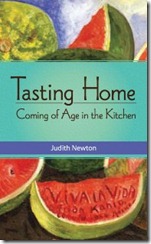
In this post Guest Blogger Judith Newton shares the back story about the food theme that serves to weave together numerous subthemes in her newly released memoir.

Newton headshot thumbMy memoir, Tasting Home, is about the healing and connecting powers of cooking and eating with others, a theme that came to me early in my life. Since as a child I’d found my mother’s meals to be the most secure form of nurturing I’d received, for me, as an adult, cooking became the only sure way I knew to create a sense of home. Tasting Home deals with some painful episodes in my life, but I wanted readers to experience the ways in which cooking helped me to establish emotional connections and a sustaining sense of joy. It is for this reason that the memoir is loaded with scenes in which I invite readers to the table, by recreating what the food tasted like, what surroundings it was eaten in, and the ways in which it bound me to others.

Tasting front cover thumbFood memoirs were popular by 2009 when I began Tasting Home. Some came with recipes and others did not. I decided to include recipes as a way of inviting readers to enter a communal space. Although I could share food experiences with my readers through telling my story, I wanted to give them a more lasting way of creating pleasurable moments in their lives. I think of recipes as gifts. I wanted my readers to feel what I often experience when I read magazines like Woman’s World — that I have entered a place in which women share stories, give advice, provide comfort, and hand on recipes.

Recipes also captured the changing cuisines and the spirit of the many decades I wrote about. Mastering the Art of French Cooking, for example, struck me as very much a product of the 1960s in the wild optimism and ambition it demanded of those who used it. (Julia Child’s recipe for Veal Prince Orloff went on for three pages when my mother’s recipe for spareribs in the 1950s took only one side of a 3 by 5 card.)

Recipes for the fifth section of the memoir, which covers the 1990s and 2000s when I was hosting buffets to build a cross-racial community on my campus, are often dishes that combine cuisines and that are easy to serve to a large crowd —goat cheese tamales, oven baked polenta with tomato fondue, Sonoma Jack cheese, and chiles en nogada, stuffed chiles in walnut sauce.

I also baked a lot from Martha Stewart’s Entertaining — lemon curd tart made with sweet Meyer lemons and tons of butter, pear frangipane with glazed pears on a bed of almond paste, a chocolate cake surprisingly flavored with whiskey-soaked raisins. Recipes helped the memoir become a book that invited readers to give parties, to bring exuberance to living, and to feel that , despite the suffering one might endure, life could be joyful, intense, and thoughtfully led. As one of my readers wrote about an early scene “you were in a moment of grace and you took us there with you.”

Huffington Post Food blogger Judith Newton is Professor Emerita at UC Davis and lives in the San Francisco Bay Area. On March 1, She Writes Press released her culinary autobiography, Tasting Home: Coming of Age in the Kitchen. The next stop on her blog tour is Eat, Drink & Be Merry Magazine.

Write now: pick out one of your favorite recipes that brings back memories and write the stories behind it.

Like Santa’s Bag of Presents

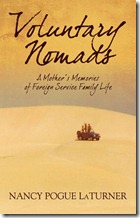
Santa's Choice“True, I’ve written a few stories, but I’m not a writer!” Such is the mindset of most beginning writers. In January of this year I posted an interview with author Nancy Pogue LaTurner based on her experience writing her memoir, Voluntary Nomads: A Mother's Memories of Foreign Service Life. I’m happy to welcome her back with this guest post building on the metaphor of Santa Claus as she outlines her writing path from novice to “real writer.”

Before beginning my memoir, Voluntary Nomads, I carried a weight around with me. Like Santa's bag of presents, I hefted my sack of stories. It was full to bursting and I needed to lighten the load by giving these gifts away.

Unlike Santa, with his centuries of expertise and magic delivery system, I worried that I was ill equipped to carry out my plan. When I began the memoir-writing journey, I didn't consider myself a writer. I could have, given my early experience as editor of my elementary and high school newspapers, columnist for my hometown weekly, and jobs throughout my working years that required writing grants, proposals, procedure manuals, and public relations material.

I didn't yet see myself as a "real" writer. Then I took a writing class, the first since college half a century ago. The teacher told us to introduce ourselves by saying, "Hello, my name is So-and-so and I'm a writer." It was embarrassing at first, and I felt like an imposter, but as the class continued over several weeks, I grew to fit the writer's costume and learned more skills to perform the author's role.

Faced with the instructor's scathing critique of my final short story in that class, I almost surrendered my name-tag along with any hopes I had of deserving the title "Writer." However, I surprised myself by having the courage to return to my story with a commitment to make it better. My persistence paid off. That story won a cash prize in an international contest sponsored by SouthWest Writers  and received Honorable Mention in the Writers Digest Magazine annual contest of the same year.

Even though more of my writing won other prizes and earned publication in two volumes of the Albuquerque Almanac and an anthology Wisdom Has a Voice, I still didn't see a real writer when I looked in the mirror. Like a department store Santa's promises, my sleigh full of gifts offered potential rather than actual achievement.

Even so, prizes and publication served as validation and infused me with energy to pursue my desire to make a book of my Foreign Service stories. I took more classes and joined critique groups. In 2009, NaNoWriMo (National Novel Writing Month) fever ignited the urge to write 50,000 words during the month of November. When I recognized the power of daily writing practice, I made January my own personal writing month and finished my memoir manuscript.

Voluntary Nomads, coverWith the first draft completed, I began a new adventure. On this journey, I learned what it takes to publish a book, and I discovered plenty about myself too. At the beginning of the trip, I couldn't have guessed that I would be able to handle the critical input of an editor, find a publisher, format a manuscript for both print and digital editions, turn color photos into black and white as well as crop and size them for both print and digital reproduction, or carry out the marketing of my final product.

I should have worn a Santa suit to launch my book. On that day, as I signed and distributed my gift of stories, I finally felt like the real thing. I recognized myself as a real writer at last and changed my identity forever.

Nancy Pogue LaTurner plays Santa to three grandsons when they visit her home in Albuquerque where she enjoys retirement with her husband, Fred. Nancy's current writing project is a suspense novel set in New Mexico. Learn more about her on her website and read my review of Voluntary Nomads on Amazon.

Write now: Write a story about your writing journey. If you’ve been writing for years, include some of the blocks you’ve faced and how you overcame them. If you are just beginning, write about your hopes and dreams, and how you will know you are a real writer. Explore elements underlying your belief that you are not yet a real writer. Regardless of your state of maturity as a writer, include your dreams for what you’d like to achieve with your writing.

Dancing in the Rain

PotatoFarmingElizabeth-Anne Kim recently published two collections of life stories, DANCING IN THE RAIN (free Kindle download Thanksgiving Day through Sunday, Nov. 25, 2012) and WHAT MY MOTHER DIDN’T KNOW, as Kindle Shorts. These memoir pieces were largely unplanned. In this guest post, she explains how incidental writing can turn into something surprising.

If you can be an accidental life story writer, that's what I am. I didn't mean to publish independently either; it just sort of happened.

After nearly four years in Korea, my husband and I transitioned our family back to the United States in the spring of 2010.  I found myself in a new setting with two children who needed me close at hand. Traditional career options were not going to work. I decided to try writing. I had previously done a bit of writing work, and I felt pretty confident in my ability to transition back and forth between genres.

What I didn't feel comfortable with was my ability to stick to a deadline all by myself.

ADHD runs in my family, and I desperately need deadlines, lists, and accountability. Finding writing groups I could join with two little boys in tow was difficult. Finding writing groups that met consistently was even harder! Fortunately, I ran across a life writing group at a nearby library that met religiously on the second and fourth Wednesday of the month. Proud to have found a group that would give me a solid writing deadline, I told myself I could learn to write memoir.

I did learn. Sharon's book, The Heart and Craft of Lifestory Writing, has helped. I am writing a full-length memoir—but this isn't it. Once again, serendipity stepped in. In response to a county library initiative, our life story group concept was expanding to other libraries. I started facilitating a life writing group at my own local library, and I needed some stories that were more relevant to the general population. Those stories essentially boiled down to my stories as a child and my stories as a parent.

Until that point, I had only blogged about my children, who are bright, creative, active little boys who also happen to have some mental health issues. Reactions from the writing group and others in the community cemented two things for me. First, many parents are grappling with mental health issues in their children now. Secondly, while there are plenty of heartbreaking memoirs out there and lots of self-help books for children with ADHD and spectrum disorders, very few people are writing about the joy found in life with these children. And that was my intent—to connect with others who were determined to enjoy their sometimes rather difficult children.

I began with four solid stories. I thought about building up enough stories for a complete memoir, a feat which would require quite a bit of time and would have no guarantee of eventual publishing success. I thought of my community. Those of us struggling now need encouragement now, not a few years down the road.

That conviction in and of itself, however, probably wouldn't have pushed me to publish independently either.

I was convinced instead by a combination of an upcoming project in our life writing group that I would like to convert to book form (and would therefore need a book to practice on first!) combined with Will Bevis's Kindle Shorts. If you haven't read Will Bevis's work, please do! It's hilarious, and I never begrudge the $0.99 I spend on it. In fact, I appreciate the brevity of the pieces. I will finish his work (and laugh the whole time).

With the project looming over my head, I began investigating the Kindle Short and Kindle Direct Publishing (KDP). It requires no initial monetary investment by the writer, takes care of all the sales taxes and online sales, and offers free promotions. It merely requires that there be no other electronic formats of one's e-book out there while that e-book is enrolled in KDP. So essentially, you can publish and un-publish in KDP. It allows me to get stuff out there in a format to test the waters. If I decide that I want to expand this material, which I think I'm going to do, it allows me to incorporate it into something larger by taking it down at the end of my contract period and putting it in a different format. It also allows me to test my voice as well as give a preview. As I write that longer memoir, I'm thinking of taking the stories that don't fit and putting them into a Kindle Short to use as a promotional piece later on. KDP will NOT work for my group project, but it has really allowed me to enter publishing at the shallow end of the pool. I'm extremely grateful for that.

Like many authors, I'm a little overwhelmed at the promotional end of the publishing process, but I think that KDP offers the perfect place to start. I have no initial costs to pay back, so my mistakes in promotions are not disastrous to my bank account. Because I'm confident in my stories, I'm satisfied that putting them out there, in whatever small capacity, will eventually help build my career, and I fully expect that as I publish more, the books will sell each other.

Elizabeth-Anne Kim, mother, writer, editor, teacher, records her personal thoughts at Kim Kusli, her pedagogical reflections at Umm, Teacher?, and tips for life writers at Lives in Letters. She is also currently coordinating the Share a Pair of Stories initiative.

Write now: Write about something annoying and go on to find the joy in it. Write about your most recent annoyance and include thoughts on how your attitudes might seem when viewed from another perspective. Empathize with yourself and gain a big picture attitude. Then turn your frustrations into a story we can all laugh along with by walking us through the whole situation with a few well-placed asides.