Showing posts with label Legacy. Show all posts

Don’t Wait Too Long

Ben-Melton-1998As I mentioned in my last post, my father died last month. The last few weeks I’ve become obsessed about writing family stories while digging through genealogy material and old pictures. I’m finding dozens of dots I never noticed before and discovering new insights with roots that reach beyond the Civil War.

One of the most touching things I’ve found is this emailed letter from my father that’s been lurking in my files for a couple of years. He must have memorized this piece. He recited it, almost verbatim, with a few new embellishments, the last time I talked to him, shortly before he died. I’ve been wishing I’d thought to turn on my phone recorder that day, but no matter. Turns out, I already had the transcript. I don’t think he’ll mind my sharing it as a tribute to him with a message for all of us.


Reflections on my life
Ben Melton, June 25, 2015

The most beautiful woman I ever met (1943):
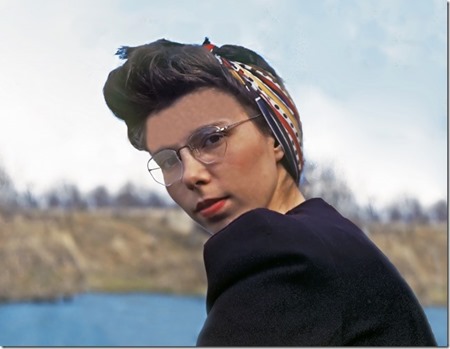
Marjie in scarf

The most beautiful (the same one) woman I ever met, with me, 50 years later:

Ben & Marje, 50 years later

I’ve led a wonderful life. 

I married the prettiest girl. My children, my grandchildren and my great grandchildren are good-looking, good-natured and brilliant.

I’ve had, and have some wonderful friends.

In a multi-faceted career, I’ve had some exciting, interesting and rewarding jobs.

I’ve shot the biggest deer I ever saw, caught the biggest salmon I ever saw, flown the hottest (in my day) bomber, and the biggest bomber, and done acrobatics in a fighter plane.

I’ve survived multiple encounters with the grim reaper in the air, on the highway and in the operating room.

Fortunately, I’ve had a few dull moments to round out the spectrum.

My life doesn’t owe me a thing.  It has already delivered more than I could possibly ask for.

Why am I telling you all this?  Because if I wait too long, I’ll lose the opportunity to express my awe and gratitude for a richly rewarding life!

Love,

Ben sigBen's Snoopy Plane

gDad


In that recent phone call he added, “I’ve done everything I was ever afraid to do except jump out of an airplane. I didn’t do that when I had the chance because I’d hurt my foot and was afraid I’d break my leg when I landed.” Reality-based fears like that are worth respecting!

At 187 words, this letter is a clear example of a mini or micro-memoir with a theme of gratitude. It’s also a love story and a celebration of life. It hints at obstacles overcome. It touches on triumphs with faint whispers of shadows, which he did not dwell on.

He wrote other stories too, but this is his capstone. It could have been his obituary if we’d remembered we had it. What a wonderful legacy he has left. I’m in tears all over again.

I hope this can serve as an example that less may be more. Pay special attention to his last words:

 Why am I telling you all this?  Because if I wait too long, I’ll lose the opportunity to express my awe and gratitude for a richly rewarding life!

It doesn’t need to take a lot of words. Now, get those fingers flying and write on!

A Humble Story Lives On

Hettie Stein never dreamed hundreds or thousands of people would learn about her life when she hand-wrote her lifestory on forty pages of notebook paper sometime around 1975. She wrote separate, personalized copies for each of her three grandchildren, my husband being one. We have not seen either of the other two copies, but I scanned ours, saving the images in a PDF file and also transcribing them into a Word document for easier reading by later generations.

Now the world can read about Hettie’s life on Amy Cohen’s blog, Brotmanblog: A Family Journey, beginning with Part 1 and share our delight in these accounts of a long-gone way of life in simpler times.I thank distant cousin Amy for finding our family and pulling so many resources together into a compelling story.

As you can see from the graphic below, excerpted from Hettie’s story (which I gratefully borrowed back from Amy’s blog), the writing is as primitive as a Grandma Moses canvas in both form and message. As Hettie explains in her story, she chose to leave school after eighth grade (in 1898). Her reasoning was that like other women of her day, her lot in life was to marry and raise a family, and no housewife needed more book learning than she already had, so why exert herself?


This lack of formal education shows in her writing, but that did not deter her for a moment. Thank goodness! This humble, unaffected story reflects her authentic heart, big as all outdoors, and the fact that she wrote it is the sign of a satisfying life. She never had material wealth, but what she had was enough. I have never met a kinder, more positive person. Hettie loved everyone with childlike enthusiasm, and was always up for an adventure. I feel blessed for having been part of her family.

Hettie decided one day to write these stories. She just sat down and did it, though it took her months to finish each one. She wrote each story in the form of a letter to that grandchild, warmly laced with references to memories of “your mother” and “the time you and I …”. We have not seen the volumes she wrote for her two granddaughters, but presumably they cover much of the same material, customized with slightly different words.

She died in 1987, more than a decade before I preserved her work for the family and the world. Now it’s treasured by great- and great-great-grandchildren and will hopefully be passed down even further.

I often mention her amazing accomplishment when I’m encouraging people to write. “If Hettie could do that, anyone can. You don’t need to produce a literary masterpiece. Whatever you write is better than nothing and will be treasured by generations to come.”

Hettie wrote by hand, on the simple paper she had. She made a manila paper folder to hold the pages and fastened it all together with brads. Even without those manila covers, in only a few years, the acidic notebook paper had begun yellowing. Scanning put a halt to that process.

If by some amazing coincidence, you decide to write a legacy manuscript by hand, acid-free paper is easy to find today. More likely you’ll sit down at a keyboard and print acid-free copies. But even if you write on unfolded paper bags or the backs of envelopes, your descendants will treasure your work.

Points to ponder: If you’re trying to get traction, what obstacles prevent you from “just doing it”? Are you concerned that you writing won’t measure up and your family will laugh or sneer? How good is “good enough”? If you are well on your way toward finishing a story, ponder how satisfying that feels.

I Want My Grandchildren to Know I Wasn’t Always Old

Old-woman-sagI watched as an old woman entered the room, leaning heavily on her cane. Although each step seemed to be a huge effort, her sagging figure was elegantly dressed, and her face, a road map of wrinkles, tastefully made up. She sat heavily in a seat near the door, in the front row, not far from where I stood, waiting to present a book talk about The Heart and Craft of Lifestory Writing.

I begin these programs by asking everyone why they are interested in writing their lifestories. I get a variety of predictable responses: “I have a few memories I want to write down for my kids” ... “I do genealogy and want to write about my family” ... “My children are on my case to write things down” ... “I’ve had some experiences I learned a lot from that may help other people.” These are all good reasons to write.

This woman had a new one, and it brought down the house. “I want my grandchildren to know I wasn’t always old!”

Her comment resonated with us all and led to an animated discussion of the way children think of anyone who isn’t free to roam around and play all day as old. How hard for them to imagine that we once saw shapes in clouds and marveled at bugs crawling across a dandelion bloom. Or that we played tag with our friends and told secrets on sleepovers or agonized over dropping the ball at second base. Or that we could ride our bikes across town when we were twelve or hang out in the woods with our friends with no adult around.

What can we do to remedy this?

WRITE ABOUT IT!

Write about those clouds and agonies and all the fun things we did. You don’t have to write long, involved stories. Write random memory paragraphs for now. Use these tips to get started:

  • Make a story idea list specifically for childhood memories. Include sensory elements like the feel of the wind on your face, the way your dark hair felt scorchingly hot to the touch on a sunny day, the scent of lilacs or pine sap on warm days, how your fingers went numb building snow forts.

    Or just start writing and let it all flow out as it will. Then go back and fill in the blanks. There is no “right” way to write this stuff.

  • List both friends and foes. All kids have both friends and people who irritate them. These people may be other kids or adults – teachers for example. Write short stories about these people.

  • Include elements of daily life. How did you get to school? Did you really walk three miles through three feet of snow, uphill both ways? Did you walk alone or with friends or siblings? Did you ride a bus for an hour?

  • What did you eat and wear? The average American diet has changed dramatically over the last fifty or seventy years. Do your grandchildren know about canned Spam? And wearing suspenders with flannel lined jeans that had matching flannel shirts?

  • Tell about your toys. Yoyos, jacks and jump ropes may seem exotic today. What about soapbox derby cars? Clamp-on roller skates with keys? Your favorite dolls or toy cars or cowboy guns?

  • Include a mix of triumphs and disappointments. It’s okay to brag, especially about childhood exploits. Especially if you balance this with remembering when you didn’t get the part in the play, that cute girl turned you down for prom, or your third-grade teacher unfairly kept you after school for passing notes when it was really someone else.

  • Take them to school with you. Don’t just tell about school. Show them the school. Use dialogue. Show them what the room looked like. Let them tag along to art class or assembly. And definitely take them along to recess!

  • Write about your own grandparents. Tell how you thought they were old and all the things you did with the.

This list could include at least 100 more items. I hope it gets your imagination flowing and your fingers moving. If you need help with details about toys, games, or anything else, Google is your friend.

It’s fine to make an anthology of random loose pieces. And, after you have a couple of hundred short-short flash memoir stories, you may find a way to string them together into a cohesive memoir. Either way, your descendants will love this legacy.

Write now: Get those fingers moving and let your grandchildren know you weren’t always old!

Respecting Your Writer’s Voice

Writer-Voice“It’s critically important to find an editor who will respect your writer’s voice and not try to change it into her own.”

Electric agreement surged through  the room during a Penn Writers self-publishing workshop offered last weekend by acclaimed Pittsburgh author Kathleen Shoop. Heads nodded, and a ripple of “Mmm hmm” rose and fell.

I exchanged nods with friends sitting on both sides. Then a memory tempered my thought. Ten years ago a group fondly referred to as “angel editors” banded together to help a mutual friend – I’ll call him Will – hammer a complex memoir into publishable shape..

Aside from structural concerns, as editors we faced a delicate challenge: Transforming Will’s voice from a stilted style with big words and convoluted, page-long sentences into something that flowed smoothly into readers’ eyes, ears and brains. Will finally agreed that we needed to streamline the language without compromising the message or completely losing his voice. The resulting book went into a third printing.

Will’s purpose for his book was to inform a wide, general readership. Thus his voice had to be changed for reader appeal.

Conversely, when compiling a vast array of drafts and notes my mother left behind, I changed only documented factual mistakes, a few flagrant grammatical errors, and typos. Since she was no longer around to discuss style and voice, I left things like her strings of dots and signature clichés so it sounded like a letter from Marje.

Marje’s purpose for writing was to leave a legacy of personal and family history for posterity. Leaving it in her words and phrasing was an additional way of documenting the writing style of her generation of women.

Where is the balance? These are two extreme examples. In general, when I edit a story, I find ways to smooth rough edges and make words flow more smoothly. My edits are only suggestions. My fix for a phrase that sounds awkward to me may grate on the author’s ear.

The extent to which I change things depends in large part on the author’s purpose. If I’m helping a friend finish a family project, I’m less inclined to tinker. In my opinion, a bit of colloquialism and cliché lends authenticity. If an author hopes to sell truckloads of books to the public, buckets of red ink may flow.

So, you see, how much an editor (that includes friends and critique groups) should mess with your voice depends on your purpose. If you plan to appear on stage, appropriate makeup will emphasize your message. Stage makeup is out of place on a mountain trail.

Experience and practice are additional factors. A polished writing voice is not necessarily the sign of an expensive editor. Writers follow a learning curve much like musicians. Beginning piano students do well to tap out Chopsticks. Ten years later, they may perform Beethoven sonatas with ease. In between lie thousands of hours of practice with gradual improvement.

Your writing voice will likewise gain tone and force as you seek constant feedback and work to improve. That does not make your voice less authentic. It reflects the years of practice you put in and becomes natural and authentic for you.

As you continue down your writing path, you’ll discover that each story has a unique voice. Some are humorous, some sassy, some sad or mournful. Let your stories whisper their way, and your voice will grow in range.

Write now: if you have some, read a few unchanged stories you wrote several years ago and consider how you might change them today. Even if you’re a beginner, start a practice of keeping versions of stories to help keep track of how much your writing has developed. If you change a story after more than a year has elapsed, rename it to preserve the old version so you can compare. Think of this as your growth chart and celebrate your continuing improvement!

Eternal Optimists Piss Me Off

RoseColoredGlassesAt the risk of sounding judgmental (how human would that be?) I’ve got to admit that when I continually hear nothing but rosy accounts from the same person, I grow suspicious, even angry at times.

For example, an elderly woman I knew many years ago never had anything but the kindest, nicest things to say about people, even about people I found monstrously arrogant or rude. She was always smiling and cheerful, even in her nineties when I knew she had aches, pains, and countless physical problems and not everyone treated her well. By her account, people were always delightful, and her cheerfulness never ended.

Get real, Gertie, I thought. Admit it. Some of the cherries in that bowl are rotten.

Another example is an acquaintance who seemed authentically forthright and open. Until serious illness set in. At first, rosy Caring Bridge accounts of awesome friends and caregivers, minimal side effects, and even the blessing of illness seemed brave and spunky. Later, when no post ever mentioned the least affliction of the spirit, I became suspicious. These sound like press releases from the Ministry of Positive Thinking and Eternal Gratitude. What's it really like? What are we not hearing?

Snarky bitch am I not? But those reports increasingly reeked of dishonesty. I became increasingly convinced I was not reading the whole story. I felt disrespected and misled. While happy to hear good reports, I wanted to read about the challenges of remaining positive in spite of the odds, in the face of obstacles. I wanted survival lessons "just in case."

Now, lest you decide I’m totally lacking in compassion, please understand that I realized both these people presumably held back for good reasons. The old lady belonged to an ethnic minority and learned from her first breath not to make waves. My annoyance with her was fleeting. The ill acquaintance was probably hanging on by fingernails, frantically stomping all negative thought, hoping thereby to promote healing for self — and also for the world. This person is like that. Genuinely compassionate and caring, expecting the best of others and determined to set a great example by walking the talk

But it pissed me off. Reports — STORIES, that is — that lack conflict, lack a bit of appropriate, expected pain, suffering and angst don't ring true. Authenticity holds my attention, especially authentic transcendence. You can't transcend what you don't experience and unless you give a fuller picture we don't know but what you had a fortunately light case of whatever, sort of like being passed over by a blizzard after dire forecasts.

I'm not perfect. I obsess, fend off fear, dread and demons of doubt and despair like anyone else. I bite back now and then. So the last thing I want to read or hear about is someone so good, so saintly, that they don't have these carnal thoughts or problems. That makes them unattainably better than me. I must cut them down to size or feel diminished myself. Unfortunately, cutting them down to size makes me feel rotten, not encouraged.

So here's the irony for lifestory and memoir writers:

If we record only the light sides of ourselves, our noble accomplishments — the sides we want to be remembered for and examples we want to provide, we come across as plastic stereotypes who set an unattainable standards. Through perceived insincerity, we run a great risk of pissing off readers.

To claim admiring respect spin around in front of the camera, for at least a quick rotation, and prove that you are/were human. It doesn't have to be much — only what's required to flesh out the story. A few lines of inner reflection may be enough, if they support the story to help readers understand your point and person.

Only vampires and liars lack shadows.

Write now: pull out an overly bright story and add a few lines of shadowed reflection for depth and credibility. Readers will love you for it.

Writing Prompts Aren’t Just for Beginners

Little-ShaverNo matter how long we’ve been writing, free writing, writing practice, and writing prompts remain a powerful source of inspiration. Some prompts come from books, some from websites, some from writing groups or friends, but some of the most important come from our thoughts. I was reminded of this when I found the following email snippet from my writing buddy, JS:

I was thinking last night about shaving and decided I’d write a little bit about it. I thought maybe I’d write about ten sentences. As soon as I started writing, I remembered all sorts of things I hadn’t thought about for years. I remembered how my father used to use his shaving brush to stir up some lather in his mug of shaving soap. He’d lather me and let me pretend to shave with a bladeless razor. I remembered starting to shave for real, lots of different kinds of razors, blades and electric, and barbers I’ve gone to, and how they nearly shaved my head in the Army, and all that stuff. I wrote for nearly and hour and really had fun with it. There’ some great story starts in that mess. 

This email snippet also reminded me that listening to those tiny whispers when we start thinking about “the olden days” can yield fascinating stories. It’s also great sport, like having a family reunion with memories and you get to tell al the stories. It can also lead to fame, if not fortune. JS lives in a retirement community that publishes an occasional anthology of poems, pictures and pieces of work written by residents. He submitted an essay based on the ramblings in that memory dump. He’s become a local celebrity there and heard lots of shaving jokes and stories for some time after his essay appeared.

Snippets like his are rewarding for several reasons:

  • Without his essay, his great-grandchildren may never know about shaving mugs and brushes and blades that were sharpened for reuse.
  • Writing about memories like these helps focus on them and renews a sense of connection with the past.
  • Collecting a number of related memories can help you see patterns and connections you never noticed, sometimes solving several minor mysteries of life.
  • Sharing memory stories builds community.
  • It’s fun!

We all have little daily things that bring back memories. My kitchen is haunted with memories. Two of my three cast iron skillets were wedding gifts from my grandmother. I’ve used them nearly every day for over fifty years now and thought of her nearly every time I pull one out. I have pie plates, tea strainers and other gizmos of my mothers. Peeling potatoes or carrots, making meatloaf or enchiladas, even filling the sink with soapy water brings back memories. Some of them go back to childhood, some are more recent.

I’ve written about some. After reading that email from JS, I’m motivated to write more about daily life, probably contrasting then and now.

In fact, I just stopped and filled a long Evernote with prompts that sprang to mind that I can use some morning soon when I sit down to journal and inspiration has run dry. That happens.

Write now: Call up a recent memory of times past and things you used to do. Jot down a few key concepts, then spend ten minutes (more if you get into the swing of things and don’t want to stop) and write about one of them. Start paying attention to those mental riffs and capture some writing prompts. Go back over your free-writing material and find some juicy material to develop into an essay or story.  

Photo adapted from work published by Phyllis Buchanan under a Creative Commons license.

Piles of Unfinished Stories

Boy-FishingMy mother a woman of great vision, imagination, and versatility. She was also a woman with many unfinished projects. She was a painter and an renowned stained glass artist. She made glass sculptures and sand-blasted glass creations, did batik painting, created wearable art, and occasionally mixed several media in a single project.

After she died, I looked through the sizable stack of water color pieces she never had framed. Some were obviously practice or experimental pieces. Some seemed unfinished. Others may have been finished, but she hadn’t framed or hung them. How sad, I thought, that she had left so much unfinished work. With her talent, it seemed that she should have had more to show for her efforts.

Today I see that scrap pile quite differently. As I look around the houses of my siblings and children, as well as my own, I see her art hanging in places of honor. And now I recall that her work hung in many galleries, and lots of pieces sold.

I compare her work to my writing. Both are creative, but different in a fundamental way: words don’t disappear like a sold painting. I keep it all. And unlike art, story scraps can be revised and recycled.

But our work is alike in another way. I have a huge and growing pile of unfinished stories. Most will never be finished. Perhaps the thought was incomplete. Perhaps I started it awkwardly and failed to find a way to smooth it to a finish. Maybe I got distracted halfway through, lost interest, or covered the subject in another story. Whatever the reason, I’ve kept those scraps. I may finish them one day. I may combine some into longer stories. Collectively, they record my progress as a writer.

I also keep them because I practice what I preach: “Any lifestory you write is better than writing nothing.” And, “Someday somebody is going to appreciate that scrap.” Who knows whether anyone will ever take the time to read all the stories on my hard drive? All I know is that if I delete anything, they won’t have that choice.

If anyone does go through it, I no longer care what they think of my pile of unfinished and unpublished stories, and it no longer matters to me how many pictures my mother may have sold. I’ve come to understand the joy in the simple act of creation, and that it’s often enough just to get those words on paper, whether anyone reads them or not.

But I know that Mother would be happy that her work will be admired by her family for several generations to come as it is passes from one to the next. And although it’s enough to write for my own satisfaction, I do hope my stories will be appreciated at least as long as her art.

Write now: Read through some of your old stories and find inspiration for new ones, or ways to move a few along. But more than that, reread for your own pleasure and joy.

Real Writing, Rough or Polished?

Coal&diamondAuthenticity is a big issue for lifestory and memoir writers and daunting to consider. Which is better and more authentic, those first rough drafts, or stories you’ve polished to a flawless sheen? After wrestling with this question for a seeming century, I’ve come to the conclusion that they are both authentic and real.

A family example

My mother began writing her autobiography late in her life, and her health failed before she finished. After her death, I pulled a thick folder of drafts and notes into a coherent, unpolished, story that gives a comprehensive picture of her life before she met my father. I shudder to think how much would have been lost if she’d spent time polishing!

My father is the opposite. He polishes every word. His stories are magnificent, and we have a dozen of his hundreds.

If you focus on facts and creating a legacy of history, rough works. If you focus on art, polish matters. In my opinion, both are authentic. Rough reflects honest effort to connect. Polish reflects dedication to order and esthetics.

Rough serves well to convey passion and spontaneity. In an earlier post, “Stories Around the World,” I wrote about LifeMemo.com, a site rich with real stories from everywhere. I keep going back. Raspy rawness in those rough outpourings moves me intensely. Strong emotional connection clings like a cocklebur.

Polish slides smoothly into my heart with incisive focus. Poetry may fly over my head, but lyrical phrases in poems or prose resonate within me like fine crystal bowls.

Both work. The key to the power in either case is to write from your heart. No hedging, no hiding. If you are going to write it, write it! The message I get from raw writing is that those people trust their message enough to put it out there “as it is,” messiness, and all. Like poetry, not all messy stories work, but heartfelt stories transcend messiness.

Polished writing clarifies and refines the message. Many find joy in finessing a phrase with robust writing skills. We want to tie silken word ribbons around readers’ hearts. We study, seek feedback from multiple sources, and practice until fingers and minds grow numb.

Raw writing gets memories out where they can be seen, shared, and analyzed. Polishing stories develops insight and refines your view of the world. Investing the effort to grow as a writer delights readers and shows your dedication in developing your gift.

Lumps of raw coal provide warmth, power and comfort. Diamonds delight. In the end, I see it much like the difference between Sunday singers’ heartfelt hymns and operatic arias. Each has a purpose and place, and each appeals to different tastes.

Based on my family example, if you must choose, and you have any descendants, I urge you to focus on rough quantity first. After you’ve assembled that legacy, be creative. Edit and polish to your heart’s content.

Write now: read stories on LifeMemo.com, paying close attention to how they affect you. What elements do you most strongly connect with? How can you tap into that power in your writing? Pay back the pot by leaving a simple story of your own for the global tribe.

How Do I Start Writing My Lifestory?

q's.pptx

“I want to tell my grandchildren about my life, but when I sit down to write, my hand freezes and no words come  out. I don’t know where to start or how to do it. What can I do?”

“Do you use email?”

“Yes.”

“Try this: Open a new email message and write a long email to your grandchildren. Start at the beginning. Tell them when and where you were born and who your parents were. Then start telling them about things you remember from early in your life. Tell them what things looked like and what you thought and felt about them, why they mattered. Write about friends you had and important people in your life. Just keep writing, talking from your heart in email, just like they were sitting there with you. You can send the email, or copy it and paste it into Word. Or both. Can you do that?”

“Yes, I think I can do that. That sounds easier than writing stories!”

When people hear that I teach and write about life story writing, confusion often tumbles out. Many people have tried this email approach with good results. A few write by hand, sometimes on stationery – remember that lovely old letter paper? That works too.

Something about writing letters seems less intimidating than writing a story. You can keep using paper to write more stories, or switch to Word.

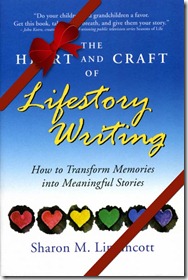
I included dozens more tips for getting started in The Heart and Craft of Lifestory Writing, like  setting up a folder in My Documents (or wherever you keep your Word documents) named “Life Story” or something similar. Save drafts of your stories in that folder so you can find them later.

For now, don’t think about editing. Keep writing and adding to the pile. This is one time that quantity trumps quality. Rest assured that you are always going to start with rough drafts. Even professionals with decades of writing experience write messy first drafts, so you are in good company.

The reason for quantity is to capture as much as you can while you are able. My mother began writing her life story around the time she turned 70. Her health soon declined ending her writing. After she died, I found piles of notes and drafts. I had to piece them together, but we have a complete record that stops just when she met my father. We can fill in the rest, but the early stuff was totally new. If she’d stopped to polish early drafts to a shine, those fascinating stories would be lost.

If you need help remembering or knowing what to write about, Google “lifestory writing prompts.” You’ll find a million.

Now, get those fingers moving!

Write Now: whether you are just starting or you’ve been writing your lifestory or memoir for years, open a blank email window and write about your birth and first year. Everything you write will be from records like your birth certificate and from hearsay. That’s okay. Write it the way you heard it, and include any thoughts it brings to mind. You may be surprised what comes out in this informal setting.

Resurrecting Memories

Coltsfoot

This afternoon I took a walk in search of the first coltsfoot blooms of the season. They usually appear on March 21, give or take a day, but this year winter has hung on longer than usual, delaying their appearance more than a week. This winter has been a difficult one, filled with reminders of our mortality. Never have I been more eager for the appearance of spring!

I was even more eager to see them today after receiving an unexpected phone call from my brother in Richland, Washington. Kathy Utz, a dear friend I’ve known for 43 years, died a couple of weeks ago. The news felt like a sandbag hitting my solar plexus. I had no idea she was ailing, and I’d planned to call her later today to wish her Happy Easter.

Since my brother knew no details, I called a mutual friend to get the rest of the story. Talking about our grief and sense of loss helped us both. Story is like that. It’s how we make sense of things, individually and collectively. I had to know more details to calm my shocked brain, and telling the story again gave my friend an opportunity to deepen her sense of it.

Going for a walk and finding the flowers helped too, in an odd way. I usually find the first blooms on the uphill side of the road on a sunny curve about three-quarters of the way along the half mile walk  to the stop sign. I found none on the bend where they always make their first appearance, confirming my suspicion that this winter will never end. As I turned around at the stop sign, I glanced down the hill on the other side and breathed a huge sigh of relief. My spirit soared as I saw them blooming in abundance in a new location, out of sight from the road. After spotting them, I continued to find blooms every few yards all the way home.

Buoyed by this discovery, I realized the need to get out of my mental rut. I began thinking again of my friend and all the adventures and we shared and plots we concocted. I determined to come home and begin writing as a tribute to her and a way of healing my grief.

I’ve already written about some of those experiences, like sitting in her kitchen feeling like a beached whale the afternoon before my daughter was born, two weeks late. I’ve written about campaigning with Kathy for the Washington State Equal Rights Amendment and going to trashy movies together as couples and trading babysitting and lobbying to bring liberal arts classes to the University of Washington extension campus in our community. A long list of other stories awaits the telling.

Although our paths diverged as she became more involved in politics and we followed separate career paths, we always stayed in touch. She’s the only one I have seen on every visit to Richland since we left in 1985.

Writing “our” story will help me cement those memories, and exploring some deeper meanings is sure to spark new insights. I will send some of the stories to her sons as a legacy. They are part of her history that she never did write.

Finding the coltsfoot in a new location inspires me to try new perspectives and look for new meanings in unexpected places as I write. I will not only resurrect those memories, I’ll turn them to gold, the color of coltsfoot.

Write now: think of the friend you’ve known the longest and make a list of adventures and experiences you’ve shared. Include simple things like chatting over coffee or talking on the phone every day. Record any disagreements or conflicts you may have had. Select a few items and write the stories around them. Include your assessment of the situation at the time, and how your thoughts and understanding have changed in the interim. Explore what this person has meant to you and how she or he affected your life. When you finish, share a story or few with your friend, or surviving family members, as the case may be.

Documentary Memoir

MathieBooksWhen I first began writing lifestories and teaching workshops to help others do the same, my emphasis was on preserving family memories and creating a legacy of personal and family history for future generations. That picture gradually enlarged to include documenting your way of life in what will soon be times gone by.

In spite of a growing emphasis on transformational, healing and confessional memoir, historical documentation still serves a valid and important purpose, one that should not get lost in the scramble to bare more psychological skin. Well-written documentary memoir can be both fascinating and thrilling.

British author Ian Mathie is remarkably skilled at this. I read each of his four  engrossing volumes of memoir straight through. I was unable to tear my eyes from the page as I read about his experiences during the 1970s in various parts of northern Africa where he worked as a water engineer for an unspecified British Foreign Service agency. Rather than commuting from cities, he preferred to live in remote villages among the people while teaching them to dig reliable wells with natural filtering systems to provide a sustainable, safe water supply. He began schools with native teachers to spread these skills to other areas.

At times he was in the jungle. Other times he was in one desert or another, and occasionally he did live in cities. He encountered witch doctors, tribal chiefs, and ordinary villagers. He was invited to dinner by four different presidents, including Mobutu. He drove all over in Land Rovers, rode trains and camels, and often relied on his small Cessna. He was a genius at working the system.

But these are not books about “The Further Adventures of Ian Mathie.” Despite the fact that his life was indeed filled with constant adventure, the emphasis in his stories is on the people he encountered, the people he came to care so deeply for, his friends for life — which unfortunately wasn't long. Most of those people and cultures were victims of one revolution or another.

The books document lifestyles of people who had highly evolved cultures, ideally adapted to an environment which was already endangered when he lived among them. My understanding and respect for the wisdom of prewestern, native cultures soared, and I expect enthralled anthropology students will be citing Mathie’s accounts in piles of research papers for decades.

Few of us have stories as inherently exotic and powerful as Mathie’s, but even ordinary life can be described in compelling ways and may seem exotic to your offspring  in fifty or one hundred years. Imagine how fascinating it would be to read the details of your great-great-grandparents’ lives more than 100 years ago. Even if all mine did was haul in the harvest and milk the cows, I’d love to know how they went about it.

Each of Mathie’s volumes has a different structure, so each has a lesson to teach on how to write as a bonus beyond the amazing content. All four of his volumes are available in print on Amazon. The first, Bride Price, is now also available in all eBook formats as well as text documents on Smashwords, and the other titles will soon follow.

Write now: write a description of your day today (or a recent one of your choosing). Rather than simply listing things calendar style, describe how you did them. Pretend you are writing for someone from 200 years ago and explain what a dishwasher is and how it works. What sort of blankets are on your bed. What does your house look like? What did you do at work if you went there? Fill them in, and tell how you felt about each activity. You may find your days are more interesting than you’d realized!

Give the Gift of Story

book-giftIf you, like Santa, are making a list and checking it twice, here’s a gift idea for adult relatives: stick a copy of The Heart and Craft of Lifestory Writing in their stocking.

This gift is a way of urging them to record their stories for you and the future. While you’re at it, order a copy for yourself. While you may not be able to crank out the story of your entire life in the next six weeks, you can begin now with a single story or two. If you write two pages a week, you’ll have six hundred pages in two years.

Amazon has dozens of books explaining how to write lifestories, and all have merit. In fact, I encourage anyone who is serious about writing lifestory, autobiography or memoir to read several.  I also encourage them to begin with mine, which is the most comprehensive I’ve found.

In addition to the usual guidelines for writing stories, here’s a list of features that set The Heart and Craft of Lifestory Writing apart:

  • Start-to-finish instructions on planning writing projects, whether you want to write a simple story about a single incident or a complete history of your life.
  • Guidelines for finding your personal writing style, whether you are a spontaneous binge writer, or someone who likes an orderly, little-bit-at-a-time process.
  • Simple explanations of elements that bring stories to life like description, strong beginnings and endings, including personal reflection, and more.
  • Concise overview of grammar and punctuation. Everything the average writer needs is covered in a one place.
  • Layout guidelines with step-by-step instructions for using your computer to prepare attractive printed pages.
  • Self-publishing overview explains the basics of preparing finished volumes of stories or memoir for uploading to free Print-on-Demand (POD) publishing sites like Amazon’s CreateSpace.
  • Extensive list of writing prompts to trigger memories about any stage of life.

Please understand: this book is not intended to be read cover-to-cover, non-stop. It’s a user manual for the writing process. Read some, then write. Then read more. Repeat until your project is finished. Then read again and start another volume. It’s addictive!

Write now: click here and enter ordering information for several copies of  The Heart and Craft of Lifestory Writing! Then write notes for each recipient explaining that you’ll never be able to remember or tell their stories the way they do, and you hope they’ll write them down as a legacy of family history. Explain that it’s okay if they write these stories as a series of letters. The book will show them how to get started.

How I Realized that Poetry Alone Was Not Enough to Convey the Story in My Memoir

Guest Post by Madelyn Sharples

dust-jacket-cmyk.epsMadeline Sharples’ memoir began as a collection of poems, that she thought would suffice to record her memories of living with her son’s bipolar disorder and subsequent suicide. In this invited post she explains how she realized poetry alone would not suffice.

My memoir, Leaving the Hall Light On: a Mother’s Memoir of Living with Her Son’s Bipolar Disorder and Surviving His Suicide consists of a mix of prose, poetry, and photos. And if I could have put music into it I would have.

I originally dreamed about publishing a memoir in poems. I had a finished poetry manuscript early on and since poetry came out almost miraculously from my pen soon after my son died, I thought telling his and my story in poems would be most appropriate.

But I was soon convinced the poems could not stand-alone. My book would lack the details, characterization depth, and the thoughts and feelings of my husband Bob and surviving son Ben that were necessary in the telling of our whole family’s story. The poems provided the chapter themes and emotional impact, the prose provided the details and descriptions, and the photos helped to make the story seem more real.

Early on my son Ben introduced me to a former literary agent who asked to read the poetry manuscript. After her reading she suggested I use the order of the poems as a way to organize my book’s chapters. And that organization stayed mostly intact in the final book manuscript. This young woman also generously gave me writing prompts that helped me flesh out my story in prose. I worked with her in developing the first draft of my memoir for about a year.

As I began to introduce more prose into the manuscript, using my huge supply of journal entries, pieces I wrote in various writing classes, and my advisor’s wonderful writing prompts, I formed chapters each starting with a poem. Then I began to worry that interested agents would reject my book because of the poetry. That concern was not unfounded. As I looked for appropriate agents I found more and more who did not want to be involved in poetry books in any way. I even work-shopped the book and was advised by my instructor to take the poems out.

I also remembered the words of a good friend. She told me no one had the right to tell me that I had to take something out of my book if I, the author, felt it belonged in it. So, I kept the poems in although I didn’t mention their existence in my query letters. I thought I’d discuss the poetry later if it ever came up. Even then I was still waffling about leaving them in or taking them out.

Although I never found an agent to represent my book, I happily contracted with a small traditional press. My publisher asked me to revise my book in many ways, but her only suggestion about the poetry in the book was that I should add more. She resonated with my final decision to include poetry in my memoir.

Madeline-SharplesMadeline Sharples studied journalism in high school and college and wrote for the high school newspaper, but only started to fulfill her dream to work as a creative writer and journalist late in life. Her memoir, Leaving the Hall Light On: A Mother’s Memoir of Living with Her Son’s Bipolar Disorder and Surviving His Suicide, tells the steps she took in living with the loss of her oldest son, first and foremost that she chose to live and take care of herself as a woman, wife, mother, and writer. She hopes that her story will inspire others to find ways to survive their own tragic experiences.

Madeline’s mission since the death of her son is to raise awareness, educate, and erase the stigma of mental illness and suicide in hopes of saving lives. She and her husband of forty plus years live in Manhattan Beach, California, a small beach community south of Los Angeles. Her younger son Ben lives in Santa Monica, California with his wife Marissa. Click to visit Madeline’s blog, Choices, and on Red Room.com.

Read my Amazon.com review of Leaving the Hall Light On.

Write now: if you write poetry, find a poem or few and write a narrative version of the story they tell. Those like me, who lack the poetry gene or muse, can find a photo and do the same exercise.

Where’s the Story?

Getty Villa bustOver a million people visit the Getty Center and Villa in Los Angeles each year. I’m one of them. I’ve been to the Center a couple of times and last week I visited the Villa. Like other visitors, I’m blown away by the splendor of both places. The architecture is magnificent and objects and art are displayed with great care and respect.
Nevertheless, I have the sense there, as in other museums, that something is missing. As I circled the last roomful of antiquities in the Villa, I had a sudden flash of insight into what that missing element might be. My friend and I had just confessed that the prolonged standing and ambling on hard floors has become increasingly difficult over the years. Our backs were screaming for a break.
“It’s all blurring together at this point,” she said. I concurred. I also realized that it had been blurring together all along for me.
“These objects were never intended to be viewed this way,” I blurted. “They lack context in here. They are as dead as the mummy in the other room.” I glanced at a display of household utensils and my eyes fell on objects that looked like small sauté pans with ridges in the bottom.
“I find it mildly interesting that the Roman glitteratti used things like this to wash their hands at meals, but still …” I paused briefly as a thought took form. “There’s no story here!” I blurted.
Her eyes widened in sudden recognition of this obvious fact.
“These objects were never intended to be viewed this way. They were made for a purpose, and when we look at them one after another, apart from their context, they barely hint at the dramas they were involved in. I want to know who dipped her fingers into that bowl. I want to know what she was doing at the banquet, what she ate, who she talked to about what, what she wore, how many outfits she had to select from … I want to know about the servant or slave who brought that bowl to the guest and what his or her life was like. I want to know about the life of the people represented by those statues, and what others thought of the statues,” I added, pointing to the room we’d just left. 
Some of these objects fire up my imagination with hints of story, but it’s all based on modern accounts by historians making guesses little more educated than mine. Other objects hint at creative stories of design and implementation. I fill in a few blanks with imaging's of my own, but they raise more questions than they answer.
Perhaps we’re becoming jaded, my friend and I concurred. Perhaps we’ve lived too long in an era of full disclosure and developed an over-reliance on realistic depictions in any media.
As I left, I realized yet again that my mind had been craving story to add relevance to what I saw, to compare it to what I know and store it away. When the “real” story isn’t available, I speculate and fill in the blanks with fabricated context and story – or I move on and ignore the object.
I also realized that there’s nothing inherently wrong with this. Those objects did stimulate my imagination. I could weave some of those details into stories of my own making. But that’s not nearly as satisfying as knowing the “real” story, and that’s what I insist on in reading material. If a story has large holes, if it’s obviously leaving out key details and context, I’m unlikely to finish reading – unless the story is about a relative and I know enough context to fill in the blanks. That won’t be the case if too much time has passed.
Write now: pluck a couple of memory fragments of objects from your mental storeroom. Find pictures of them if you can, otherwise describe them clearly. Then do some freewriting about the stories those objects fit into. Tell how they were used, what purpose they served. Then go beyond that and work one into a scene showing them in use. Include your thoughts about them, even if you only mindlessly picked them up. These details will breathe life into your stories and help later generations understand life as we lived it. You’ll be creating a living museum of dead objects.

Milestone Memories

Milestones are key components of lifestories and memoir. The events they signify are the moments we feel our life shift or turn a corner. Our perspective changes, if only slightly, and the moments stick in memory, perhaps sweet as cotton candy residue or irritating as cockleburs.

Last night was a cotton candy milestone for me: along with my husband and our older son’s family, I attended our oldest grandchild’s high school graduation in Lake Oswego, Oregon. I tried to swallow the lump in my throat and watched through teary eyes as Keith strode to the podium, laden down with honors cords, to address his classmates and an audience of about fifteen hundred. He did so with superb aplomb. I cheered loudest of all at the end.

Over the course of the three interminable hours I spent squirming and wiggling on that rock-hard gymnasium bleacher, I recalled Keith’s birth, the arrival of other grandchildren, each graduation we’ve attended, and a long list of other milestone moments.

I’ve been thinking about milestone's a lot recently. Late May through early July is a major milestone season for my family and me. I graduated from high school on May 28. and began my first job on June 5, which was also the day I first met the man I married a year later. The last weekend in June I will attend my LAHS ‘62 50th reunion. I find the symmetry of Keith’s graduation in juxtaposition with my impending reunion compelling.

Milestone moments deserve to be celebrated and commemorated. Many call for celebration in person with others. All are compelling story topics on their own merits. I wrote a blog post for One Woman’s Day about June 5, a Double Milestone Day.

Writing about these experiences pays multiple dividends:

Personal satisfaction. Writing about happy or rewarding milestones allows you to re-experience the joy and pleasure and excitement you felt at the moment and share the energy of the experience with others.

Broadening perspective.  Focusing on individual senses, perhaps on the often-overlooked sense of smell, may reactivate subliminal memories and uncover meaningful connections to other memories. Most especially, you may find additional ways to view and interpret the situation.

Healing painful memories. Looking at painful situations from other perspectives is a primary key way to removing their sting, and as mentioned above, reflecting and writing about key memories often triggers new views and perspectives.

Clarifying your message. You may recall Mark Twain’s advice in my previous post. He urged you to begin writing afresh after completing a story to your satisfaction. Fully developing a single story as a polished vignette is terrific preparation for incorporating that memory into a more comprehensive memoir.

Creating a legacy of story. Very early in The Heart and Craft of Lifestory Writing, I emphasize that any story you write, however crude and unpolished, is better than writing nothing. I explain that my mother left behind comprehensive drafts of her lifestory. Time ran out for her, and she was unable to integrate multiple drafts and individual accounts into a finished memoir, but the details are there and her story is complete up to the point where she met my father. Her descendants and their flock of cousins will have a wider window into the past as a result.

Write your stories now, before your time runs out, and give yourself the opportunity to savor them afresh as you share them with posterity.

 Write now: if you don’t already have one in mind, make a list of milestone memories from your past. Pick one and write a complete story about it. Include lots of sensory detail along with personal reflection about the meaning the moment had for you.

Mother Memoir

MDMLynn Henriksen, aka The Story Woman, is a woman with a mission. As she explains in a blog post on Telltale Souls.com, since her mother’s death over a decade ago, she has been collecting “Mother Memoir” stories. She publishes collections of these stories, and teaches people how to write them. Although I have not yet read it, her newly released how-to book, TellTale Souls Writing the Mother Memoir, is said to be a comprehensive guide to remembering and capturing the essence of your mother’s story – and probably your own in the process.

Memoirs about mothers abound. Since nobody came into this life without a mother, it’s hard to imagine writing a book-length memoir that didn’t mention the author’s mother at least in passing, but some dwell on the mother-child relationship in more depth than others. Flavorwire.com recently posted a list of “10 of the Best Memoirs About Mothers.” Many titles may be new to you, but chances are you’ve read (or at least heard of) The Glass Castle, by Jeannette Walls. The Flavorwire list barely scratches the surface. Carol O’Dell’s memoir, Mothering Mother, is a heart-rending read, and Linda Joy Myer's’ volume, Don’t Call Me Mother (soon to be re-released with additional chapters) is a fine example of writing about a darker type of maternal relationship.

While the volumes I just mentioned are book-length, even single-page memories and stories are a worthy tribute to the woman who brought you into the world and shaped your life. When I say tribute, I don’t necessarily mean accolade. Whether rosy or dark, your stories should reflect the truth of your mother as you knew her.

The fact is, stories without shadows and shape tend to be flat and uninteresting. Ann Lamott explains this in one of her books – I don’t remember which. Her novel Rosie is modeled on her family, with twists. She explained some of them. The mother in Rosie has one nostril larger than the other. She did this to give her more interest and character. Ann did similar things with behavioral and emotional quirks. Your mother may not have unbalanced nostrils, but she will have distinctive traits and quirks. Use these to add interest and color to your story. Don’t just tell how loving she was. Include a little conflict and tension, thus showing her as real and human.

And definitely include snippets of daily life. That which you took for granted back then has already changed dramatically and will continue to do so. Let future generations know what ordinary life was like “back then.”

Whether your mother sported a halo or horns, hopefully you’ll show her foibles with compassion and understanding, as Jonna Ivin does in Will Love For Crumbs and Linda Joy Myers does in Don’t Call Me Mother.

If you have accolades, what better time to record them than this Mother’s Day season? If your memories are more tender and sore, writing about them may help you shift your perspective and find the understanding and compassion that can sooth many of those raw memories. Whatever the case, your story or stories will make an important contribution to your legacy of personal and family history for future generations.

Write now: make a list of key memories involving you and your mother. Select one and write about it. Include details of the scene where it takes place. Include some dialogue and show what your mother looked like. Give a sense of her emotional state – and yours as you interacted in this scene.

Photo: Marjorie Melton. Happy Mother’s Day Mom, your memory lives on.

Nobody Remembers Your Story the Way You Do

PhoneCallMy daughter recently sent me a copy of an article she’d written with the following note in her email: “… I’m kind of stealing your stories here and wonder if it’s okay and if you want o me to change anything …”

I was pleased that she had the professionalism and courtesy to alert me and ask permission first.

I read the article with interest. It was strong and well-written, but I saw with dismay that although she had the general sense of my experiences right, most all the specifics were inaccurate. I called her and set the record straight, giving the story my blessing.

This experience underscores three fundamental facts about the importance of writing your own life story.

If you want your story written right, write it yourself.

My father is a great story teller. I’ve spent untold hours listening to him tell about his father’s job killing prairie dogs for the USDA (I think it was the USDA – I’m not entirely sure, which emphasizes my point here), teaching cadets to fly bombers during WW II(I always forget the full list of models) and endless others. The fact is, I don’t even remember all the subjects, much less the details. Fortunately he has written many of his stories – but nowhere near all of them. There are still huge gaps. Most of his stories will die with him, along with fragments of family history that he’s the last to remember at all.

I’m doing my part to perpetuate them. I’ve been turning on my tiny digital recorder while he talks – when I have it handy and remember. That’s better than nothing, but he lives 2500 miles away, so our time together is limited and editing or transcribing recordings is hard, time-consuming work.

Sharing stories with others is a great way to set the record straight.

If my daughter had not written her story and shown it to me, she would never have known the actual facts, and I would not have realized this. There was no harm in the way she told the story, but setting the record straight gave her a little more insight into the relationship I had with my mother and a couple of other things.

Had she not written this story, these facts would never have all been on the table at the same time, and neither of us would have connected the dots.

Collaboration fills in blanks in family history.

The fun part is that had my daughter not written this story, I’m pretty sure I never would have – at least not that way. Her approach of  writing and checking facts worked well, even though that wasn’t her specific intention. She was simply being respectful. If you have family members available to collaborate with on writing family history, seize the moment.

Write now: write a story based on your memory of a relative’s experiences that hold meaning for you. Show the story to your relative and ask for their version. You may want to change your story to incorporate their edits. Another possibility is to incorporate their version as additional observations, for example, “In Aunt Gussie’s version of this story, Uncle Herman … )

Photo credit: Ken Banks

Honoring the Simple Story

Memory-TreeEveryone’s talking about memoir. It’s a hot genre to read, and definitely a hot genre to write. More people than ever come to writing classes with the stated intention of “Writing my memoir.” I’m firmly in the camp of those who support this intention, but with a caveat: few people who bandy the term around have any idea what it means, or the difference between autobiography, lifestory and memoir. 

As you can see from my oft-used “Tree of Life Writing” graphic, memoir is a complex writing form that draws on increasingly polished levels  of simpler writing. At the base is what I refer to as Raw Writing, a form that flows onto the page spontaneously and unedited. Its most structured form is journaling, which is generally kept in a volume for at least a period of time. Freewriting and rants may be discarded as soon as finished.

Although it is not included in the Tree image, autobiography is another umbrella form. Memoir is a slice of life, zooming in on a specific time period or topic. It is thematic and reflective. Autobiography tends to be documentary, concentrating more on events and chronology than reflection, and it covers your entire life to date of writing. Both memoir and autobiography are built from smaller component stories.

Stories and essays are relatively simple documents, focused primarily on a single topic or concept, and usually short in length. They can be as carefully edited and polished as you wish. They are well-suited for focusing on specific events, memories, or beliefs. They’re a perfect way for letting descendants know about ancestors and family history.

Memoir is the most complex mode, frequently composed of a mélange of short stories and essays blended into an integral unit. Scenes within the larger work are derived from stories – prewritten or freshly composed – and essay material may contribute to reflective elements.

I value and teach each of these forms, but I have a special soft spot for the simple story. I didn’t yet understand the full extent of the complexity and benefits of writing memoir when I wrote The Heart and Craft of Lifestory Writing, which zeroes in on short story writing basics, placing them within the larger context. Even in my expanded state of understanding, were I to begin it now, I would keep that focus. There is a certain dignity and power in a short, focused story.

Short stories are an ideal place for new writers to begin, and many experienced writers choose to stick with this form rather than moving to the more complex memoir. The thought of writing an entire volume of anything is enough to send most people running in fear. But a story … we all know stories. Writing a simple story seems doable. Nearly anyone can write one story. And then another. If you write one story a week, you’ll have at least fifty by the end of a single year. If you skip a week now and then, you’ll still have a respectable pile.

Once you accrue a few dozen, you may want to begin organizing and sharing them in collections I refer to in the book as “Story Albums.” These make great gifts. Although the album is  not a formal memoir, it does serve most of the same purposes, and is far easier to assemble. Depending on how you package it, you can continue to add stories, occasionally, or  as you write them. You’ll find general instructions for doing this in my book, and Linda Thomas gives easily followed specific ones in her most recent Spiritual Memoirs post.

You still have time to make such a gift for giving this holiday season, but you’ll have to get started soon.

 Write now: If you haven’t already begun to write, get busy and write a story about Thanksgiving. Use one of these ideas as a prompt: What do you remember about Thanksgiving as a child? How did your family celebrate? What did you like and dislike most? What vivid memories come to mind? What is Thanksgiving like for you and your family today? What has changed? What do you think and how do you feel about that?

Not Just for Tuesdays

Tuesdays-with-MorrieI must not be a Tuesday person. Today is Sunday, but since I hadn’t read the book, it didn’t occur to me to wait yet another two days to read Tuesdays with Morrie.

When the book was first published nine years ago, I cynically thought it couldn’t possibly live up to all the hype, but was also deterred by the fact that my feelings about that name were on the cool side, and who wants to read about a dying old man? These less than admirable facts I neglected to confess. I’ve been asked dozens of times if I’ve read it and always mumbled something about it being on my list. It finally got pushed to the top of the list, and I think at just the right time. I’m certain I would not have appreciated it as much nine years ago.

The fact that I was not ready to read this book until now carries a lesson for lifestory and memoir writers. I always remind people that we should write for ourselves first, because there are no guarantees that family will ever be interested, and even if they are, your words may mean more to them later. That’s especially likely to be true of younger family members.

Back to Tuesdays. I’ve since learned that books getting rave reviews usually do live up to the hype, but even more than the message, the structure of this book means way more to me today than it would have back then. I’ve learned how to read — like a writer, that is. The first writerly thing I noticed was Albom’s superb use of words. A couple of years ago I began keeping a list of what Sheila Bender refers to as “Velcro Phrases,” so named because they stick in mind. I described this process in a previous post, “Hang onto Inspiration.” I made many new entries as I read today. Some similes I especially enjoyed include:

. . . he waved his arms like a conductor on amphetamines . . .

. . . the sagging cheeks gathered up like curtains.

ALS is like a lit candle: it melts your nerves and leaves your body a pile of wax.

I noticed that Albom uses a unique dialog convention. He puts Morrie’s words in quotation marks. His own remarks lack them. The reason isn’t entirely clear, but it appears that he mixes the drift of his remarks in with reflection and summaries of the conversation rather than using them as an integral part of an ordinary conversation. Whatever the case, it works well, and the average reader would probably not notice.

His structure also appeals to me. He uses the metaphor of a final class with a beloved professor as the basis of the book and uses the metaphor to compile the parts: background history, synopsis of characters, and class session summaries. In reality, I strongly suspect that at least in the beginning, the conversation each visit covered more than the topic of the day, and some topics may have spanned several visits. But who would want to read a transcript? The way Albom spotlights each of the thirteen themes with a session of its own highlights and clarifies each in turn.

His use of “intersession notes” prepares the reader for each visit with flashbacks and other relevant material without distracting from the discussion during the visit.

Albom has accomplished what I dream of doing. He has written a concise volume filled with timeless wisdom that slips straight through the eyes into the heart, and created a literary masterpiece in the process.

My final thought regarding this book is that he celebrates one teacher who touched his life in such an all-encompassing way. In a very real sense, books like this one are my teachers, both for the content and as an example of fine writing. I honor and celebrate my teachers by mentioning the books.

Write now: if you don’t already have a list of Velcro Phrases, use the instructions in “Hang onto Inspiration” to start one. When your list is set up, read a book and begin making entries. Add a section at the end for other notes about writing style and structure for each book you read.

Where Should I Start?

BlocksThe single most frequent question I’m asked by people who are thinking about writing their life story, or those who recently began, is “Where do I start?” Variations of this are “How do I start?” and “How do I go about it?”

My answer has two parts and is echoed by everyone I know who teaches life story writing:

1. There is no right way to go about this. You think of one specific memory you want people to know about and start writing. Then you write another and another. Eventually they’ll start clustering in your mind and you’ll know what to do next.

2. You can jump start the process by taking time to make a Story Idea List. Essentially you just make a list and then write a story about each of the items on the list, in whatever order you wish. Some people write an orderly river of story; others write like time-traveling grasshoppers.

I cover the complex relationship between planning and writing in considerable detail in The Heart and Craft of Lifestory Writing. At the end of that section, the concluding wisdom remains: there is no right way to write. You have to find a way that works for you. You’ll only find that way if you pick up a pen or sit down at the keyboard and get those fingers moving.

The other key thing to remember is that almost nobody produces a final copy the first time they write a story. While it is true that anything you write is better than writing nothing, and that your descendants would rather have a hastily scribbled draft written on a discarded lunch bag than not have a story at all, most people realize this work is their legacy, and they want to make it the best they can, within the bounds of time, ability, and motivation.

So don’t be daunted by thoughts like I’m not good at writing ... I don’t know how to say what I want to say ... People will read this and think I was an ignorant dope. Those thoughts come from your Inner Critic. Send him to his room. Start writing and let the words pour out however they do. You may be surprised to read things you had forgotten or never realized you knew.

For the first draft, it’s enough to just get the story down on paper. Later you can add details, refine descriptions and structure, expand the concept, and get as creative as you wish. Maybe branch out into another story. Edit  the best you can. Ask a literate friend for help. Read a book — of course I recommend my own at the top of the list, and you can find other fine titles on my website. Take a class. Join a writing group. You could even hire a coach.

Circling back around, it doesn’t matter where you start. It matters that you do.

Write now: make a list of 100 story ideas. Even if you are an experienced writer, you’ll benefit from this exercise to inject a dose of freshness into your writing. Make the list as broad or specific as you wish. When you finish the list, pick one idea and write the story.