Showing posts with label Generations. Show all posts

Don’t Wait Too Long

Ben-Melton-1998As I mentioned in my last post, my father died last month. The last few weeks I’ve become obsessed about writing family stories while digging through genealogy material and old pictures. I’m finding dozens of dots I never noticed before and discovering new insights with roots that reach beyond the Civil War.

One of the most touching things I’ve found is this emailed letter from my father that’s been lurking in my files for a couple of years. He must have memorized this piece. He recited it, almost verbatim, with a few new embellishments, the last time I talked to him, shortly before he died. I’ve been wishing I’d thought to turn on my phone recorder that day, but no matter. Turns out, I already had the transcript. I don’t think he’ll mind my sharing it as a tribute to him with a message for all of us.


Reflections on my life
Ben Melton, June 25, 2015

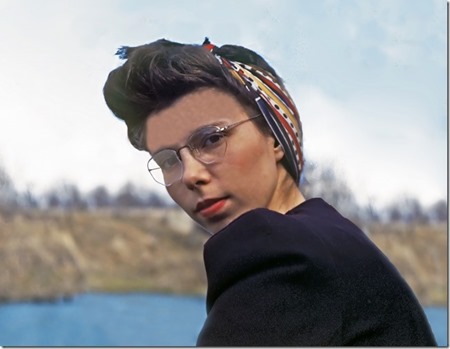
The most beautiful woman I ever met (1943):

Marjie in scarf

The most beautiful (the same one) woman I ever met, with me, 50 years later:

Ben & Marje, 50 years later

I’ve led a wonderful life. 

I married the prettiest girl. My children, my grandchildren and my great grandchildren are good-looking, good-natured and brilliant.

I’ve had, and have some wonderful friends.

In a multi-faceted career, I’ve had some exciting, interesting and rewarding jobs.

I’ve shot the biggest deer I ever saw, caught the biggest salmon I ever saw, flown the hottest (in my day) bomber, and the biggest bomber, and done acrobatics in a fighter plane.

I’ve survived multiple encounters with the grim reaper in the air, on the highway and in the operating room.

Fortunately, I’ve had a few dull moments to round out the spectrum.

My life doesn’t owe me a thing.  It has already delivered more than I could possibly ask for.

Why am I telling you all this?  Because if I wait too long, I’ll lose the opportunity to express my awe and gratitude for a richly rewarding life!

Love,

Ben sigBen's Snoopy Plane

gDad


In that recent phone call he added, “I’ve done everything I was ever afraid to do except jump out of an airplane. I didn’t do that when I had the chance because I’d hurt my foot and was afraid I’d break my leg when I landed.” Reality-based fears like that are worth respecting!

At 187 words, this letter is a clear example of a mini or micro-memoir with a theme of gratitude. It’s also a love story and a celebration of life. It hints at obstacles overcome. It touches on triumphs with faint whispers of shadows, which he did not dwell on.

He wrote other stories too, but this is his capstone. It could have been his obituary if we’d remembered we had it. What a wonderful legacy he has left. I’m in tears all over again.

I hope this can serve as an example that less may be more. Pay special attention to his last words:

 Why am I telling you all this?  Because if I wait too long, I’ll lose the opportunity to express my awe and gratitude for a richly rewarding life!

It doesn’t need to take a lot of words. Now, get those fingers flying and write on!

Connecting Dots to Find Story

Connect-dotsMy cousins and I play an ongoing game of Connect the Dots as we try to piece together a fuller picture of our forebears’ lives. What we are learning opens choices about how to shape stories we leave behind.

The most intriguing set of dots right now involves my great-grandmother, Matilda Evelyn Grammer, who married Robert Pinckney Roberts, son of Governor Oran Roberts of Texas when she was not quite 16 and he was 37. When she was widowed at 26, she was responsible for two nearly-grown step-children and four of her own, ranging from one to ten years old. Two years later, she married Paul Arthur Preuit, the (great)grandfather my cousins and I share. We know quite a bit about the Preuit part of her life, but her life with Roberts Roberts is largely a blank. We’re working on that.

Last year a cousin wanted to know if I could tell her anything about the possibility her mother (my aunt) lived for a short time with my father’s family – before my parents were married. That opened a  new package of dots about both our families and the enduring friendship between these aunts. 

Why does this matter? Why do we play Connect the Dots?

Our brains are wired to crave story, drilling down to details and closure. What is closure? Understanding WHY things happened and WHAT they mean. To some extent, we look to the past to explain how things are now, and imagine how they might be as we move forward. We explore examples of ancestors to make sense of ourselves and how we can handle the curves life may throw.

As my cousins and I continue to dig, we’ll find more information about where people lived and maybe glimpses of what they did, but for the most part, we’ll have to make up story to connect those dots. We’ll know, for example, that in 1888, Texas women did not have air-conditioned houses and we’ll speculate about what life must have been like as they toiled in gardens and doing laundry in the blazing Texas summers in long sleeves and long skirts. We’ll have to wonder if mid-wives helped deliver Grandmother Tilly’s children, or perhaps a doctor drove up in his buggy just in time.

We’ll conclude that we come from a line of tough women who knew how to survive. We’ll never know how Grandmother Tilly felt about the ups and downs of her life. What were her regrets? Did she wonder what life would have been like “if only”?

Implications for Life Writers

We can document our lives on two levels, detail and meaning. Details give the dots. Our descendants will know what happened when, in general terms. That leaves them to wonder and connect dots themselves, the best they can.

We can do them a favor and connect the dots for them, writing stories rich in reflection and insight. We can show the lessons we learn and what the bumps we roll over mean to us. These rich stories will satisfy our descendants, helping them quickly and easily understand us and our times.

The key to writing these rich stories is to take the time with each story we write to ask ourselves

  • Why did this happen?
  • What does it mean?
  • What did I learn?

Include the answers to these questions in your story and intrigue readers of any time and generation. They’ll thank you for making the effort.

If you don’t have time or inclination to dig so deeply, fret not. Keep writing anyway. Remember,

Anything you write is better than writing nothing.

At the very least, you’ll leave them dots to connect if they wish.

Who Owns Which Memory?

Cousins

I know three sisters who remember life differently, and sometimes things I hear from them drop my jaw, at least mentally. For simplicity here, I’ll call them Annie, Betsy and Connie, in order of age. All are in their mid-eighties.

One day I got an email from Connie with a scanned letter attached. The letter was from her aunt, confirming that this aunt had indeed taken Connie as an infant to her house to care for while Connie’s mother was sick.

“I can’t wait to show this to Annie! She has sworn for years that Aunt Laura never took me home with her, she just took me to a motel!”

Apparently, when Annie saw the letter, she humphed and changed the subject. Obviously this development did not square with her memory of things, and as the older sister, she was supposed to be the authority. 

During a recent visit with Annie and Connie, we got to talking about their grandfather. He let me drive his old car all over the place when I was only eleven. He even lied to the Department of Motor Vehicles so I could get my driver’s license when I was twelve. He told them I was fourteen,” said Annie.

“That’s interesting. He did the same thing for Connie,” I said.

“What?”

“She told me the same story about him taking her to get a license when she was twelve and letting her drive thirty miles to Turkey Town by herself to get something he needed.”

Annie looked at Betsy. “That’s not possible. He didn’t live near us when she was that age.”

Betsy shrugged. She didn’t seem eager to get involved. I changed the subject.

Which sister owns that memory? Did Connie hear Annie tell the story often enough that she started thinking it had been her? Stranger things have happened.

As it turns out, I may be the one with the creative memory. Connie affirmed that it was Annie’s story. “I hardly ever spent time with him when I was young.” Well … whatever. In the overall scheme of things, who cares?

This all goes to show that much of family history is myth, and a changing one at that. One key thing we collectively agree to is that the old man was a scoundrel who bent rules when it suited him and ignored them much of the time.

From the larger perspective, that matters more than which granddaughter got to drive when or where. I’m semi-sorry I sought to clarify the source.

Writing tip: Do some freewriting or journaling about conflicting stories within your family. (This may be best left unshared.)

A Humble Story Lives On

Hettie Stein never dreamed hundreds or thousands of people would learn about her life when she hand-wrote her lifestory on forty pages of notebook paper sometime around 1975. She wrote separate, personalized copies for each of her three grandchildren, my husband being one. We have not seen either of the other two copies, but I scanned ours, saving the images in a PDF file and also transcribing them into a Word document for easier reading by later generations.

Now the world can read about Hettie’s life on Amy Cohen’s blog, Brotmanblog: A Family Journey, beginning with Part 1 and share our delight in these accounts of a long-gone way of life in simpler times.I thank distant cousin Amy for finding our family and pulling so many resources together into a compelling story.

As you can see from the graphic below, excerpted from Hettie’s story (which I gratefully borrowed back from Amy’s blog), the writing is as primitive as a Grandma Moses canvas in both form and message. As Hettie explains in her story, she chose to leave school after eighth grade (in 1898). Her reasoning was that like other women of her day, her lot in life was to marry and raise a family, and no housewife needed more book learning than she already had, so why exert herself?


This lack of formal education shows in her writing, but that did not deter her for a moment. Thank goodness! This humble, unaffected story reflects her authentic heart, big as all outdoors, and the fact that she wrote it is the sign of a satisfying life. She never had material wealth, but what she had was enough. I have never met a kinder, more positive person. Hettie loved everyone with childlike enthusiasm, and was always up for an adventure. I feel blessed for having been part of her family.

Hettie decided one day to write these stories. She just sat down and did it, though it took her months to finish each one. She wrote each story in the form of a letter to that grandchild, warmly laced with references to memories of “your mother” and “the time you and I …”. We have not seen the volumes she wrote for her two granddaughters, but presumably they cover much of the same material, customized with slightly different words.

She died in 1987, more than a decade before I preserved her work for the family and the world. Now it’s treasured by great- and great-great-grandchildren and will hopefully be passed down even further.

I often mention her amazing accomplishment when I’m encouraging people to write. “If Hettie could do that, anyone can. You don’t need to produce a literary masterpiece. Whatever you write is better than nothing and will be treasured by generations to come.”

Hettie wrote by hand, on the simple paper she had. She made a manila paper folder to hold the pages and fastened it all together with brads. Even without those manila covers, in only a few years, the acidic notebook paper had begun yellowing. Scanning put a halt to that process.

If by some amazing coincidence, you decide to write a legacy manuscript by hand, acid-free paper is easy to find today. More likely you’ll sit down at a keyboard and print acid-free copies. But even if you write on unfolded paper bags or the backs of envelopes, your descendants will treasure your work.

Points to ponder: If you’re trying to get traction, what obstacles prevent you from “just doing it”? Are you concerned that you writing won’t measure up and your family will laugh or sneer? How good is “good enough”? If you are well on your way toward finishing a story, ponder how satisfying that feels.

A Grounding [TAP?] Root of the Tree of Life Writing

Denis LedouxGuest post by Denis Ledoux, founder of The Memoir Network.

Just as with so many big projects in life, you’ll benefit by taking a moment to consider why you ought to start—or continue—to write this memoir of yours that is intriguing you and what role you anticipate it will play in your life.

I like to think of my thoughts below as one of the roots of the Tree Of Life Writing that needs to be nurtured.

You may not know it yet, but your impulse to write is probably solid.

In late autumn of 1988, as people were hunkering down for another Maine winter, I was asked to read from my first collection of short stories (What Became of Them) to a gathering of volunteer Foster Grandparents.

My collection clearly made use of autobiography—the approach to fiction that has always compelled me the most. Several dozen men and women, sitting at long tables, many smiling in recognition of elements in the stories I had just shared, said in one way or another, “These are people just like us!” They seemed to recognize the child climbing the apple tree at the edge of the meadow or to glimpse once again their own parents in the tired women and men trudging through the tenement district on their way back from the textile factory.

Most of the basic material writers work with is acquired before they reach the age of fifteen.

Willa Cather

Story share time proves dynamic and teaches me something about why we write

After the short program of reading from my book of short stories, as has been my custom, I asked people to share their own stories with me and with each other. An astounding—but, as I was to find over and over again, completely natural—response occurred.

In a torrent, members of the audience began to tell me their life stories. These Foster Grandparents spoke with eagerness—as if speaking their stories was, at last, satisfying a hunger of long standing. Or, perhaps it was a need to preserve their story, to achieve some snippet of immortality if only in the telling to their fellow Foster Grandparents.

Their memories were set in a number of countries around the world and in a variety of cultures within the US. As people spoke, some grew animated while others exuded peace. Some spoke with pride; others with sorrow. All, however, seemed to need to tell the stories of their lives and of their families.

Stories prime the pump of memory

Once again, storytelling had “primed the pump” of memory to enable personal and family stories to pour out. After my reading that day, I left for home feeling justified in my faith in the primal function of storytelling to affirm and reaffirm meaning in our lives.

It’s fine to write for yourself—you deserve to be honored

Like the Foster Grandparents, if you need to write—or tell—lifestories because you need to establish a “monument” to your experience in the “city park” of your memory—and of the world’s memory—then you have a reason that may well see you to the end.

My big takeaway that can be yours, too.

I have come to also realize something more about writing, something that is a corollary of this need to be public: telling your story to yourself (in the privacy of your office, for instance) does not satisfy that hunger to tell.

People need to tell their stories to an audience. Sometimes that audience is your own family; sometimes that audience is much larger—as large as a city, a region, a whole country, or even the world.

Is that why you want to write: to share with a larger audience? If so, that is natural and good.

Questions to ask yourself as you start to write

Besides starting to write a memoir that records the story you so much want to tell, part of what you need to do is start to address who the audience for your memoir will be. (This is an on-going task, and you are likely to revisit it during the entire process of your writing.)

Ask:

~ who needs to hear your story?

~ whom do you need to share this story with?

Our distant ancestors told stories around the campfire. They did not tell stories just for themselves, sitting in the woods far from others: they told stories to an assembled group because they understood that telling and hearing were part of a process.

Yes, it can be intimidating to realize that your words are going to be read by an audience of real, live people—people who, in some cases, will criticize you. But, these real people—both those with appreciative remarks and those with cutting riposts—are part of your writing experience.

My send off as you begin—or continue—to write

Write for an audience (even if sometimes that audience is only you). Don’t let fear of judgement stop you. Pursue your dream of sharing your story.

Writing a memoir is important work. Do it!

Action Steps

1. Whom are you writing for? Be insightful now: whether your answer is my grandchldren or the Noble LiteraturePrize Committee. State why you have this audience in mind. What difference will this memoir of yours make for this audience?

2. If your audience is small, is there any way you could make it larger and still be comfortable with your goals? (I find that people’s sense of audience often grows as they write more.)

Denis Ledoux is the author, most recently, of How to Start to Write Your Memoir which is Book One in the seven-part Memoir Network Writing Series. This post is adapted from that e-book. Also in publication is Don't Let Writer's Block Stop You. A complete list of publications is available. To be placed on an alert list, send an email.

Discover by Doing

Medusa“I don’t really know how things will turn out until I start making them. They don’t always look like I thought they would, so sometimes I’m surprised.”

My eight-year-old granddaughter Sarah was talking about the clothespin doll she was wrapping in a scrap of cloth when she told me this, but she could have been talking about writing. She is also a budding writer, though most of her story-making remains in her head at this point.

I covered her doll making process in my previous post and explained how observing her expanded my creativity. Here are a few tips I gleaned that apply to any creative endeavor, especially writing.

Remain open to possibility. The doll pictured above became an Evil Queen, eventually  named Medusa. Sarah didn’t know who the doll would be when she began. Its identity emerged from the choice of spikey silver hair and black fabric and grew with the addition of lace and lamé.

Stories often work that way for me. Sometimes fanciful stories emerge from freewriting and their significance and meaning for my personal or life story become apparent only later. Other times I may know the bones and drift of a life story, but  my reflections often refract in new directions, adding unexpected elements. Based on my observations of Sarah, I’m ready for lots more freewriting!

Bounce back from mistakes. Sarah discarded several scraps that didn’t look “right”, didn’t quite fit, or didn’t please her. “Sometimes I have to try lots of things before I find what works.” Doesn’t this sound just like the editing process for writers?

Take a break when you need it. These dolls joined several she brought from home to become characters in a sequel she began writing to a book she dearly loves. I saw in silent awe as she made notes on a clipboard to set up the story , then began acting it out. “I’ll work on it more later,” she decided when she hit a snag.

Accept dead ends. “Or maybe I’ll just start over.” Sarah does finish projects, but she has no qualms about abandoning the ones that don’t please her, at least if they aren’t assigned projects for school. Aside from homework and chores, her equivalent of adult work tasks, everything she does is play. What a liberating way to view self-assigned writing projects.

Use organization tools. Sarah didn’t need tools to plan her dolls, but she is using them for writing projects. Her school begins teaching story organization tools in kindergarten, and I wish I’d had time to learn more about them. Her abbreviated notes looked like an outline of sorts, a cryptic sketch of plot. It reminds me of story idea lists, outlines, mind maps, and other planning tools covered in previous posts.

Play with your work. In my opinion, this is the key. Sarah asked various forms of the question, “I wonder what if …” constantly. “What if she had a silver cape? …” “What if” is said to be the most powerful tool a writer can use. It pushes us into the Land of Make Believe, perhaps better understood as the Land of Unlimited Possibility.

You can use “what if?” to explore writing techniques, and you can also use it as a way of examining alternate views of past experiences: “What if she really meant … ?” or “What if something else was going on that affected that situation?”

Realize that imperfections add character. This is a touchy tip, a tw0-edged sword. Sarah’s dolls are quirky and rough cut, exuding the power of primitive art. They are perfect for her purpose, capturing the heart of her vision, but they are imprecise, with blobs of glue peeking beyond hairlines, ragged edges, and more. Would they work as they are in the marketplace? Hard to say. Perhaps our biggest challenge as writers is retaining the freshness of a draft while editing out major flaws. Over-editing can sanitize the life out of a story or interject additional sparkle. Keeping the right balance between Heart and Craft is an ongoing challenge.

Another side to this tip is that imperfections in the people you write about (yourself included) add character to the people and the story.

My time with Sarah as we made these dolls and I watched her begin developing a story was a powerful reminder that life can be an ongoing writing workshop. It’s all a matter of perspective.

Write now: take a play break with your writing and indulge in fifteen or more minutes of freewriting. Explore the results and look for material you can polish into a memorable story.

How Long Will Your Words Last?

Quaker-DiaryWho would expect a diary to last hundreds of years? Someone told me a few years ago about conversion journals written by Quaker women as part of what might be called an initiation into the faith. If my source was correct, the women were required to keep these diaries, presumably to demonstrate the strength of their faith and their worthiness to be accepted as members of the Religious Society of Friends.

The Lippincott tribe is descended from Quaker ancestors Richard and Abigail Lippincott, who arrived in the colonies in the mid-1500s seeking relief from persecution by the Church of England. A few years ago my husband received a copy of the Quaker marriage certificate of his grandfather’s great-grandparents, signed by everyone who witnessed the ceremony. He decided to donate this historic document to the Special Collections kept by Haverford College. During a recent visit to deliver the document, I asked to see some of these women’s conversion diaries. Unfortunately the collection includes nothing specifically identified as a conversion diary is included in the collection, but they do have a sizeable collection of other journals. I scanned the list and found a promising volume written by Anna. I’m chagrinned to realize I neglected to note her last name or the dates of the diary, but it was referenced as a “spiritual diary” and I do know that it dates to pre-Revolutionary times, so it’s about 250 years old. 

With a bit of ceremony, after I completed the formal registration and request, the volume was brought forth from it’s protected location and placed on green velvet-covered foam blocks that positioned it for reading.

“Don’t worry about harming it,” the librarian told me. “It’s sturdier than it looks.” He chilled my blood by picking it up and flexing the spine to demonstrate. The volume consists of hand sewn signatures. I couldn’t tell for sure how they were held together, because the spine was covered, but many seemed quite loose. The pages felt a bit slick, due to an invisible layer of ultra-sheer silk applied to protect them and avert further aging damage.

The text was challenging to read, written in flowery old script. Anna was thrifty with her paper. She used small handwriting and close spacing between lines, further complicating the reading by our eyes, unaccustomed to her style. Occasional ink blots didn’t help.

How I would have loved to sit there for a week and deeply ponder her words, puzzling out obscure ones and ruminating on meanings to plunge into her world. Unfortunately, our time was limited, and I had to make do with skimming several pages while my husband poured over Minutes of Cropwell meeting where his ancestors played leading roles. What I found was a powerful testament of faith, reminding me of the first four lines of the magnificat or Song of Mary:

My soul doth magnify the Lord. And my spirit hath rejoiced in God my Saviour. Because he hath regarded the humility of his handmaid; for behold from henceforth all generations shall call me blessed.—Luke 1:46-47

Such flowery, passionate language surprised me, coming from a devoted member of a sect traditionally known for stoicism.  Perhaps that element of surprise underlines the importance of this document. It challenges me to revisit assumptions. It informs me more accurately of how things really were. And isn’t that exactly what most of us hope our words will do? Set the record straight at some future time and inspire others to expand understanding?

That old diary and the Meeting Minutes are sturdy. Even without preservation they would probably remain legible and valuable for at least another century. Will our digital output endure as long? I can’t imagine it will. I’m reminded that a copy or few, printed in durable ink on acid-free paper, will increase their odds of long-term survival. Unless you plan to burn your journals, use archival quality volumes to  create a legacy for centuries to come.

Write now: make a plan for preserving print copies of at least your most important stories. Look for sources of acid-free archival quality journals. Then write something something that will set a record straight about your life or family.

Documentary Memoir

MathieBooksWhen I first began writing lifestories and teaching workshops to help others do the same, my emphasis was on preserving family memories and creating a legacy of personal and family history for future generations. That picture gradually enlarged to include documenting your way of life in what will soon be times gone by.

In spite of a growing emphasis on transformational, healing and confessional memoir, historical documentation still serves a valid and important purpose, one that should not get lost in the scramble to bare more psychological skin. Well-written documentary memoir can be both fascinating and thrilling.

British author Ian Mathie is remarkably skilled at this. I read each of his four  engrossing volumes of memoir straight through. I was unable to tear my eyes from the page as I read about his experiences during the 1970s in various parts of northern Africa where he worked as a water engineer for an unspecified British Foreign Service agency. Rather than commuting from cities, he preferred to live in remote villages among the people while teaching them to dig reliable wells with natural filtering systems to provide a sustainable, safe water supply. He began schools with native teachers to spread these skills to other areas.

At times he was in the jungle. Other times he was in one desert or another, and occasionally he did live in cities. He encountered witch doctors, tribal chiefs, and ordinary villagers. He was invited to dinner by four different presidents, including Mobutu. He drove all over in Land Rovers, rode trains and camels, and often relied on his small Cessna. He was a genius at working the system.

But these are not books about “The Further Adventures of Ian Mathie.” Despite the fact that his life was indeed filled with constant adventure, the emphasis in his stories is on the people he encountered, the people he came to care so deeply for, his friends for life — which unfortunately wasn't long. Most of those people and cultures were victims of one revolution or another.

The books document lifestyles of people who had highly evolved cultures, ideally adapted to an environment which was already endangered when he lived among them. My understanding and respect for the wisdom of prewestern, native cultures soared, and I expect enthralled anthropology students will be citing Mathie’s accounts in piles of research papers for decades.

Few of us have stories as inherently exotic and powerful as Mathie’s, but even ordinary life can be described in compelling ways and may seem exotic to your offspring  in fifty or one hundred years. Imagine how fascinating it would be to read the details of your great-great-grandparents’ lives more than 100 years ago. Even if all mine did was haul in the harvest and milk the cows, I’d love to know how they went about it.

Each of Mathie’s volumes has a different structure, so each has a lesson to teach on how to write as a bonus beyond the amazing content. All four of his volumes are available in print on Amazon. The first, Bride Price, is now also available in all eBook formats as well as text documents on Smashwords, and the other titles will soon follow.

Write now: write a description of your day today (or a recent one of your choosing). Rather than simply listing things calendar style, describe how you did them. Pretend you are writing for someone from 200 years ago and explain what a dishwasher is and how it works. What sort of blankets are on your bed. What does your house look like? What did you do at work if you went there? Fill them in, and tell how you felt about each activity. You may find your days are more interesting than you’d realized!

Entering the Next Age

Broken-CalendarA few hours ago the Mayan calendar reset. We are officially in a new “age”, at least according to the Mayans.

Nobody I know was surprised to wake up this morning to find the world unchanged in any discernible way. I heard reports that some were stockpiling Doomsday kits of food and survival gear, just as they did for Y2K thirteen years ago, but this event has had far less hoopla in the media or public attention.

I’ve been contemplating its possible significance for at least four years, never expecting anything dramatic to happen, but watching trends and listening to thought leaders who point out that change has become dramatic and global since about the end of World War II. They also point out, for whatever it may be worth, that the Women’s Movement has occurred in waves of about forty years from the first Suffragette efforts, to the Consciousness Raising of the 60s and 70s to now.

These gurus opine that the trends they discuss have brought us to a tipping point where change must and will occur. They express no doubt that this change will be positive, escalating mankind to new levels of awareness and collaboration, but they don’t promise it will come about smoothly, without a certain degree of pain and suffering in the interim.

Their intriguing theories boil down to one thing: Stories are changing. Stories shape collective awareness, collective perceptions and judgments. On one level, our individual stories have become so fragmented that at least in the USA, even those who claim strong allegiance to ethnic, religious, professional or other groups tend to feel isolated within those groups.

On the other hand, collective stories about things like political correctness, individual rights, and such things abound. The challenge is that we have numerous collective stories at work that compete with each other. Which is right, my story or yours?

Anyone writing life stories and memoir is well aware of perceptual and conceptual differences on a small scale, for example within families. It’s only a matter of degree to see it on the level of an entire society, even globally.

How does collective Story change? Just as personal stories are an accumulation of memories and scenes that may change as we explore, question and examine them, scenes that may be linked together in an infinite variety of ways, collective Story is a compilation of individual stories. Thus collective Story evolves as personal ones do.

My part in bringing about the change I hope to see in global Story is to continue writing and revising my own story, seeking ever increasing transformation from fear, resentment and worry to one of loving acceptance, peace, and gratitude.

While this may seem a small, perhaps insignificant contribution, reports continue to pour from the media indicating that “writing peace” into our lives is a skyrocketing trend. I’m part of this trend, part of what Jerry Waxler calls “The Memoir Revolution.” Watch for his forthcoming book on this topic.

In prophesies about the turn of this age, the ancient Mayans never predicted Doomsday. They pointed to this pivotal point as a time of decision for mankind. Depending on our decisions, we may plunge into chaos and possible annihilation, or we may shift into that promised age of universal peace and prosperity.

That decision rests on the stories underlying decisions at every level. My story and yours can help spread healing and peace or perpetuate violence. My hope is that you will join me and keep working on your contribution as we transform to a new Story of love and peace, worldwide.

Write now: write a story about change in your life. For example, has your thinking changed over time about volatile topics like same sex marriage or gun control? How has your understanding of your own relationships changed? Be brave. Be brutally honest with yourself and burn your writing if you don’t want anyone to read it. And be open to new ways of looking at what you find.

Where’s the Story?

Getty Villa bustOver a million people visit the Getty Center and Villa in Los Angeles each year. I’m one of them. I’ve been to the Center a couple of times and last week I visited the Villa. Like other visitors, I’m blown away by the splendor of both places. The architecture is magnificent and objects and art are displayed with great care and respect.
Nevertheless, I have the sense there, as in other museums, that something is missing. As I circled the last roomful of antiquities in the Villa, I had a sudden flash of insight into what that missing element might be. My friend and I had just confessed that the prolonged standing and ambling on hard floors has become increasingly difficult over the years. Our backs were screaming for a break.
“It’s all blurring together at this point,” she said. I concurred. I also realized that it had been blurring together all along for me.
“These objects were never intended to be viewed this way,” I blurted. “They lack context in here. They are as dead as the mummy in the other room.” I glanced at a display of household utensils and my eyes fell on objects that looked like small sauté pans with ridges in the bottom.
“I find it mildly interesting that the Roman glitteratti used things like this to wash their hands at meals, but still …” I paused briefly as a thought took form. “There’s no story here!” I blurted.
Her eyes widened in sudden recognition of this obvious fact.
“These objects were never intended to be viewed this way. They were made for a purpose, and when we look at them one after another, apart from their context, they barely hint at the dramas they were involved in. I want to know who dipped her fingers into that bowl. I want to know what she was doing at the banquet, what she ate, who she talked to about what, what she wore, how many outfits she had to select from … I want to know about the servant or slave who brought that bowl to the guest and what his or her life was like. I want to know about the life of the people represented by those statues, and what others thought of the statues,” I added, pointing to the room we’d just left. 
Some of these objects fire up my imagination with hints of story, but it’s all based on modern accounts by historians making guesses little more educated than mine. Other objects hint at creative stories of design and implementation. I fill in a few blanks with imaging's of my own, but they raise more questions than they answer.
Perhaps we’re becoming jaded, my friend and I concurred. Perhaps we’ve lived too long in an era of full disclosure and developed an over-reliance on realistic depictions in any media.
As I left, I realized yet again that my mind had been craving story to add relevance to what I saw, to compare it to what I know and store it away. When the “real” story isn’t available, I speculate and fill in the blanks with fabricated context and story – or I move on and ignore the object.
I also realized that there’s nothing inherently wrong with this. Those objects did stimulate my imagination. I could weave some of those details into stories of my own making. But that’s not nearly as satisfying as knowing the “real” story, and that’s what I insist on in reading material. If a story has large holes, if it’s obviously leaving out key details and context, I’m unlikely to finish reading – unless the story is about a relative and I know enough context to fill in the blanks. That won’t be the case if too much time has passed.
Write now: pluck a couple of memory fragments of objects from your mental storeroom. Find pictures of them if you can, otherwise describe them clearly. Then do some freewriting about the stories those objects fit into. Tell how they were used, what purpose they served. Then go beyond that and work one into a scene showing them in use. Include your thoughts about them, even if you only mindlessly picked them up. These details will breathe life into your stories and help later generations understand life as we lived it. You’ll be creating a living museum of dead objects.

Alpacas Are Mom Enough

NursingAlpaca

On a recent trip to Bolivia and Peru, our tour group stopped at the mysterious Sillustani burial towers near Puno, Peru. As we hiked up to the site, I was amazed to see a young alpaca nearly as big as the mother root for swigs of milk between mouthfuls of succulent grass. I was equally amazed that Mom didn’t seem to notice. Female  Alapacas are obviously mom enough, I thought, zooming in for a closer look at a picture I took.

My thought harks back to the May 21 Time Magazine cover. Its provocative picture of Jamie Lynn Grumet breastfeeding her three-year-old son as he stands on a stool created a predictable storm of controversy. The caption, “Are You Mom Enough?” added fuel to the fire, seeming to throw down a gauntlet to advocates of early weaning.

A quick search led me to an article showing that the proper age and process for weaning alpaca crias is as controversial among ranchers as the human topic.

You know where this is all going: story time! I became a mother just as Lamaze classes and La Leche League were picking up steam in Boston. Fellow grad student wives introduced me to these cutting edge trends that defied the tradition of the anesthetized birth experiences our  mothers had undergone and the hassle and hazards of bottle feeding. I inadvertently ended up with an “old school” Harvard Med professor obstetrician about my grandfather’s age, and their pep talks prepared me to stand my ground.

My dignified doctor was aghast at my plans to breastfeed. “We don’t raise our young women to be cows!” he said. “We’ll be traveling across the country when the baby is four weeks old …” I shot back. He gruffly conceded the point, but obviously clung to his belief.

Over the ensuing years, conversations with women friends have often ventured onto experiences and memories of breastfeeding. Some did, some didn’t. Some tried and soon switched to bottles for various reasons. 

We talk about it freely, but of all the hundreds of student stories I’ve read over the years, I do not recall a single one addressing the topic of breastfeeding— not even peripherally.

What a shame! What better topic to share with future generations than your experience in this regard, whether it be good, bad, or indifferent. These are the stories that bind generations, and may also serve as encouragement.

Before you write, consider your feelings about the topic. Does it embarrass you? Do you still feel the need to keep a blanket over the topic as you once hid your suckling infant from view? Does the topic of breasts seem too prurient to write about publicly? Where did your attitudes originate?

While you’re on the topic of feelings, think about the physical sensations and emotions involved – the feel of the child in your arms, the chair you generally used, satisfaction, pain, dismay – anything that comes to mind. If you chose to or had to bottle feed, how did you feel about that? Did you feel like a failure for not breastfeeding? Were you relieved? Follow your intuition to the bottom of this feelings barrel. What smells do you recall? How about sounds?

Do you have childhood memories of feeding babies? Did you help bottle feed siblings or babysitting charges? Did your other breastfeed you or your siblings? Did you hear her talk about it?

These questions have no right or wrong answers, but they are important. Weaving insights into a story or essay on the topic will give it life and meaning beyond anything a factual account could possibly achieve. Your thoughts and memories are an important part of the history of child reading and nutrition.

Write now: a story or essay about your experiences with breast or bottle feeding. If you never had children and/or you’re a man, your views still matter. You may not have had the same experience, but everyone has had experiences with this important subject. Please leave a comment about your feelings on writing about this topic.

How Will They Ever Know?

Sharon SkypingIt took me a second to recognize the Skype ringtone. Knowing it must be Susan calling from New Zealand,  I ran to my computer. We talked for a few minutes about the people she met whose home was destroyed in the earthquake. It’s in the Red Zone and can’t be rebuilt. She mentions that everywhere they go, Kiwis swarm around and strike up conversations. “They are so friendly, so unlike your average American! I love it down here!”

The girls told me they baked chocolate chip biscuits (British word for cookies) with their babysitter last night. They told me about other new words, like riding in lifts (elevators), and pushing trolleys through the grocery store.

When we hung up I had goose bumps. My girls are literally on the other side of the world, and we had just had a real-time video chat. Fifty years ago a computer-based video chat was beyond imagining.

I had goose bumps. The girls take it for granted, much like I took telephones, radios, flush toilets and electric lights for granted, but my grandmothers didn’t. What could I do to let these little girls know what life was like before WiFi, iPhones, and Homeland Security?

How can I clue them in that there was a time when anyone could walk out onto the runway to see someone off on a flight? How do I tell them about lighting stoves with matches, and the pleasure of standing on a floor furnace with hot air ballooning out your skirt? How will they ever know about 45 rpm vinyl disks that held only one song? What about typewriters? Or making cakes from scratch?

You already know the answer: I can write stories! I can write stories with detail rich scenes, dialog and tension-laden plots. These kids are not going to read how-to manuals.

"“How do you make a story about getting on an airplane exciting?” you ask. Adventure is a matter of perspective. A question as simple as “What will happen if I make cake icing with regular sugar instead of powdered?” can create tension. Remember how you felt when you first sat down in front of a computer? Use your description skills to convey that awe. You certainly faced plenty of challenges getting it to do things!  I once read that many people feared electricity would gush into the room if they unscrewed the light bulb, and heaven only knew what would happen then! Wouldn’t you love to read a story written by someone who had faced that fear?

We live in a time of such change. I moved to Pittsburgh 26 years ago when the Monongahela River was lined with rusty abandoned steel mills. Today that real estate is covered with sparkling research and shopping centers. I never saw this area in the days when street lights were on all day if the mills ran at full capacity.

It’s entirely possible that ten years from now, half of all manufactured items will be made on 3D printers, completely revolutionizing industry and the world economy. Who will tell the story of what life is like now, and what it was like within our lifetimes? Does it matter? I think it does, and I believe it’s up to each of us to save our little piece of that history.

Write now: write a story about an amazing innovation in your life, like getting your own typewriter, or your first computer. Polish it up with description and a little dialogue – write your thoughts if no other people were involved. Send your story to somebody young, or somebody who will love the memories.

Too Silly to Write About?

Gilette Safety Razor“Is anything too insignificant or silly to write about?” asked Margaret, a frail-looking resident at a retirement community where I was presenting a program on lifestory writing.

“Any subject can be fascinating if it’s well written. Do you have a specific topic in mind?”

Margaret looked down at her lap and spoke almost in a whisper. “I was remembering the first time I shaved my legs,” she said. “My father didn’t tell me anything about how to do it.”

“Oh, that’s a wonderful story!” I replied. “I’d love to hear a story like that about one of my grandmothers!”

“I can’t hear!” “What’s did she say?” My reaction had raised everyone’s curiosity.

“Do you mind if I tell them what you said?”

She blushed and shrugged in agreement, and the large group responded like school kids. Everyone turned to a neighbor and began talking at once. “I remember the first time I shaved …” Men and women alike had shaving stories. Margaret’s shy question had touched every heart in the room, bonding them into one big memory mass. Aside from any interest for descendants, this seemingly mundane topic revived youthful memories and added extra zest to the day. Everyone had extra spring in their step when they left the room after the program ended a few minutes later.

Her core question was how she could take make such a mundane matter into something other people would be interested in. The first step is to lock in content. Looking at the woman’s brief topic statement, several story possibilities emerge. A few starter questions are:

  • How did she happen to choose that day for her first shave?
  • Had she been teased about hairy legs, felt self-conscious … ? 
  • How long did it take her to build up to this event?
  • Did she ask permission, or just do it?
  • What sort of razor did she use? Shaving soap or cream? Blade? 
  • How did she feel afterward?

Margaret’s statement raises an intriguing and uniquely personal  question: why did she mention her father as the person who had not taught her what she needed to know? Most girls would turn to their mothers with questions like this. That one phrase hints at a much larger encompassing story.

That list of questions  could be adapted for any similar personal anecdote to identify the basic story. The next step is to give your story a highly personal voice and add sparkle. This calls for adding plenty of sensory description, like the smell of shaving cream, the feel of the suds and the razor slipping across your skin or pulling against stubborn hairs. You might mention the sting of a nick or red blood flowing wetly from a gash. Details like these, along with your feelings and thoughts about the event, will set your story apart and delight your readers.

To answer Margaret’s original question, no, nothing is too silly or mundane to write about if you use your imagination and look at it from a creative new angle.

Write now: use these guidelines to write about your first shaving experience. Include lots of sensory description along with your thoughts and feelings to make a compelling story of this rite of passage.

A Gift to Yourself

Gift

Kim Pearson, an author, ghostwriter and editor, shared a wrenching story on Womens Memoirs. Kim’s jolting experience with an art teacher taught her a lesson for life about the importance of doing our best. Although stunned by her teacher’s seemingly appalling behavior, Kim came to see it as a gift – it instilled respect for excellence in her developing mind.

Kim learned a lesson in seconds that I spent years acquiring. I grew up with a mother who insisted that ever stitch in every garment be perfect, and I sewed constantly. I hated her perfectionism at the time, but came to value it later.

That ethic transfers to editing and making my writing the best it can be on any given day. I don’t curl up and die if a typo or missing word occurs in a Forum or blog post, but I’d just about as soon go out in public with my shirt buttoned crooked or jelly on my face as send sloppy writing out into the world. It’s about more than ego and self-respect. I see it as respect and consideration for readers. I want to make my message clear and easy to understand.

It’s a huge challenge to figure out how to balance this message about the importance of respecting your work by polishing it to perfection with the counter one:

Anything you write is better

than writing nothing!

I shout this message from the rafters in classes of new writers. It is often the key to unlocking the fingers of people who were terrorized by teachers earlier in life.

The balance I found turned out to be quite simple and consists of two parts:

Write first, THEN edit.

Suit the polish to the purpose.

Purpose implies choice. Choice is involved in setting the purpose that determines the appropriate level of polish. To illustrate that concept, think of drinking wine. If you just finished unloading the moving van, any clean cup will do the trick quite nicely. If you’re preparing a formal dinner, crystal goblets are in order.

I give my mother full credit for giving me the gift of choice. You can only choose to do less than your best if you know what your best is. I did eventually learn that it was okay to not spend an hour ripping dense stretch stitches to correct a tiny pucker in the sleeves of toddler pajamas. And it’s okay to leave my journal and experimental drafts unedited.

It all boils down to purpose. When she died, Mother left a secret stash of manuscripts covering the first 19 years of her life. Her primary purpose was to complete a draft. If she had taken the time to perfect every word she wrote, she probably wouldn’t have gotten past the age of six. How glad we are that she wrote first, saving the edits for a later that never came. I could do the editing, but I couldn’t write stories from her private memory.

If you write for yourself in a journal, forget about editing. If you decide to share what you wrote with friends or family, make it the best you can within the time you have available. If you write for publication, do whatever it takes to make it glisten and gleam.

Mastering the craft of editing – not just the basics, but also scene, character development, dazzling description and more – may seem daunting, but the time you spend buffing stories often sinks them deeper into your soul and shows you depths you didn’t realize were there. Ultimately the time you spend editing your work is a gift to yourself, not just window dressing.

Write now: pull out an old story and buff it up. Make it the best it can be. Make plans to read a book on the craft of writing or take a class to hone your skills.

Stick to Your Own Story

red flad
During a recent discussion, someone (I’ll call her Darla) mentioned that she “needed to learn more about my grandmother’s history so I can explain why she acted the way she did and why she was so over-protective.”

Although this aspiring memoir writer had only the best of intentions in mind, her comment set a couple of red flags flapping for me. Life story or memoir writers who claim to know why someone else did something, or what that person was thinking, lose credibility with me. Here’s my thinking on this topic:

#1 Only fiction writers can explain why someone else acted as he or she did, or what that person thinks, and only then when writing in the third person. Darla’s granny is long gone, so there is no way Darla can tell us why she acted as she did. Even if Granny were available, Darla could only report what Granny told her, what she observed Granny doing, or her own speculation about why Granny did what she did.

#2 This is Darla’s story. It’s about her experiences, thoughts and reactions. It doesn’t matter why Granny did anything. The fact that Granny did do something is what affected Darla. Granny’s deeds and Darla’s reaction and understanding are key story elements, not the reasons why Granny acted as she did.

If Darla wants to do research on her grandmother’s history and speculate on why things were as they were, that speculation may be relevant, but to maintain credibility, she’ll be well-advised to use phrases like probably, it seems like, or might have as she spins her tale. 

Speculations about motives and reflections on your understanding of other people’s behavior can add important context to your stories, and will shed light on the way you view things. Examples of behavior are a great way to support your reflections and weave them seamlessly into the narrative. For example, one of my grandmothers had eccentric gift-giving habits, as shown by the following example:
Granny didn’t even bother to wrap the battered old suitcase she used to hold the collection of used kitchen items she gave me as a wedding present. For a few months I resented the fact that she gave me cruddy old cast iron skillets and dishes she’d used for years. She could have afforded to buy me new things. I felt like she was telling me I wasn’t good enough for new things. Then I realized that she had given me things she had used. All of it was useful, and it reminded me of her more powerfully than anything new would have. It gave me a sense of connection with her, of continuity between generations. Maybe she was being stingy – that wouldn’t be surprising considering the austere circumstances of most of her life – but it doesn’t matter. I came to  love her old gifts, and I’ve already promised to pass those by-now-antique cast iron skillets on to my granddaughter when she marries.
By showing what Granny did (gave me used gifts), and how my attitude toward them changed, I’ve given you a view of Granny and also my own thought. Would you believe me if I tried to explain why Granny did what she did? Does that matter? 

As you write stories involving other people, especially people who aren’t available to explain their versions of things, be sure you stick to your own story and your understanding of what they did. You can only speak for yourself. 

Write now: do some writing practice using a person you make excuses for, at least to yourself as your prompt. In your writing tell what happened to the person to cause what you consider to be inappropriate or disappointing behavior, how you feel about it, and how you handle and explain it. Use examples of behavior. If you feel inspired, turn this account into a story.

The Story of Every Thing

In a frenzy of activity to clear my space for the New Year, I whip out my dust rag and go to work in the living room. How I'd like to get rid of this clutter, I think, dusting away. For a moment I seriously entertain the thought of getting a big box from the garage and … what?

That thought stymies me. What could I do with this stuff? I ponder the hand thrown pottery vase. Mother gave me that for my birthday one year. It's gorgeous. It's exactly the kind of pottery I most love, natural earth colors. I feel the potter's love each time I glance at it. I feel connected to earth and to Mother. She's long gone, but her spirit lingers in that vase.

Likewise with the pewter-washed copper candelabra next to it. It's a cunningly crafted item, old, hand-worked, slightly off-balance. I don't even remember when I got that. Did she give it to me, or was it part of the loot I scored when Daddy cleared out her stuff? I recall that trip, packing boxes, stabbed with the knife of sorrow, knowing she'd never be home again, that life had turned one of those irreversible bends,

Seashells? They nestle so nicely on the small shelf in the bookcase Hubby built when we moved into our first house. My mind wanders off to that long-ago day when we were young and getting acquainted with life as parents and contributing members of society. Ah, the stories.

The Japanese tea set, a gift from Mitsui when Hubby visited his home in Japan all those years ago. It's such a thing of beauty, deep cobalt blue. What about the Gurkha knife, the Buddhist prayer wheel,  remnants of Hubby's trek in Nepal, or the soapstone cats from our trip to Egypt or the grandfather clock and family Bible and tree. Our roots are in this room.

I look around the room, recalling the trips to Pendleton to order the custom-built sofa and loveseat and a later trip to the Fabric District in Philadelphia for new upholstery. I remember sitting in the dark chair with nursing babies, which reminds me of the time Phyllis came to visit after Susan was born and how she seemed to freak out when I handed her that tiny person to hold for “just a minute.”

Each of the lamps has a story, especially the one I found in Seattle — another hand-thrown pottery piece in earthen tones. Aside from books, every item in this room is hand-crafted or customized. Each item has a story, and its acquisition is part of my story. This room documents much of my life.

My thoughts turn back to Stuff. I don't want to get rid of this clutter. It's part of me. It connects me to my Story. If someone else wants this stuff someday, it will become part of their story. A fragment of mine may be woven into it, as a fragment of Mother is part of a few objects in here. Hubby's mom is here too, and his ancestors.

I feel connected to family, to continuity, to the world in this house, and most of all to Story. I live in the midst of deep, ongoing Story. The Story of Every Thing. Simply walking into this room connects me with my Story and I'm grateful for that. I celebrate my stuff!

Write now: look around a room in your house. Jot down story ideas that come to mind as you eye moves from one item to another. Notice how one story links to another. Consider the effect of telling the story of one item compared to telling about the whole collection of objects. What is your connection with the object? Let your mind run wild and write about your thoughts. How are you connected to your Stuff?

I Will Keep Writing

Drawing by Rick S. Hall
Am I the only one with 23 unread books piled on my shelf? Each seemed so urgent when I found it, mostly at the Library’s Used Book Sale. All were titles I’d heard of, and intended to check out, so why not buy? I feel stressed!

Am I the only one unsubscribing like crazy from e-mail lists? Skimming blogs I used to savor? Am I the only one who doesn’t keep up with all 583 Facebook, LinkedIn and Twitter friends? I feel stressed!

Now the question arises — if I’m stressed and slowing my reading down, maybe others are too, and I’m still writing this blog — is anyone still reading it? Well, yes. I do check stats now and then and see people stopping by from all over the world, and bless all of you who leave comments.

BUT ... I’m keenly aware this could change. Any day. On a whim. The day really could come when everyone turns off, unplugs, tunes out — for a day, a month. Maybe for good.

So what will we all do when everyone is too stressed out to connect with the amazing always-in-touch tools and toys we own? Will we keep writing? If nobody is reading?

My commitment and suggestion is YES! Definitely. I will keep writing.

I will keep writing because writing makes me feel good.

I will keep writing because writing lubricates my creativity.

I will keep writing because I find out what I really think when I put pen to page.

I will keep writing because writing keeps my blood pressure down and helps me deal with the stress of piles of unread stuff.

I will keep writing because writing is my practice, a form of meditation, a form of prayer. Spirit mixes with ink.

I will keep writing because I’m a writer and that’s what I do. On keyboard or paper, I write.

Who will read what I write? Maybe my descendants. Maybe blog readers. Maybe I’ll post more stories on various sites, or publish another book, or an eBook. Maybe I’ll explore digital publishing.

Or maybe nobody will read another word I write. Does that matter? Do I need reader acclaim to validate my skill? My story? Myself? Most definitely not! First and foremost, I write for me.

But, on balance, I think I’ll continue to blog, to read with groups, and generally hang out and share with writers, because that’s my calling, my mission to help people discover and use writing to find and heal themselves and build connections. I want to help heal the world, one story at a time.

And, because I learn writing by reading what others write, I will keep reading books and blogs for sure. As soon as I write my stress away.

Write now: jot down your thoughts on why you write. What keeps your fingers moving? How important are readers to you? How important is publication? There are no right or wrong answers, and by writing down your answers to these questions, you’ll surely learn something about your motivations and reasons for writing.

Tips for Reading Out Loud

Sharing words of story connects people in a powerful way. And as anyone who has ever listened to David Sedaris knows, stories read by their author take on an extra dimension of life. I love reading to groups regardless of who wrote the story, and I especially enjoy reading my own work. 

My love of reading to others was sparked by Mrs. Schmidt, the third of my string of four first-grade teachers (we moved a lot that year). She insisted the Blue Birds read “with expression.” I loved it! From that day on, I read to anyone who would sit still and listen — sister, brother, classmates, children, grandchildren. Today I read mostly to classes and writing groups.

Most recently, I read one of my stories for the Talent Night event at a Road Scholar program in New Hampshire. To my horror, I forgot to take a copy of the story with me, so I had to rewrite it before I could read it. But read it I did, and I’m still basking in the warm glow of appreciation. I highly recommend this experience to others. 

On November 17 the life story writing group at our local library is going to present A Festival of Life Stories for the public to celebrate National Life Writing Month. Not everyone takes to public reading like a duck to water, and many are nervous. Below are tips I’m sharing with them, and perhaps you’ll also find them useful:
  • Print a reading copy of your story in a serif font with larger-than-usual type and wider line spacing. I recommend using TimesNewRoman as your font, sized 14 pt or larger, depending on your eyesight. Bold type may also be a help. Set the line-spacing to 1.5 for this special copy. 

  • If you stand to read without a lectern, hold a colorful folder of piece of stiff cardboard behind your pages to prevent them from fluttering in unsteady hands.

  • Read your story aloud at home. Whenever your tongue says one thing and the words say another, edit the document to match your tongue. This helps the words slide out more smoothly.

  • Read your story aloud at home. Read the final draft aloud to yourself, preferably in front of a mirror. Practice using lots of drama and inflection, like the librarian at Story Hour. Listen to Books on CD for examples.

  • Read your story aloud to one or more other people — family member, friend or reading group.

  • Read your final draft aloud at least six times to master it. Even though I’ve been reading to groups for decades, I practiced that most recent story six times before the show. It made a difference! It allowed me to frequently lift my eyes from the page to gaze out at the audience, using my finger to mark my place.
With this rehearsal, you may still feel nervous, but your preparation should pay off, and you’ll sound like a pro. 

Write now: pick one of your favorite stories and read it to someone. Then write about your feelings and thoughts before and after you read. Was it enjoyable? Why not? What might prevent you from enjoying this experience? What could you do to remove this obstacle? 

Inventing Memory

Sometimes a book catches my eye and a small whisper urges me to read it. That happened yesterday as I helped sort books for the annual Used Book Sale at our library. The author’s name, Erica Jong, caught my eye first and triggered memories of reading FEAR OF FLYING caught my eye first, sparking a memory of reading that ground-breaking volume a few years after it was first published in 1973. Set in much smaller type, the title, INVENTING MEMORY: A Novel of Mothers & Daughters, furthered my interest. Perhaps it will have some Truth about memory and memoir, I thought, setting it  aside to take home.

I’m not quite halfway through the volume, and have mixed feelings about it several aspects of the book. But even so, I’m enchanted with the abundance of dazzling descriptions, and I have found many truths about memory and memoir. I’ll share a few here and leave you to savor them and suck out whatever meaning they may have for you.
    “It’s queer enough just to write books—to separate yourself from the whole world so as to re-create the world in paper and ink,” I declare.
    “I don’t know why anyone would do it,” says Mrs. Coppley. “Do you?”
    “Because it gives you back your life, calms your soul, bestows the ecstasy of understanding. And you hope it does the same for your readers.”
    *****
... his memories break down into set pieces, and he seems to tell the same story again and again. ... It is as if he made it all up long ago, locked it in his brain, and never revised it. He needs to repeat it again and again simply to prove he is still alive.
    “Promise you will write my story,” he says.
    And I promise. But how can we ever write another’s story?What we write is always some version of our own story, using other characters to illustrate the parables of our lives. I make furious notes, to please him and because I hope I may someday know  what to do with them.
*****
    The difference between writing a notebook and a novel: With a novel, you describe people; with a notebook, you assume that the reader—yourself?—already knows.
*****
    ... the book is spilling out almost as if by dictation from a secret source. I have no idea if it’s any good or not. I only know that I can’t stop.
While I’m wouldn’t give the book more than three stars for general readers, I’m glad I listened to that faint whisper and brought it home. The stunning descriptions and gems of wisdom like these are worth digging for and adding to my ever-growing collection.

Write now: use one of the quotes above as a writing practice prompt and see what thoughts about writing flow from your inner resources.

Reading Across Generations

In my last post, I mentioned best-selling author Tawni O’Dell’s observation that reading is the best way to improve your writing. In line with that advice, I read piles of memoirs. I recently read two memoirs written by authors three decades younger than I, and at first I found them disconcerting. In general and compared to my own, the younger generation has a rather cavalier attitude toward sex, living together out of wedlock, and unwed parenthood, so it’s no surprise that such topics are openly covered in memoir in ways sometimes approaching reality television. I was challenged to suspend judgment and accept the authors’ Truth at face value. Once I was able to do this, I could more fully appreciate their views of the world.

From there I also realized that shock value had obscured certain aspects of the stories. One of the authors seemed to be relying on sensationalism to hold reader attention. The story had little substance and never came to any closure or significant insight. This account of a daughter’s dysfunctional relationship with her father didn’t achieve any significant resolution by the end of the story, and served mostly to air a lot of psychic navel gazing. According to Amazon reviews, some people found it hilarious, others thought it never should have been published. There were few mid-range ratings. After discounting the shock factor, based on its literary merit, I tend to agree with the latter.

Aside from a few instances of raised eyebrows, the second book was interesting and eloquently written, with well-developed scenes and delightful description. Although positioned and described as a memoir, it’s actually a collection of free-standing essay-stories, lacking plot and storyline. Each chapter is compellingly written with a generous dose of self-deprecating humor and considerable insight, but little movement. They simply portray deftly described slices of life, focused on a specific theme. As a book of essays, it’s terrific. As a formal memoir, it’s sadly lacking.

I derived several conclusions from reading these books:

  • It’s difficult to read across generations without triggering biases of our own.
  • With creative description, and perhaps a bit of humor, ordinary life can make compelling reading.
  • No matter how much love, sweat and tears we pour into our memoir, it will never appeal to every reader.
  • Stories with plots, tension, and integrated scenes more effectively keep my attention than scattered scenes.
  • If these two books attracted traditional publishers, there’s hope for nearly any story.
  • Reading memoir written by younger generations can be as enlightening as reading memoir written by earlier ones.
Hopefully these observations will prove useful as I progress toward completion of my memoir,  A Los Alamos Girlhood.

Write now: think back through  you have read and explore your feelings about the content. Did you read anything shocking? How did that affect you? What elements of them kept your attention? How can you incorporate these insights into your writing?