Showing posts with label Descendants. Show all posts

The Gap Between Family Legend and Fact

Rene Dinsmore, Rep State Chairwoman, 1954
With respect to family history, legends are those stories that survive through generations, like Grandfather Flynn was a Methodist circuit rider, or Uncle Roger fought with Pancho Villa, or Grandma Flowers single-handedly fought off Indians with an empty gun while her husband was out plowing.

The legends tend to be headline length and seldom have much substance. They contain the hook of a good story, but more often than not, the story has come off the hook. If you like the legend, you may prefer to keep the hook and forget the story, and that’s okay. Just know it’s a choice. If you’re a stickler for facts, you’ll check things out, and that’s getting easier to do.

The clipping above is related to a  legend about my maternal grandmother. I’ve known most of my life that she (not my grandfather, but she) was a delegate from New Mexico to the Republican National Convention in both 1952 and 1956. I was proud of her for that. Somewhere along the line I heard that she started the New Mexico Republican Women’s organization.

Last summer while visiting a cousin, I copied the clipping above. A couple of days ago I found the copy and took the time to read it. That clipping seemed to validate the fact that she really was head of Republican Women. Turning to Google, I discovered that Stockton ran for Governor in 1954, and the Republican State Convention took place the end of February that year. So the picture was surely from that Convention.

I flashed back to a memory of a thumbnail story my grandmother told me in 1987, 33 years after that picture was taken. We were talking about her involvement with the Republican Women and she said, “Ed Mechem (a long-time family friend who began his first term as governor in 1951) asked me to help him get them started and I said yes.” That’s not much of a story now that I think of it, and it has a lot of holes, but I didn’t notice that at the time and didn’t think to ask questions.

So I clicked over to Google and discovered that a huge movement was begun in 1952 to get women to vote for Ike. That muddied the water floating my legend. I felt stymied. After finding her contact info online, I shot off an email to Jo Mitchell, current president of the New Mexico Republican Women. I included the clipping and what I thought I knew about my grandmother, including that “fact” that she worked with Ed Mechem to found the NMRW.

Jo promptly sent a long and thoughtful reply explaining that the organization actually began in 1939 and that Rene Dinsmore’s name was not on the complete list of presidents. Furthermore, Jo pointed out, the article does not say what she was elected chairwoman of. Most likely she was the state chairwoman for the party. If she’d been in charge of Republican Women, she would have been elected president, and not by the State Committee. As state chairwoman, she would have gone to the convention. That makes sense.

I’m grateful to Jo for the time and effort she put into her reply. I love the helpful spirit I generally find when I ask for this sort of help. Her explanation makes total sense. Discovering the communication disconnect doesn’t damage the story. On the contrary, the revised version is more consistent with my perception of my grandmother, so I’m pleased she set things straight.

This small disconnect is a perfect example of how we hear through the filters of what we already know – or think we know. I thought Grandmother was involved with Republican Women, so I heard her explanation that way and read the news item from that perspective. We hear a tidbit and our imagination goes to work, embellishing or coloring in details. Over generations, these legends may shape shift like messages in the game of Telephone.

In the end, what does any of this matter? Not much. I enjoy untangling stories, and I enjoy writing and telling them. I like to tell my grandchildren about my grandparents and older ancestors to connect them with history and help them feel rooted in a sturdy tree. I want them to know that our family has survived, one way or another through thick (many ancestors were wealthy a few generations ago) and thin (the Civil War and the Great Depression depleted those fortunes). I want them to know that many of their ancestors started with nothing or less and went on to thrive and enjoy success. I want them to know that many of us, perhaps most, have dared to be different and march to our own drummers.

I like to stick as close to the facts as I can, but I do admit that I will let at least one family legend stand unchallenged. I love the legend too much to risk deflating it. So I explain that it may be fiction when I tell it, and include the evidence of why I think it could be true.

What about you? What family legends do you cherish? What about those you don’t? Have you hit the web to look for facts? Do tell! Jot a comment now and stories for your family.

Don’t Wait Too Long

Ben-Melton-1998As I mentioned in my last post, my father died last month. The last few weeks I’ve become obsessed about writing family stories while digging through genealogy material and old pictures. I’m finding dozens of dots I never noticed before and discovering new insights with roots that reach beyond the Civil War.

One of the most touching things I’ve found is this emailed letter from my father that’s been lurking in my files for a couple of years. He must have memorized this piece. He recited it, almost verbatim, with a few new embellishments, the last time I talked to him, shortly before he died. I’ve been wishing I’d thought to turn on my phone recorder that day, but no matter. Turns out, I already had the transcript. I don’t think he’ll mind my sharing it as a tribute to him with a message for all of us.


Reflections on my life
Ben Melton, June 25, 2015

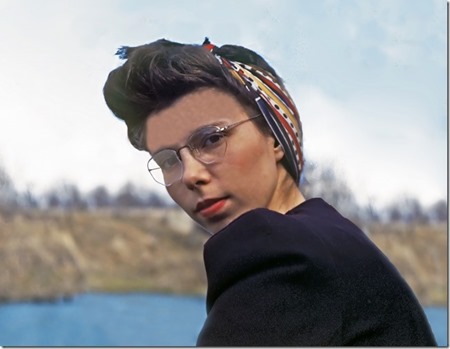
The most beautiful woman I ever met (1943):

Marjie in scarf

The most beautiful (the same one) woman I ever met, with me, 50 years later:

Ben & Marje, 50 years later

I’ve led a wonderful life. 

I married the prettiest girl. My children, my grandchildren and my great grandchildren are good-looking, good-natured and brilliant.

I’ve had, and have some wonderful friends.

In a multi-faceted career, I’ve had some exciting, interesting and rewarding jobs.

I’ve shot the biggest deer I ever saw, caught the biggest salmon I ever saw, flown the hottest (in my day) bomber, and the biggest bomber, and done acrobatics in a fighter plane.

I’ve survived multiple encounters with the grim reaper in the air, on the highway and in the operating room.

Fortunately, I’ve had a few dull moments to round out the spectrum.

My life doesn’t owe me a thing.  It has already delivered more than I could possibly ask for.

Why am I telling you all this?  Because if I wait too long, I’ll lose the opportunity to express my awe and gratitude for a richly rewarding life!

Love,

Ben sigBen's Snoopy Plane

gDad


In that recent phone call he added, “I’ve done everything I was ever afraid to do except jump out of an airplane. I didn’t do that when I had the chance because I’d hurt my foot and was afraid I’d break my leg when I landed.” Reality-based fears like that are worth respecting!

At 187 words, this letter is a clear example of a mini or micro-memoir with a theme of gratitude. It’s also a love story and a celebration of life. It hints at obstacles overcome. It touches on triumphs with faint whispers of shadows, which he did not dwell on.

He wrote other stories too, but this is his capstone. It could have been his obituary if we’d remembered we had it. What a wonderful legacy he has left. I’m in tears all over again.

I hope this can serve as an example that less may be more. Pay special attention to his last words:

 Why am I telling you all this?  Because if I wait too long, I’ll lose the opportunity to express my awe and gratitude for a richly rewarding life!

It doesn’t need to take a lot of words. Now, get those fingers flying and write on!

Who Owns Which Memory?

Cousins

I know three sisters who remember life differently, and sometimes things I hear from them drop my jaw, at least mentally. For simplicity here, I’ll call them Annie, Betsy and Connie, in order of age. All are in their mid-eighties.

One day I got an email from Connie with a scanned letter attached. The letter was from her aunt, confirming that this aunt had indeed taken Connie as an infant to her house to care for while Connie’s mother was sick.

“I can’t wait to show this to Annie! She has sworn for years that Aunt Laura never took me home with her, she just took me to a motel!”

Apparently, when Annie saw the letter, she humphed and changed the subject. Obviously this development did not square with her memory of things, and as the older sister, she was supposed to be the authority. 

During a recent visit with Annie and Connie, we got to talking about their grandfather. He let me drive his old car all over the place when I was only eleven. He even lied to the Department of Motor Vehicles so I could get my driver’s license when I was twelve. He told them I was fourteen,” said Annie.

“That’s interesting. He did the same thing for Connie,” I said.

“What?”

“She told me the same story about him taking her to get a license when she was twelve and letting her drive thirty miles to Turkey Town by herself to get something he needed.”

Annie looked at Betsy. “That’s not possible. He didn’t live near us when she was that age.”

Betsy shrugged. She didn’t seem eager to get involved. I changed the subject.

Which sister owns that memory? Did Connie hear Annie tell the story often enough that she started thinking it had been her? Stranger things have happened.

As it turns out, I may be the one with the creative memory. Connie affirmed that it was Annie’s story. “I hardly ever spent time with him when I was young.” Well … whatever. In the overall scheme of things, who cares?

This all goes to show that much of family history is myth, and a changing one at that. One key thing we collectively agree to is that the old man was a scoundrel who bent rules when it suited him and ignored them much of the time.

From the larger perspective, that matters more than which granddaughter got to drive when or where. I’m semi-sorry I sought to clarify the source.

Writing tip: Do some freewriting or journaling about conflicting stories within your family. (This may be best left unshared.)

I Want My Grandchildren to Know I Wasn’t Always Old

Old-woman-sagI watched as an old woman entered the room, leaning heavily on her cane. Although each step seemed to be a huge effort, her sagging figure was elegantly dressed, and her face, a road map of wrinkles, tastefully made up. She sat heavily in a seat near the door, in the front row, not far from where I stood, waiting to present a book talk about The Heart and Craft of Lifestory Writing.

I begin these programs by asking everyone why they are interested in writing their lifestories. I get a variety of predictable responses: “I have a few memories I want to write down for my kids” ... “I do genealogy and want to write about my family” ... “My children are on my case to write things down” ... “I’ve had some experiences I learned a lot from that may help other people.” These are all good reasons to write.

This woman had a new one, and it brought down the house. “I want my grandchildren to know I wasn’t always old!”

Her comment resonated with us all and led to an animated discussion of the way children think of anyone who isn’t free to roam around and play all day as old. How hard for them to imagine that we once saw shapes in clouds and marveled at bugs crawling across a dandelion bloom. Or that we played tag with our friends and told secrets on sleepovers or agonized over dropping the ball at second base. Or that we could ride our bikes across town when we were twelve or hang out in the woods with our friends with no adult around.

What can we do to remedy this?

WRITE ABOUT IT!

Write about those clouds and agonies and all the fun things we did. You don’t have to write long, involved stories. Write random memory paragraphs for now. Use these tips to get started:

  • Make a story idea list specifically for childhood memories. Include sensory elements like the feel of the wind on your face, the way your dark hair felt scorchingly hot to the touch on a sunny day, the scent of lilacs or pine sap on warm days, how your fingers went numb building snow forts.

    Or just start writing and let it all flow out as it will. Then go back and fill in the blanks. There is no “right” way to write this stuff.

  • List both friends and foes. All kids have both friends and people who irritate them. These people may be other kids or adults – teachers for example. Write short stories about these people.

  • Include elements of daily life. How did you get to school? Did you really walk three miles through three feet of snow, uphill both ways? Did you walk alone or with friends or siblings? Did you ride a bus for an hour?

  • What did you eat and wear? The average American diet has changed dramatically over the last fifty or seventy years. Do your grandchildren know about canned Spam? And wearing suspenders with flannel lined jeans that had matching flannel shirts?

  • Tell about your toys. Yoyos, jacks and jump ropes may seem exotic today. What about soapbox derby cars? Clamp-on roller skates with keys? Your favorite dolls or toy cars or cowboy guns?

  • Include a mix of triumphs and disappointments. It’s okay to brag, especially about childhood exploits. Especially if you balance this with remembering when you didn’t get the part in the play, that cute girl turned you down for prom, or your third-grade teacher unfairly kept you after school for passing notes when it was really someone else.

  • Take them to school with you. Don’t just tell about school. Show them the school. Use dialogue. Show them what the room looked like. Let them tag along to art class or assembly. And definitely take them along to recess!

  • Write about your own grandparents. Tell how you thought they were old and all the things you did with the.

This list could include at least 100 more items. I hope it gets your imagination flowing and your fingers moving. If you need help with details about toys, games, or anything else, Google is your friend.

It’s fine to make an anthology of random loose pieces. And, after you have a couple of hundred short-short flash memoir stories, you may find a way to string them together into a cohesive memoir. Either way, your descendants will love this legacy.

Write now: Get those fingers moving and let your grandchildren know you weren’t always old!

A Grounding [TAP?] Root of the Tree of Life Writing

Denis LedouxGuest post by Denis Ledoux, founder of The Memoir Network.

Just as with so many big projects in life, you’ll benefit by taking a moment to consider why you ought to start—or continue—to write this memoir of yours that is intriguing you and what role you anticipate it will play in your life.

I like to think of my thoughts below as one of the roots of the Tree Of Life Writing that needs to be nurtured.

You may not know it yet, but your impulse to write is probably solid.

In late autumn of 1988, as people were hunkering down for another Maine winter, I was asked to read from my first collection of short stories (What Became of Them) to a gathering of volunteer Foster Grandparents.

My collection clearly made use of autobiography—the approach to fiction that has always compelled me the most. Several dozen men and women, sitting at long tables, many smiling in recognition of elements in the stories I had just shared, said in one way or another, “These are people just like us!” They seemed to recognize the child climbing the apple tree at the edge of the meadow or to glimpse once again their own parents in the tired women and men trudging through the tenement district on their way back from the textile factory.

Most of the basic material writers work with is acquired before they reach the age of fifteen.

― Willa Cather

Story share time proves dynamic and teaches me something about why we write

After the short program of reading from my book of short stories, as has been my custom, I asked people to share their own stories with me and with each other. An astounding—but, as I was to find over and over again, completely natural—response occurred.

In a torrent, members of the audience began to tell me their life stories. These Foster Grandparents spoke with eagerness—as if speaking their stories was, at last, satisfying a hunger of long standing. Or, perhaps it was a need to preserve their story, to achieve some snippet of immortality if only in the telling to their fellow Foster Grandparents.

Their memories were set in a number of countries around the world and in a variety of cultures within the US. As people spoke, some grew animated while others exuded peace. Some spoke with pride; others with sorrow. All, however, seemed to need to tell the stories of their lives and of their families.

Stories prime the pump of memory

Once again, storytelling had “primed the pump” of memory to enable personal and family stories to pour out. After my reading that day, I left for home feeling justified in my faith in the primal function of storytelling to affirm and reaffirm meaning in our lives.

It’s fine to write for yourself—you deserve to be honored

Like the Foster Grandparents, if you need to write—or tell—lifestories because you need to establish a “monument” to your experience in the “city park” of your memory—and of the world’s memory—then you have a reason that may well see you to the end.

My big takeaway that can be yours, too.

I have come to also realize something more about writing, something that is a corollary of this need to be public: telling your story to yourself (in the privacy of your office, for instance) does not satisfy that hunger to tell.

People need to tell their stories to an audience. Sometimes that audience is your own family; sometimes that audience is much larger—as large as a city, a region, a whole country, or even the world.

Is that why you want to write: to share with a larger audience? If so, that is natural and good.

Questions to ask yourself as you start to write

Besides starting to write a memoir that records the story you so much want to tell, part of what you need to do is start to address who the audience for your memoir will be. (This is an on-going task, and you are likely to revisit it during the entire process of your writing.)

Ask:

~ who needs to hear your story?

~ whom do you need to share this story with?

Our distant ancestors told stories around the campfire. They did not tell stories just for themselves, sitting in the woods far from others: they told stories to an assembled group because they understood that telling and hearing were part of a process.

Yes, it can be intimidating to realize that your words are going to be read by an audience of real, live people—people who, in some cases, will criticize you. But, these real people—both those with appreciative remarks and those with cutting riposts—are part of your writing experience.

My send off as you begin—or continue—to write

Write for an audience (even if sometimes that audience is only you). Don’t let fear of judgement stop you. Pursue your dream of sharing your story.

Writing a memoir is important work. Do it!

Action Steps

1. Whom are you writing for? Be insightful now: whether your answer is my grandchldren or the Noble LiteraturePrize Committee. State why you have this audience in mind. What difference will this memoir of yours make for this audience?

2. If your audience is small, is there any way you could make it larger and still be comfortable with your goals? (I find that people’s sense of audience often grows as they write more.)

Denis Ledoux is the author, most recently, of How to Start to Write Your Memoir which is Book One in the seven-part Memoir Network Writing Series. This post is adapted from that e-book. Also in publication is Don't Let Writer's Block Stop You. A complete list of publications is available. To be placed on an alert list, send an email.

Not Just for Tweens

EHSIf a random person had handed me a copy of Shannon Hale’s novel, Ever After High: The Story Book of Legends, I might have flipped through the pages and admired the stunning design, skimmed a page or two and handed it back unread. I would not have known what I was missing.

Fortunately for me, the person who handed me the book was Sarah, the granddaughter mentioned in the two previous posts. This book moved into her life, luring her away into remote corners of the house and keeping her up half the night.

When Sarah finished reading the book, she began talking about it in fascinating depth and detail. She mentioned that the characters were the children of fairy tale people like Snow White, Sleeping Beauty, Prince Charming, and a long list of others. These charmed children all attended Ever After High the boarding school for all descendants of legendary characters. In a keystone event, second year students ceremonially claimed their legacy and pledged to relive their ancestral stories to keep those stories alive for the world. Should they refuse, the story and all characters in it would go POOF!

Sarah was intrigued by the fact that Raven Queen, the daughter of the Evil Queen (who poisoned Snow White), didn’t want to relive her mother’s life. She explained that the book was about Raven’s adventures as she made up her mind whether to sign the pledge. She loaned me the 300 page book to read, but reclaimed it when I was only 50 pages in so she could read it again herself. I was so intrigued that I downloaded the Kindle version.

I quickly discovered that this book is masterfully crafted, multilayered and rich, and definitely not just for kids. Raven’s struggles with self and with others are heroic, her insights profound. The issues she struggles with – personal identity, self-determination, and more – are epic and universal. Every page sizzles with action.

The part that gave me goose bumps was the insight about Story and its power to shape lives. Raven helped all the other characters, both royal and common (yes, they did have discrimination issues there), see that they are the masters of their own stories, something precious few adults in today’s world realize. They are not bound by the past – they can write new versions. They are free to write their own “Happily ever after” stories with an entirely new cast of characters if they wish. In fact, they write stories forward as well as recording the past.

That message fits perfectly with the noblest mission of memoir: process the past, pick your own path, and write a bright future.

There’s so much more to be said about this book, about finding and following Truth, about Story and differences, and many more things, but I’ll leave it to you to read and discover as you wish. I’m grateful this astute young lass convinced me to read it.

I was thrilled that Sarah was eager to discuss the book and already seemed to understand that she doesn’t have to live like anyone else, that she can invent her own life. She was excited that the book put this hunch into words and brought it to life for her. She has many years to map out and edit her “blueprint” story, and a lot more years to revise as she goes.

This book may shape her life in some small way. Isn’t that what we all hope for, that a book, a story, even a few words we write may shape someone’s life? That can happen, but only if we write!

Write now: take a cue from Ever After High. Spend some time considering how closely you are bound to the story lived by one of your parents or other relatives. Write a few stories about the similarities between you. Explore aspects of your story you’d like to change, then write a new story with the direction you prefer. Share that story if you like, or tuck it away and let it work its magic, leading you along the path you wrote of.

How Long Will Your Words Last?

Quaker-DiaryWho would expect a diary to last hundreds of years? Someone told me a few years ago about conversion journals written by Quaker women as part of what might be called an initiation into the faith. If my source was correct, the women were required to keep these diaries, presumably to demonstrate the strength of their faith and their worthiness to be accepted as members of the Religious Society of Friends.

The Lippincott tribe is descended from Quaker ancestors Richard and Abigail Lippincott, who arrived in the colonies in the mid-1500s seeking relief from persecution by the Church of England. A few years ago my husband received a copy of the Quaker marriage certificate of his grandfather’s great-grandparents, signed by everyone who witnessed the ceremony. He decided to donate this historic document to the Special Collections kept by Haverford College. During a recent visit to deliver the document, I asked to see some of these women’s conversion diaries. Unfortunately the collection includes nothing specifically identified as a conversion diary is included in the collection, but they do have a sizeable collection of other journals. I scanned the list and found a promising volume written by Anna. I’m chagrinned to realize I neglected to note her last name or the dates of the diary, but it was referenced as a “spiritual diary” and I do know that it dates to pre-Revolutionary times, so it’s about 250 years old. 

With a bit of ceremony, after I completed the formal registration and request, the volume was brought forth from it’s protected location and placed on green velvet-covered foam blocks that positioned it for reading.

“Don’t worry about harming it,” the librarian told me. “It’s sturdier than it looks.” He chilled my blood by picking it up and flexing the spine to demonstrate. The volume consists of hand sewn signatures. I couldn’t tell for sure how they were held together, because the spine was covered, but many seemed quite loose. The pages felt a bit slick, due to an invisible layer of ultra-sheer silk applied to protect them and avert further aging damage.

The text was challenging to read, written in flowery old script. Anna was thrifty with her paper. She used small handwriting and close spacing between lines, further complicating the reading by our eyes, unaccustomed to her style. Occasional ink blots didn’t help.

How I would have loved to sit there for a week and deeply ponder her words, puzzling out obscure ones and ruminating on meanings to plunge into her world. Unfortunately, our time was limited, and I had to make do with skimming several pages while my husband poured over Minutes of Cropwell meeting where his ancestors played leading roles. What I found was a powerful testament of faith, reminding me of the first four lines of the magnificat or Song of Mary:

My soul doth magnify the Lord. And my spirit hath rejoiced in God my Saviour. Because he hath regarded the humility of his handmaid; for behold from henceforth all generations shall call me blessed.—Luke 1:46-47

Such flowery, passionate language surprised me, coming from a devoted member of a sect traditionally known for stoicism.  Perhaps that element of surprise underlines the importance of this document. It challenges me to revisit assumptions. It informs me more accurately of how things really were. And isn’t that exactly what most of us hope our words will do? Set the record straight at some future time and inspire others to expand understanding?

That old diary and the Meeting Minutes are sturdy. Even without preservation they would probably remain legible and valuable for at least another century. Will our digital output endure as long? I can’t imagine it will. I’m reminded that a copy or few, printed in durable ink on acid-free paper, will increase their odds of long-term survival. Unless you plan to burn your journals, use archival quality volumes to  create a legacy for centuries to come.

Write now: make a plan for preserving print copies of at least your most important stories. Look for sources of acid-free archival quality journals. Then write something something that will set a record straight about your life or family.

Writing Prompts Aren’t Just for Beginners

Little-ShaverNo matter how long we’ve been writing, free writing, writing practice, and writing prompts remain a powerful source of inspiration. Some prompts come from books, some from websites, some from writing groups or friends, but some of the most important come from our thoughts. I was reminded of this when I found the following email snippet from my writing buddy, JS:

I was thinking last night about shaving and decided I’d write a little bit about it. I thought maybe I’d write about ten sentences. As soon as I started writing, I remembered all sorts of things I hadn’t thought about for years. I remembered how my father used to use his shaving brush to stir up some lather in his mug of shaving soap. He’d lather me and let me pretend to shave with a bladeless razor. I remembered starting to shave for real, lots of different kinds of razors, blades and electric, and barbers I’ve gone to, and how they nearly shaved my head in the Army, and all that stuff. I wrote for nearly and hour and really had fun with it. There’ some great story starts in that mess. 

This email snippet also reminded me that listening to those tiny whispers when we start thinking about “the olden days” can yield fascinating stories. It’s also great sport, like having a family reunion with memories and you get to tell al the stories. It can also lead to fame, if not fortune. JS lives in a retirement community that publishes an occasional anthology of poems, pictures and pieces of work written by residents. He submitted an essay based on the ramblings in that memory dump. He’s become a local celebrity there and heard lots of shaving jokes and stories for some time after his essay appeared.

Snippets like his are rewarding for several reasons:

  • Without his essay, his great-grandchildren may never know about shaving mugs and brushes and blades that were sharpened for reuse.
  • Writing about memories like these helps focus on them and renews a sense of connection with the past.
  • Collecting a number of related memories can help you see patterns and connections you never noticed, sometimes solving several minor mysteries of life.
  • Sharing memory stories builds community.
  • It’s fun!

We all have little daily things that bring back memories. My kitchen is haunted with memories. Two of my three cast iron skillets were wedding gifts from my grandmother. I’ve used them nearly every day for over fifty years now and thought of her nearly every time I pull one out. I have pie plates, tea strainers and other gizmos of my mothers. Peeling potatoes or carrots, making meatloaf or enchiladas, even filling the sink with soapy water brings back memories. Some of them go back to childhood, some are more recent.

I’ve written about some. After reading that email from JS, I’m motivated to write more about daily life, probably contrasting then and now.

In fact, I just stopped and filled a long Evernote with prompts that sprang to mind that I can use some morning soon when I sit down to journal and inspiration has run dry. That happens.

Write now: Call up a recent memory of times past and things you used to do. Jot down a few key concepts, then spend ten minutes (more if you get into the swing of things and don’t want to stop) and write about one of them. Start paying attention to those mental riffs and capture some writing prompts. Go back over your free-writing material and find some juicy material to develop into an essay or story.  

Photo adapted from work published by Phyllis Buchanan under a Creative Commons license.

Piles of Unfinished Stories

Boy-FishingMy mother a woman of great vision, imagination, and versatility. She was also a woman with many unfinished projects. She was a painter and an renowned stained glass artist. She made glass sculptures and sand-blasted glass creations, did batik painting, created wearable art, and occasionally mixed several media in a single project.

After she died, I looked through the sizable stack of water color pieces she never had framed. Some were obviously practice or experimental pieces. Some seemed unfinished. Others may have been finished, but she hadn’t framed or hung them. How sad, I thought, that she had left so much unfinished work. With her talent, it seemed that she should have had more to show for her efforts.

Today I see that scrap pile quite differently. As I look around the houses of my siblings and children, as well as my own, I see her art hanging in places of honor. And now I recall that her work hung in many galleries, and lots of pieces sold.

I compare her work to my writing. Both are creative, but different in a fundamental way: words don’t disappear like a sold painting. I keep it all. And unlike art, story scraps can be revised and recycled.

But our work is alike in another way. I have a huge and growing pile of unfinished stories. Most will never be finished. Perhaps the thought was incomplete. Perhaps I started it awkwardly and failed to find a way to smooth it to a finish. Maybe I got distracted halfway through, lost interest, or covered the subject in another story. Whatever the reason, I’ve kept those scraps. I may finish them one day. I may combine some into longer stories. Collectively, they record my progress as a writer.

I also keep them because I practice what I preach: “Any lifestory you write is better than writing nothing.” And, “Someday somebody is going to appreciate that scrap.” Who knows whether anyone will ever take the time to read all the stories on my hard drive? All I know is that if I delete anything, they won’t have that choice.

If anyone does go through it, I no longer care what they think of my pile of unfinished and unpublished stories, and it no longer matters to me how many pictures my mother may have sold. I’ve come to understand the joy in the simple act of creation, and that it’s often enough just to get those words on paper, whether anyone reads them or not.

But I know that Mother would be happy that her work will be admired by her family for several generations to come as it is passes from one to the next. And although it’s enough to write for my own satisfaction, I do hope my stories will be appreciated at least as long as her art.

Write now: Read through some of your old stories and find inspiration for new ones, or ways to move a few along. But more than that, reread for your own pleasure and joy.

Real Writing, Rough or Polished?

Coal&diamondAuthenticity is a big issue for lifestory and memoir writers and daunting to consider. Which is better and more authentic, those first rough drafts, or stories you’ve polished to a flawless sheen? After wrestling with this question for a seeming century, I’ve come to the conclusion that they are both authentic and real.

A family example

My mother began writing her autobiography late in her life, and her health failed before she finished. After her death, I pulled a thick folder of drafts and notes into a coherent, unpolished, story that gives a comprehensive picture of her life before she met my father. I shudder to think how much would have been lost if she’d spent time polishing!

My father is the opposite. He polishes every word. His stories are magnificent, and we have a dozen of his hundreds.

If you focus on facts and creating a legacy of history, rough works. If you focus on art, polish matters. In my opinion, both are authentic. Rough reflects honest effort to connect. Polish reflects dedication to order and esthetics.

Rough serves well to convey passion and spontaneity. In an earlier post, “Stories Around the World,” I wrote about LifeMemo.com, a site rich with real stories from everywhere. I keep going back. Raspy rawness in those rough outpourings moves me intensely. Strong emotional connection clings like a cocklebur.

Polish slides smoothly into my heart with incisive focus. Poetry may fly over my head, but lyrical phrases in poems or prose resonate within me like fine crystal bowls.

Both work. The key to the power in either case is to write from your heart. No hedging, no hiding. If you are going to write it, write it! The message I get from raw writing is that those people trust their message enough to put it out there “as it is,” messiness, and all. Like poetry, not all messy stories work, but heartfelt stories transcend messiness.

Polished writing clarifies and refines the message. Many find joy in finessing a phrase with robust writing skills. We want to tie silken word ribbons around readers’ hearts. We study, seek feedback from multiple sources, and practice until fingers and minds grow numb.

Raw writing gets memories out where they can be seen, shared, and analyzed. Polishing stories develops insight and refines your view of the world. Investing the effort to grow as a writer delights readers and shows your dedication in developing your gift.

Lumps of raw coal provide warmth, power and comfort. Diamonds delight. In the end, I see it much like the difference between Sunday singers’ heartfelt hymns and operatic arias. Each has a purpose and place, and each appeals to different tastes.

Based on my family example, if you must choose, and you have any descendants, I urge you to focus on rough quantity first. After you’ve assembled that legacy, be creative. Edit and polish to your heart’s content.

Write now: read stories on LifeMemo.com, paying close attention to how they affect you. What elements do you most strongly connect with? How can you tap into that power in your writing? Pay back the pot by leaving a simple story of your own for the global tribe.

Documentary Memoir

MathieBooksWhen I first began writing lifestories and teaching workshops to help others do the same, my emphasis was on preserving family memories and creating a legacy of personal and family history for future generations. That picture gradually enlarged to include documenting your way of life in what will soon be times gone by.

In spite of a growing emphasis on transformational, healing and confessional memoir, historical documentation still serves a valid and important purpose, one that should not get lost in the scramble to bare more psychological skin. Well-written documentary memoir can be both fascinating and thrilling.

British author Ian Mathie is remarkably skilled at this. I read each of his four  engrossing volumes of memoir straight through. I was unable to tear my eyes from the page as I read about his experiences during the 1970s in various parts of northern Africa where he worked as a water engineer for an unspecified British Foreign Service agency. Rather than commuting from cities, he preferred to live in remote villages among the people while teaching them to dig reliable wells with natural filtering systems to provide a sustainable, safe water supply. He began schools with native teachers to spread these skills to other areas.

At times he was in the jungle. Other times he was in one desert or another, and occasionally he did live in cities. He encountered witch doctors, tribal chiefs, and ordinary villagers. He was invited to dinner by four different presidents, including Mobutu. He drove all over in Land Rovers, rode trains and camels, and often relied on his small Cessna. He was a genius at working the system.

But these are not books about “The Further Adventures of Ian Mathie.” Despite the fact that his life was indeed filled with constant adventure, the emphasis in his stories is on the people he encountered, the people he came to care so deeply for, his friends for life — which unfortunately wasn't long. Most of those people and cultures were victims of one revolution or another.

The books document lifestyles of people who had highly evolved cultures, ideally adapted to an environment which was already endangered when he lived among them. My understanding and respect for the wisdom of prewestern, native cultures soared, and I expect enthralled anthropology students will be citing Mathie’s accounts in piles of research papers for decades.

Few of us have stories as inherently exotic and powerful as Mathie’s, but even ordinary life can be described in compelling ways and may seem exotic to your offspring  in fifty or one hundred years. Imagine how fascinating it would be to read the details of your great-great-grandparents’ lives more than 100 years ago. Even if all mine did was haul in the harvest and milk the cows, I’d love to know how they went about it.

Each of Mathie’s volumes has a different structure, so each has a lesson to teach on how to write as a bonus beyond the amazing content. All four of his volumes are available in print on Amazon. The first, Bride Price, is now also available in all eBook formats as well as text documents on Smashwords, and the other titles will soon follow.

Write now: write a description of your day today (or a recent one of your choosing). Rather than simply listing things calendar style, describe how you did them. Pretend you are writing for someone from 200 years ago and explain what a dishwasher is and how it works. What sort of blankets are on your bed. What does your house look like? What did you do at work if you went there? Fill them in, and tell how you felt about each activity. You may find your days are more interesting than you’d realized!

You Can’t Trust Memory!

Abq-bkydI would have bet half the farm that this picture I drew was an accurate representation of my first backyard in Albuquerque. I would have lost half that farm.

I pulled out my 64 color box of fragrant Crayolas a dozen years ago and had a blast drawing a vivid memory of that backyard, calling on artistic skills little improved since I last sat on that swing. I remembered sitting inside a curtain of leaves on the pictured stump of one of the four trunks of that willow tree. A second stump, hidden in the picture behind the two intact trunks, was cut off somewhat higher, about shoulder level for me as I sat on the lower one. I drew the grass beneath the tree, and my sandbox back somewhat behind the tree to the left. The chicken house is in the back, along with the storage shed.

Sometime later I asked my father when the two trunks had been amputated. He had no idea what I was talking about. “That tree had four trunks,” he insisted. “We never cut any off.”

Abq-bkyd-photoHis report was a jolt, but the nail in my memory’s coffin came when I reviewed blurry photos from the first roll of film I took with my first camera when I was three. This one settled the matter in my mind and convinced me, I can’t trust my memory. Mother is sitting on something – I have no idea what – in what passed for my sandbox, and the tree clearly has four trunks. There is no grass under that tree!

Where the devil did that memory of sitting on the stump having a tea party with my doll come from? I have no idea.

A later photo shows that later I did have a proper sandbox with  wooden sides around it, and as I think about it, the sandbox never could have been back where I drew it. That area was over the septic tank, and I didn’t have to be told twice not to walk there – it could cave in!

In the larger scheme of things, it doesn’t matter a bit whether I sat on that stump or not, whether the yard had grass, or the state and position of my sandbox. I’ve enjoyed that stump scene pretty much forever. To me, that’s still the true memory, whatever the evidence shows. So how should I handle this schizzy memory?

When I wrote The Albuquerque Years, a memoir of my preschool years, I intended it as a family historical document. I wanted it to be as accurate as possible, so in the face of the evidence, I chose to simply ignore the faulty-but-cherished memory of the tree stumps. The memoir is written as a simple past tense narrative, tightly confined to those few years, so there was no way to discuss discrepant memories, and it didn’t fit with the rest of the content anyway.

If my purpose were more literary and the structure more sophisticated, I might include my original memory, mentioning how happy I felt sitting there looking at blue sky peeking through green willow leaves with the scent of roses and honeysuckle wafting my way on gently balmy breezes that caressed my skin. That’s a memory I return to now in meditative moments. The memory carries its own truth, and I would let it stand on its own, with no further explanation.

This trivial example applies equally well to more substantial situations. One aim of a memoir is to document changes and insights, so it’s entirely appropriate to include discussion of discoveries such as mine – but only if they fit within the framework and structure of the story.

Write now: write about a time you discovered you remembered something wrong. What implications did the discovery have? How did you handle it? How might you incorporate this discover in a larger story?

Happy 100th Birthday to Blanche Lippincott

Blanche Lippincott, 100th birthday

Blanche Lippincott, 100 years old (photo by Susan Lippincott Mack)

Blanche-Stein-age2Although the number of centenarians is rapidly growing, having a hundredth birthday is not a once-in-a-lifetime experience for very many people. My mother-in-law, Blanche Lippincott, is one of those people, and I pause today to celebrate with her.

Blanche was born 100 years ago in Tucson, in the newly admitted state of Arizona. Her family soon moved to Ray, Arizona, a now deserted copper mining community, where they lived until she was about twelve. When the the copper industry declined, her parents, along with a few aunts and uncles, decided to move back to Philadelphia.

Blanche-&-Ezra,-Collingswood,-1938

After high school she worked for a few years in the accounting department for the telephone company. In 1937 she met and married Ezra Lippincott, and they lived happily ever after – although ever after came a bit sooner than expected. He died unexpectedly early in 1969, leaving her a widow at only 57.

Blanche-&-Ezzie,-cruise-costume-party,-1966

During those happy years they enjoyed entertaining, and their parties were always a hit. They took several Caribbean cruises back when ships were smaller and dinner was a full dress event.

After his death, she began a new career, working as a teller for a neighborhood bank, a job she held until she was forced to retire at the age of seventy.

Blanche-at-dance-class,-3-67If you asked her, she’d tell you she has had a rather ordinary life, and so it may seem to some. She’s never done anything truly flamboyant. She hasn’t set records, started a business, or written a best-seller. But she has tackled life with gusto, always open to new adventures and experiences. She’s played golf and bridge. She collected and refurbished antiques. She took tailoring lessons and dancing lessons. She belonged to Questers for dozens of years.

Hettie's-90th,-w-Blanche-&-Marty-4-24-76Perhaps her  most important attribute is her devotion to family, friends and community. When she married she became a member of the Religious Society of Friends, better known as the Quakers, and she has been a steadfast member ever since, serving on countless committees and helping with events. No family member or friend ever has to ask for help – things are taken care of, often before the need is recognized. She always has something good to say about anyone she speaks of, and she excels at showing gratitude and appreciation.

Blanche-@-brdige,-7-2003

In 1994 she moved into an independent living apartment in a  Continuing Care Retirement Community, and within a short time she knew virtually every one of about 150 residents along with their life stories. Every time we’d go from her apartment to the central area, we’d have to stop a dozen times as she greeted another resident and introduced one or both of us. It has often been difficult to reach her by phone because she’s always out at an activity. Until recently that often included playing bridge, but her eyesight has deteriorated so much that’s no longer possible. When she quit driving five or six years ago, she retired from the local hospital thrift shop where she had served as a volunteer for over twenty years.

I could not ask for a sweeter, more supportive and helpful mother-in-law, nor is anyone prouder than she of her two children and their spouses, her five grandchildren and their spouses, and her six great-grandchildren. She is the most optimistic person I know, and should I live to be 100, I hope I’ll be as vital and involved as she continues to be.

Happy Birthday Blanche. May your good health and happiness continue for every one of your remaining days.

Where’s the Story?

Getty Villa bustOver a million people visit the Getty Center and Villa in Los Angeles each year. I’m one of them. I’ve been to the Center a couple of times and last week I visited the Villa. Like other visitors, I’m blown away by the splendor of both places. The architecture is magnificent and objects and art are displayed with great care and respect.
Nevertheless, I have the sense there, as in other museums, that something is missing. As I circled the last roomful of antiquities in the Villa, I had a sudden flash of insight into what that missing element might be. My friend and I had just confessed that the prolonged standing and ambling on hard floors has become increasingly difficult over the years. Our backs were screaming for a break.
“It’s all blurring together at this point,” she said. I concurred. I also realized that it had been blurring together all along for me.
“These objects were never intended to be viewed this way,” I blurted. “They lack context in here. They are as dead as the mummy in the other room.” I glanced at a display of household utensils and my eyes fell on objects that looked like small sauté pans with ridges in the bottom.
“I find it mildly interesting that the Roman glitteratti used things like this to wash their hands at meals, but still …” I paused briefly as a thought took form. “There’s no story here!” I blurted.
Her eyes widened in sudden recognition of this obvious fact.
“These objects were never intended to be viewed this way. They were made for a purpose, and when we look at them one after another, apart from their context, they barely hint at the dramas they were involved in. I want to know who dipped her fingers into that bowl. I want to know what she was doing at the banquet, what she ate, who she talked to about what, what she wore, how many outfits she had to select from … I want to know about the servant or slave who brought that bowl to the guest and what his or her life was like. I want to know about the life of the people represented by those statues, and what others thought of the statues,” I added, pointing to the room we’d just left. 
Some of these objects fire up my imagination with hints of story, but it’s all based on modern accounts by historians making guesses little more educated than mine. Other objects hint at creative stories of design and implementation. I fill in a few blanks with imaging's of my own, but they raise more questions than they answer.
Perhaps we’re becoming jaded, my friend and I concurred. Perhaps we’ve lived too long in an era of full disclosure and developed an over-reliance on realistic depictions in any media.
As I left, I realized yet again that my mind had been craving story to add relevance to what I saw, to compare it to what I know and store it away. When the “real” story isn’t available, I speculate and fill in the blanks with fabricated context and story – or I move on and ignore the object.
I also realized that there’s nothing inherently wrong with this. Those objects did stimulate my imagination. I could weave some of those details into stories of my own making. But that’s not nearly as satisfying as knowing the “real” story, and that’s what I insist on in reading material. If a story has large holes, if it’s obviously leaving out key details and context, I’m unlikely to finish reading – unless the story is about a relative and I know enough context to fill in the blanks. That won’t be the case if too much time has passed.
Write now: pluck a couple of memory fragments of objects from your mental storeroom. Find pictures of them if you can, otherwise describe them clearly. Then do some freewriting about the stories those objects fit into. Tell how they were used, what purpose they served. Then go beyond that and work one into a scene showing them in use. Include your thoughts about them, even if you only mindlessly picked them up. These details will breathe life into your stories and help later generations understand life as we lived it. You’ll be creating a living museum of dead objects.

Milestone Memories

Milestones are key components of lifestories and memoir. The events they signify are the moments we feel our life shift or turn a corner. Our perspective changes, if only slightly, and the moments stick in memory, perhaps sweet as cotton candy residue or irritating as cockleburs.

Last night was a cotton candy milestone for me: along with my husband and our older son’s family, I attended our oldest grandchild’s high school graduation in Lake Oswego, Oregon. I tried to swallow the lump in my throat and watched through teary eyes as Keith strode to the podium, laden down with honors cords, to address his classmates and an audience of about fifteen hundred. He did so with superb aplomb. I cheered loudest of all at the end.

Over the course of the three interminable hours I spent squirming and wiggling on that rock-hard gymnasium bleacher, I recalled Keith’s birth, the arrival of other grandchildren, each graduation we’ve attended, and a long list of other milestone moments.

I’ve been thinking about milestone's a lot recently. Late May through early July is a major milestone season for my family and me. I graduated from high school on May 28. and began my first job on June 5, which was also the day I first met the man I married a year later. The last weekend in June I will attend my LAHS ‘62 50th reunion. I find the symmetry of Keith’s graduation in juxtaposition with my impending reunion compelling.

Milestone moments deserve to be celebrated and commemorated. Many call for celebration in person with others. All are compelling story topics on their own merits. I wrote a blog post for One Woman’s Day about June 5, a Double Milestone Day.

Writing about these experiences pays multiple dividends:

Personal satisfaction. Writing about happy or rewarding milestones allows you to re-experience the joy and pleasure and excitement you felt at the moment and share the energy of the experience with others.

Broadening perspective.  Focusing on individual senses, perhaps on the often-overlooked sense of smell, may reactivate subliminal memories and uncover meaningful connections to other memories. Most especially, you may find additional ways to view and interpret the situation.

Healing painful memories. Looking at painful situations from other perspectives is a primary key way to removing their sting, and as mentioned above, reflecting and writing about key memories often triggers new views and perspectives.

Clarifying your message. You may recall Mark Twain’s advice in my previous post. He urged you to begin writing afresh after completing a story to your satisfaction. Fully developing a single story as a polished vignette is terrific preparation for incorporating that memory into a more comprehensive memoir.

Creating a legacy of story. Very early in The Heart and Craft of Lifestory Writing, I emphasize that any story you write, however crude and unpolished, is better than writing nothing. I explain that my mother left behind comprehensive drafts of her lifestory. Time ran out for her, and she was unable to integrate multiple drafts and individual accounts into a finished memoir, but the details are there and her story is complete up to the point where she met my father. Her descendants and their flock of cousins will have a wider window into the past as a result.

Write your stories now, before your time runs out, and give yourself the opportunity to savor them afresh as you share them with posterity.

 Write now: if you don’t already have one in mind, make a list of milestone memories from your past. Pick one and write a complete story about it. Include lots of sensory detail along with personal reflection about the meaning the moment had for you.