Showing posts with label Inner Censor. Show all posts

“I Could Write About My Sex Life”

Gparents-love2Soon after I began teaching lifestory writing, I met with a man I knew only slightly, I’ll call him Sam. Sam wanted my advice on how to write his lifestory. I was several years short of sixty,  and this crumpling man in his late eighties. As usual, I suggested he start with a story idea list and asked him what he might want to write about. I sat patiently for what seemed like an hour while he sat silently, slumped in his chair and lost in thought.

Suddenly he seemed suffused with high noon sunshine as his head lifted. A huge smile spread across his pallid, wrinkled face. “I could write about my sex life!” he said, sounding like a child who just spotted the carnival’s cotton candy stand.

I’m embarrassed to admit this – I remember recoiling in shock. I hope that  reaction was confined to my mind and didn’t show on the surface. Age difference was definitely a factor. It’s true that I would have been stunned to hear anyone say this, male or female, but I would have pursued the topic with someone my age. Generational differences made it unthinkable to pursue it with Sam. I knew that I would absolutely not, under any circumstances, want to read about my parents’ sex life, and he was older than my father. I assumed his children would feel the same way. I’m sure a psychologist could have a ball with my reaction.

“You could …” I demurred. “It might be a little hard for your children to read ….” I swallowed and took another breath. “Is there anything else you might write about?” He visibly deflated. 

The meeting was short. I never saw or heard from Sam again.

I’d answer him differently today. I’d return his radiant smile, maybe wink, and encourage him to write about those lovely memories that obviously gave him great pleasure. He could celebrate the good times and perhaps grieve their decline. I would still alert him to the fact that his children may not want to read those accounts and remind him that he should discuss things with his wife before sharing with anyone else. But I would definitely encourage him to write for himself.

I have no idea how deeply Sam was thinking of delving into those memories or how much detail he might have included. Although I’ve never had a student or writing group member focus a story specifically on sex, some stories do call for at least a mention of the topic. In such cases, observing good taste and privacy while still providing enough detail to retain authenticity can be a challenge. I’ll save that discussion for another time.

For now, suffice it to say that writing about your sex life will bomb if you aren’t comfortable doing so. Freewriting and journaling are the best way to come to grips with your memories and feelings and the heart of your story and message, whatever the topic. Write for yourself first, then make decisions about what, if anything, to share with whom.

Write now: Not everyone has or had a delightful sex life. If you do or did, write about the joy it’s brought you. Tell how it made your life fuller and better. If you don’t or didn’t, write about that. In either case, write privately. In a journal. On scrap paper. On a keyboard. Write freely, bravely. Try lots of points of view. Write about love and lovers. Write about fantasies and spurned pursuits. Write about how and when you learned the facts of life and all you know now. Explore what turns you on and anything else that comes to mind. I guarantee you’ll learn something, and it may be downright pleasurable and fun.

If you wish your writing would spontaneously ignite when you’re done and it doesn’t, head for a fireplace or shredder. If a piece passes the blush test, consider sharing, with trusted friends or your writing group first, then openly.

Interview with Sue Mitchell, “The Memoir Muse”

Sue MitchellToday I am pleased to host an interview with creativity coach Sue Mitchell, “The Memoir Muse,” about the challenges new lifestory and memoir writers face and some tips on avoiding them.

SL: You explain on your website that your passion is to help people overcome obstacles and reluctance to begin or continue writing their memoirs or life stories. What are the most common obstacles people bring to you?

SM: Most clients come needing some form of outside approval. They want to know if their writing is any good. They wonder if they’re going about this in the “right” way. They worry about offending others by sharing their view of what happened. I help them understand the messy nature of the writing process, teach them to set their own criteria for success, and help them give themselves permission to tell their stories.

It’s also typical for beginning memoir writers to find that writing a memoir competes with other priorities in their lives, time slips away, and they don’t get to their writing as often as they’d like. Using the Japanese principle of kaizen, we establish routines and build momentum so they can make more consistent progress on their memoir project.

SL: Do you draw a distinction between the process of writing and the product? How does this influence the way you work with clients?

SM: When a writer focuses on their process, they are noticing what they’re doing and how they’re doing it. They are experimenting and learning from their trial and error. They’re observing the satisfaction of creating a well-turned phrase and the emotional release of self-expression. They assess their level of motivation to work on their project and seek inspiration. They’re driven by curiosity and enjoyment.

When writers focus on their product, they’re considering the quality of the work. They’re putting themselves in others’ shoes and wondering, “What will they think?” They’re driven by a desire to meet a certain standard.

If you want others to benefit from what you’ve written, there is definitely a time to place your attention on the product, but it’s dangerous for a writer to worry about that too early. Focusing on the product too soon can inhibit creativity and feel discouraging to the writer.

SL: I’ve been noticing a trend over the past few years in the memoir community to focus increasingly on publication rather than the process of writing. How do you see this affecting writers, especially beginners?

SM: I’ve noticed the same trend. Now that self-publishing has become so much easier, it seems like everyone wants to do it. The idea of having a published book is very appealing. But again, thinking about how your work will be received by others too early in the process can lead to creative blocks and even quitting.

It can also be overwhelming for someone just getting started to mingle with other memoir writers and hear them talk about building a platform, ISBNs, query letters and such at a time when the novice just needs to know what to do first! It’s important that writers find a community of writers who aren’t too far ahead of where they are.

Unfortunately, many writers come to internet forums as a way to build their author platform, so I think those who are nearing publication far outnumber the beginners in those communities. That can make it seem, in online circles, like publication and platform-building should be everyone’s main focus. Not true.

Besides, there are so many personal benefits to writing a memoir even if you never publish it, and I worry that many writers don’t benefit from telling their stories because they think no one will want to read it. Seeing publication as the only worthy goal means that people are missing out on the benefits of simply doing the writing.

I started my business, An Untold Story, to create an internet community focused on the creative process as it pertains to memoir writing because I noticed there wasn’t much conversation about that happening online. That’s why I was so excited to discover your work, Sharon. I love the way you focus on enjoying the process and doing the actual writing.

SL: What is the most important piece of advice you can offer new life writers?

SM: It may sound crazy, but my best advice is to lower your expectations of yourself and your writing. Set yourself up for success, not disappointment.

When you’re establishing your writing practice, start small. You’d be amazed at how much you can accomplish in 10 minutes a day if you stick with it for a few weeks. Let your writing be awful in the beginning. Give yourself permission to write a bunch of disjointed pieces and practice feeling comfortable with not knowing how it will all fit together in the end.

Lower the pressure on yourself to be a great writer or to complete a certain amount of writing within a specific timeframe. Take small steps, experiment, learn and enjoy the process!

SL: Thank you Sue for sharing these insights and tips!

Sue Mitchell Bio:

As “The Memoir Muse,” Sue Mitchell will inspire you to finally write your memoir by giving you the tools, support and confidence you need to succeed. She is a lifewriter, teacher and certified Kaizen-Muse Creativity Coach. Sue lives with her husband and son in the high desert of Colorado, where she enjoys hiking, river trips and painting. Request her free Memoir Starter Kit at www.AnUntoldStory.com.

Like Santa’s Bag of Presents

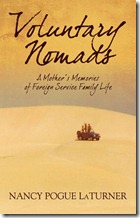
Santa's Choice“True, I’ve written a few stories, but I’m not a writer!” Such is the mindset of most beginning writers. In January of this year I posted an interview with author Nancy Pogue LaTurner based on her experience writing her memoir, Voluntary Nomads: A Mother's Memories of Foreign Service Life. I’m happy to welcome her back with this guest post building on the metaphor of Santa Claus as she outlines her writing path from novice to “real writer.”

Before beginning my memoir, Voluntary Nomads, I carried a weight around with me. Like Santa's bag of presents, I hefted my sack of stories. It was full to bursting and I needed to lighten the load by giving these gifts away.

Unlike Santa, with his centuries of expertise and magic delivery system, I worried that I was ill equipped to carry out my plan. When I began the memoir-writing journey, I didn't consider myself a writer. I could have, given my early experience as editor of my elementary and high school newspapers, columnist for my hometown weekly, and jobs throughout my working years that required writing grants, proposals, procedure manuals, and public relations material.

I didn't yet see myself as a "real" writer. Then I took a writing class, the first since college half a century ago. The teacher told us to introduce ourselves by saying, "Hello, my name is So-and-so and I'm a writer." It was embarrassing at first, and I felt like an imposter, but as the class continued over several weeks, I grew to fit the writer's costume and learned more skills to perform the author's role.

Faced with the instructor's scathing critique of my final short story in that class, I almost surrendered my name-tag along with any hopes I had of deserving the title "Writer." However, I surprised myself by having the courage to return to my story with a commitment to make it better. My persistence paid off. That story won a cash prize in an international contest sponsored by SouthWest Writers  and received Honorable Mention in the Writers Digest Magazine annual contest of the same year.

Even though more of my writing won other prizes and earned publication in two volumes of the Albuquerque Almanac and an anthology Wisdom Has a Voice, I still didn't see a real writer when I looked in the mirror. Like a department store Santa's promises, my sleigh full of gifts offered potential rather than actual achievement.

Even so, prizes and publication served as validation and infused me with energy to pursue my desire to make a book of my Foreign Service stories. I took more classes and joined critique groups. In 2009, NaNoWriMo (National Novel Writing Month) fever ignited the urge to write 50,000 words during the month of November. When I recognized the power of daily writing practice, I made January my own personal writing month and finished my memoir manuscript.

Voluntary Nomads, coverWith the first draft completed, I began a new adventure. On this journey, I learned what it takes to publish a book, and I discovered plenty about myself too. At the beginning of the trip, I couldn't have guessed that I would be able to handle the critical input of an editor, find a publisher, format a manuscript for both print and digital editions, turn color photos into black and white as well as crop and size them for both print and digital reproduction, or carry out the marketing of my final product.

I should have worn a Santa suit to launch my book. On that day, as I signed and distributed my gift of stories, I finally felt like the real thing. I recognized myself as a real writer at last and changed my identity forever.

Nancy Pogue LaTurner plays Santa to three grandsons when they visit her home in Albuquerque where she enjoys retirement with her husband, Fred. Nancy's current writing project is a suspense novel set in New Mexico. Learn more about her on her website and read my review of Voluntary Nomads on Amazon.

Write now: Write a story about your writing journey. If you’ve been writing for years, include some of the blocks you’ve faced and how you overcame them. If you are just beginning, write about your hopes and dreams, and how you will know you are a real writer. Explore elements underlying your belief that you are not yet a real writer. Regardless of your state of maturity as a writer, include your dreams for what you’d like to achieve with your writing.

Accessing Intuition

Swhite coverI recently wrote a review of Someone to Talk To,  Samantha M. White’s compelling memoir of her long process of building a life of serenity, love and happiness after falling into a pit despair when her young daughter died in a fatal car crash after a string of traumatic events. Since writing the review, Samantha and I have exchanged a number of emails about writing and memoir, and I’m delighted that she agreed to share the following thoughts as a guest post.

My rule for intuitive writing: While writing, don’t edit. Editing is the job of the brain; writing is the job of the heart. The heart knows no rules. Intuitive writing is what comes from the heart.

I believe the voice of my intuition has always been there, that we are probably all born with it. Parents, teachers, friends, and the media, in the process of “civilizing” us, overlay it with “rules” – lots of “don’ts” (”Don’t waste paper, don’t talk about others, don’t talk about sex,”) “always” (“Always stand up straight, always start a sentence with a noun phrase, always keep your prepositional phrases short,”) “never” (“Never wear white after Labor Day, never use an exclamation point at the end of a complete sentence”) and “shoulds” (A chapter should have a structure, contain action, a lady shouldn’t wear trousers in public,” etc.). I learned when I was still a teen-ager that cocktails were before dinner drinks, cordials were served after the meal. Red wine went with meat, white wines with chicken and fish. Those rules were as important as using the correct fork at the banquet table and sticking to the correct subjects in my speech and my writing. It was all part of the same very long list of Rights and Wrongs.

The rules were good to know, in order to not appear clumsy, gauche, or ignorant. But rules can pile up and eventually become so numerous that they hold the door to our intuition shut by their sheer weight. They become a barrier between us and our intuition, which is the free expression of our inner voice, our heart voice.

So accessing intuition, for me, was about judiciously discarding rules. In violation of what I had been taught, I wrote in incomplete sentences and about forbidden topics, and revealed my true self, weaknesses and strengths alike.

Does that suggest we would have better access to our intuition if we were not conscientiously “civilized” by our elders? Probably. But intuition without thought wouldn’t make for skill. I needed to know the rules AND to give myself permission to break them, first knowing, in every case, the reason why I was doing it, and measuring whether my action would cause anyone harm, and if it supported or violated my ethics and purpose.

So I guess my take on intuition is: know the rules of good writing, and then consciously put them aside and write from the heart. Write the initial drafts with confidence that they will never be seen by the reading public. Journal writing is especially valuable practice for accessing intuition, especially when we finally learn to trust that no one else is going to read it. Then we write as if we were talking to ourselves, telling ourselves only what is true and important, without regard for anyone else’s opinion of it. It helps open the door previously held shut by concerns of what others will think of us.

If writing for publication, go back afterward and check whether the writing conforms to good grammar, etc. Allow violations, but know the reason why. Always have an editor you can trust to both know the rules and respect your heart. The first step in writing a good paper, article, story, or book is to first write a “bad” one. It’s not really bad, of course, just probably in need of lots of good editing. Know the difference between editing and writing. Start with the writing.

Samantha M. WHite, MSW, LICSW, is a psychotherapist and life coach in private practice. She has earned college degrees in Pre-Med, Chemistry, Computer Science, and Social Work, achieving her most recent degree, the MSW, at the age of fifty-five. Her career has spanned the fields of medical research, education, health care administration, business and medical, hospice, and clinical social work, and she is a writer, educator, and public speaker. She lives in New England with her jazz musician husband, plays folk harp and percussion instruments, and enjoys kayaking on quiet rivers and ponds. Visit her website at http://www.samanthawhite.com/

Write Now: make a list of as many “rules” as you can think of that were uploaded into your head to govern your life. Then write a story about one of them, and how it has influenced you. Let intuition be your guide as you write, real and raw.

Turn Your Story Inside Out

Sometimes you have to turn a story inside out to find the real one.

Angela, a writing group friend, has been struggling with a story that just didn’t seem to be going anywhere. “It doesn’t have any tension,” she observed. “Nothing is really happening. Nobody would read more than a page or two.”

“So, why did you write this story? Why is it important to you?” another member asked.

Angela’s voice was tentative as she began to explain. When she got to one element she had stashed in a single paragraph near the end, she exclaimed, “I really have two stories here!” A jolt of electricity pulsed through the group.


We realized that her true and powerful story is buried deep inside the presenting story. That tiny seed of real story is where all the conflict and tension is, and the outer story seems almost dead, because it is only a shell. After Angela pulls the true story into the dominant position and gives it proper attention, the dull part will become relevant and lively.
 

A mental movie ran through my mind. I saw a cylindrical drawstring bag made of  filmy pastel silk print. It was a little wider than a fist, and deep enough to bury a hand well past the wrist. I reached into the dark depths of the bag, relishing the feel of rich velvety softness. I felt a lump attached to the bottom. When I pulled to remove the lump, the bag inverted. A rich black velvet bag now encased the silk one. A velvet-wrapped lump lay in my hand, well-padded and still hidden. It turned out to be a large jewel, sparkling in sunlight.

Thinking about the image of that bag, I recognize it as a metaphor. The original ephemeral story, bland and sweet, was hiding a true and powerful one. The bag hid and padded the jewel, removing the life that light imparts to it, and keeping it secret.

Why would you hide a jewel, I wondered. You may hide it to protect it
from thieves, dust, getting lost — and to keep its sharp facets from scratching things. Maybe you hide it because you don’t want to seem like a show off, have no place to wear it, or don’t think it’s real.

You may even hide it because it’s magic and you fear its power. Angela's Inner Censor may
have hidden it without her knowing. Or — you may not have realized the bag was magic! It was a lovely bag the way it was. Who knew treasures lurked in its depths?

Angela's enthusiasm grew as she discussed her plans for revision, and I have no doubt that the new version will crackle with tension and energy.


Besides the jewel, that magic bag held some writing tips. If you are struggling with a story

  • Ask yourself, Why did I write this story? What matters? What’s the real story here?
  • You’ll know when you find the real story. You’ll experience a surge of energy and excited recognition.
  • Find a good writing group or writing buddy to help you discover your treasures.
  • Be patient. You won’t find your jewel until it’s ready to be found.
 Sometimes the best stories are hidden inside our old ones.

Write now: pull out an old story that you struggled with, one that seems dull and boring. Ask yourself that key question, Why did I write this? Keep digging until you hit some hard, glittering truth that fires your heart with enthusiasm. Let the new energy guide you to your real true story.

How to Read Like a Writer

One of the best workshops a writer can take is found between the covers of books, and if you have a library card and return your books on time, it doesn’t need to cost a penny. Of course I’m talking about reading, often, widely, and deeply. Reading the work of others fires your imagination, and exposes you to myriad voices and ways of expressing thoughts and opinions.

Before I give you tips on how to turn your reading time into your own personal writer’s workshop, please heed this caution: Reading the polished prose of successful writers can put your Inner Critic on steroids. “I can never write that well,” it screams into your brain, hiding behind the first person pronoun as a disguise. “Why bother? My life is so dull, and my writing plain as dirt. I don’t know grammar and forget to run spellcheck. Nobody cares anyway. Why should I bother?”

Here’s what you shout back to that Inner Critic, out loud if nobody’s listening or you’re holding a cellphone to your ear: “I’m a student. I’m learning. I write better today than I did last (year, month), and next year I’ll be even better. If you look at the details, my life is amazing, and I’ll use this book to find a way to show that to other people.”

You don’t have to stick to reading memoir. Well-written novels, mysteries, travelogues, and other topical non-fiction books are also useful. Here are tips to make them do double duty for you:

  • Take notes. Since I generally read library books, I don’t make notes on the page, but I do stick in Post-It flags when I find an especially delectable description or a section that lights my fire. Right now I’m reading Christina Baldwin’s amazing book Storycatcher: Making Sense of Our Lives through the Power and Practice of Story. This book is like rich chocolate to me, so I’m taking my time with it. I’m only about a quarter of the way through, and it already looks like a porcupine, with pink quills sticking out the edges. Later I’ll sit at my computer as I go back through and transcribe notes from those sections. That works better for me than taking notes longhand on paper, but you’ll find your own system.
  • Ask the same question about the book as a whole. What did you like? What didn’t work as well? What questions are you left with? Why would you or would you not recommend this book to a friend?
  • Analyze. When you find those glowing sections, ask yourself what grabs your attention? What makes this section work especially well for you? Jot down the answers and create your own text or checklist to use when you are writing.
  • Review it. Write a review of the book. This may be a long and detailed or a few sentences. Post your review on Amazon if you feel brave and have an account. The process of writing the review helps you hone your writing skills and practice putting random thoughts in logical order.
  • Discuss it. Join a book discussion group, at your library or bookstore, or start your own. You can also find online book discussion groups. You can learn even more from hearing how other people experienced the book.
For a powerful set of examples of how to wring the last bit of juice from the books you read, visit Jerry Waxler’s blog, Memory Writer’s Network and browse through his 150+ insightful analyses and reviews.

Books are indeed a powerful workshop, but I also encourage you to sign up for occasional classes, workshops and writing groups. Books can inspire your ideas and help you craft your content, but they will never supplant the value of feedback from compassionate and insightful readers. You’ll also benefit from reading books about writing, participating in teleseminars and listening to podcasts about writing. For further guidance and inspiration, get involved with the Life Writer's Forum (see box in left column to join) or the National Association of Memoir Writers.

Write now: write a short review of the last book you read. If it’s been awhile, visit the library and check out a few. Bring home several. You don’t have to read them all, but it’s helpful to browse through them and you’ll help the library by keeping circulation stats high.

Keyboard or Paper? The Journaler's Dilemma

Photo by Paperback Writer

Last week I was pulled into a discussion of Morning Pages with a couple of other writers. One had not found them helpful and wanted to know our thoughts on the matter. This evolved into a conversation about the relative merits of writing by hand or on the keyboard.

This morning as I began writing in my hard-bound paper journal, I began feeling restless. It would be faster to write on the keyboard. I could use cut and paste and ... I began listing all the relative merits and demerits of each form and came up with the following list:

Digital journals are
  • Faster to write
  • Searchable for nuggets of wisdom that flow forth
  • Easily copied into other documents
  • Less likely to be found lying around
  • Password protectable for security
  • Subject to file corruption
  • Potentially inaccessible as technology advances
Handwritten journals are
  • Durable
  • Satisfying to write in
  • Potentially risky places to keep sensitive insights
  • Possibly making use of hand-heart-brain connection in unique way
Ultimately I realized that neither is perfect. There are dozens of purposes for journaling and some are better suited to digital and others to paper. For me, the danger of writing exclusively on the keyboard is that I may evolve it back to yet another resource for projects and lose much of the truly insightful, creative, soul-nurturing power that writing “off-line” holds for me. I write for at least a couple of hours nearly every day, and using the same place and method for journaling is risky.

I’m going to stick with my paper journal as an adventure, because I’m never sure where it will take me, and I’m going to spend more time on journal-type writing on the computer, especially for things I’m uncertain about sharing. It’s easy to password a folder, and easy to delete words after they are written. Short of destroying the volume or tearing out pages, that’s hard to do with a paper journal, and that realization is enough to deter (me) from writing with utter abandon in a bound volume. I'll use loose sheets, perhaps the back of junk mail, for that!


Although the debate about keyboard versus paper was not conclusive during that conversation I mention, conclusions we did agree on incuded:
  • Writing a journal, any journal, is better than not writing a journal.
  • No matter how you do it, journals are a great legacy, for yourself now and future generations later.
  • Sooner or later, keeping a journal will lead to insight, personal growth, and probably healing.
As I searched Creative Commons/Flickr for an illustration for this post, I realized another reason I won't abandon paper journals. I've become hooked on making my own — the physical distraction frees my creative juices — and it's immensely satisfying to write in a volume made by my own hands. In some way, this seems to give additional importance or “honor” to my thoughts and words, and that matters to me. (I could become equally hooked on buying gorgeous volumes.)

Write now: spend (at least) fifteen minutes doing freewriting — the basis of power journaling. Do it by hand, in a paper journal, on scrap paper, whatever; or do it on the computer. It doesn’t matter how you do it. It matters that you do it! If it doesn’t lead you to instant inner wisdom and deep soul healing, don’t fret. If you keep at it, sooner or later it will.

Joy Writing

Photo by Jurvetson
You know the image of the writer as a starving, tortured soul, each agonized word blurred on the page by sweat beads dripping from his brow. He writes in longhand, on a hand-hewn log desk, by candlelight, wrapped in rags against the wintry blast, with only a crust of bread to sustain his unworthy efforts, and page after page of tormented efforts are wadded into balls and tossed into the fireplace for a bit of added warmth. He makes frequent stops to sharpen the quill with which he writes or to fill the inkwell into which he dips that plume. He may occasionally resort to chopping kindling to gather his erratic thoughts, mind churning in sync with his stomach. In the depths of his heart, he knows these efforts will pay off. His words will be pressed upon millions of pages and stir the hearts of readers with passion second only to his.

You know the image. You may even relate to that image and fear to write because of it. I say to you now, forget it! It’s only a myth. Writing doesn’t have to be this way. Listen to your muse. Loosen up. Write for the sheer fun of it.

“Fun?” Your unspoken question reverberates even unto my heart and ears. Yes! I said fun. Joy. Pick up your pencil and take a joy break.

Maybe before you take write for joy, a little physical action is in order. When was the last time you zoomed around your yard, arms dipping and rising like an airplane? I admit this is not one of my daily activities, but I did try it last summer. I swooped around, dipping and diving, making airplane sounds. I marched like a majorette with knees rising high. I whirled and twirled, stopping just short of falling in a heap on the asphalt. After six or seven minutes, I felt loose as a goose, both mentally and physically. I felt young at heart, and considerably younger in body.

You can do the same thing indoors, moving wildly to magic music, something with a strong beat and lots of energy. For now, try it alone. Or blow some bubbles if you have a bottle around. Catch a few on your hand.

Now, you are ready to write. Start a story with “Once upon a time there was a little (girl or boy, your pick). S/he lived in ...” You take it from there. Make it wild. Transcend gravity. Fly. Swim under the sea. Leap tall buildings with a single bound. Be totally outrageous. Nobody is going to read this, unless you decide to share.

How did that feel? Why don’t you write this way all the time? Because your inner critic won’t let you, that’s why. Talk back to your critic (in my case, Gretchen). Say something like, “Gretchen, I know you have my best interests at heart, but I need a break. I need some joy. Please sit back, have some milk and cookies while I write. You can check it over later.”

By the way, your words will surely flow most freely if you write by hand, on paper, but that’s only one option. Do what feels write to you. Write it your way, with joy.

Start out with easy, childlike topics, and as you grow more comfortable, you’ll find it ever easier to write joy-fully, even about dark topics, knowing that your playful spirit will find the hidden blessing within. You’ll have a fresher attitude, less stress, brighter descriptions. You’ll knock away your blocks with a writer’s rush, and generally juice up your writing. Your
writer’s voice will sing. But best of all, it’s fun!

Just in case you were wondering, this child-like joy writing originates on the creative, write side of your brain, not the reasonable, rational, linear left.

Write now: with joy. Follow the directions above and write something fun, like blowing bubbles and hopping inside one to travel away to a magical place.

Living Color

I’m a great fan of Natalie Goldberg. Not long ago I read her book, Living Color. The book is filled with Natalie’s glorious art, in all its aberrant color. Natalie explains her color choices on page 3:
I was delighted one day to paint an adobe house blue. Stepping through the belief that I must paint mud brown, I experienced an explosion of energy and freedom. It was as though that blue paint were a sword slashing through illusion, bringing me into direct connection with the house’s essence. Objects began to dance unhinged from their proper pigment. That man is green, those sheep are maroon, that horse is scarlet, I suddenly wanted to shout with a new-found freedom as I gazed around me from the hilltop where I had drawn the blue house.
Her explanation about using color to learn metaphor is hazy, but I was intrigued with the idea of playing with color that way. It reminded me of a post I wrote in September about the origins of the Inner Critic. I felt bold. I wanted to play with color, and I wanted to do it the easy way, so I Googled my way to The Coloring Spot and found ready-to-color pictures. In the interests of full disclosure and truth, I’ll admit that I did my coloring on a fresh layer in Photoshop® with a virtual felt-tip pens. It would have been easier to print the pictures and color with crayons!

I began with the Great Wall of China. I didn’t give specific thought to choosing color. I just picked orange for the sky and went from there. I did add a big yellow sun, because the picture told me it needed a sun, and I didn’t want to mess with the sun. The sun is what it is. Everything else is negotiable. I also added a person (me) walking on the wall. I didn’t bother to add the other thousands of people who were there with me. I feel lonely without them, so next time I’ll draw more people.
 

The Great Wall was so much fun I turned to Mt. Rushmore. As I began scribbling, my inner child grew tired. My Brat started arguing with my Good Girl. Mommy had to put the colors away.So, I had fun. I had lots and lots of fun. Did I learn anything about writing? Sort of. I did some writing practice and discovered that I can write nutty, bizarre descriptions, wild as you can imagine. I wrote about a man who needed to have his lawn mowed to keep it out of his eyes, and a walking flower garden (a woman in a wild floral print dress. I can crumple these up and toss them into the trash when I'm done if I want. My mind grows a little wider this way. I’ve put out a few feeder roots out of my thought ruts toward more colorful descriptions.

In a few days I’m going to get out my crayons and color with my three-year-old granddaughter. I want her to know it’s okay to make the sky orange if she wants to (just in case she hasn't figured this out). I’ll invite Natalie to sit with us, in spirit if not body, since she has no children or grandchildren of her own. I know she’d have fun.

Write now: take a break with your box of crayons or marking pens, or Photoshop. Dare to color outside the lines and use unexpected colors. Be brave. Be bold. Have fun. Then go back to your writing and write something utterly ridiculous and audacious. See how it feels to use big juicy words for tiny topics.

Magic Spell to Brighten Dingy Gray Writing

Writing from an adult state of mind often results in dingy gray writing that has all the appeal of instruction manuals for installing dishwashers. The roots of gray writing go all the way back to childhood. Remember when you first started coloring in a color book? The day you made the sky bright orange and scribbled the grass purple and put pink leaves on the tree? And your mother looked aghast at your proud efforts. “You know the sky is blue. Why did you make the grass purple?” And you knew failure.  Even if you don’t remember, your Inner Critic was born that day, and life became a little less fun. So here you are now, wanting with every fiber of your being to amaze your family and friends with wondrous webs of enchanting words, and you sit staring at blank paper with your solar plexus squooshing your guts up into the back of your throat and you think of orange skies and you can no more write brightly blossoming words than fly to the moon.
TAKE HEART!
BE BRAVE!
Maori boys jumping in riverReclaim your right to chose your own colors. Release your Wild Child, listen to your heart, then color and write on your own terms. That’s the only way to amaze anyone with wondrous writing.

If you dare to try something zany, here’s a special magic spell Sarabelle taught me for keeping Gretchen out of my way. To cast the spell, you’ll need a medium-sized glass jar or drinking glass, your favorite pen or pencil and plenty of unlined paper (best for writing outside the lines, which this spell is all about). Place the jar next to your paper and pen.


Now, sit comfortably in your chair, ready to write, and rest your write hand on your paper. Place your other hand over your solar plexus (the soft triangle where your ribs begin to spread apart). Press gently and notice any sensation of tension or tenderness there. Close your eyes and take a deep, slow breath, filling your lungs comfortably full. Concentrate on the feeling of your breath entering your body. Exhale gently, relaxing and feeling peaceful as the breath departs. Feel your solar plexus relax. Repeat six times, feeling more calm and relaxed each time.

On the seventh breath, fill your lungs completely. Raise your write hand and place it below your mouth in a cupped position. Push on your solar plexus with your other hand as you exhale forcefully, “blowing” the Inner Critic out into the palm of your waiting hand. Quickly close your hand and grasp the critic firmly to keep it from slipping away. Use your other hand to raise the glass jar to one side, and slip the critic underneath, quickly snapping the jar down to capture it inside. You may or may not be able to see it. That doesn’t matter. Know it’s in there, and promise to call it when you need it, but be firm in telling it to sit there quietly. Slide the jar to the back of the desk.

You are now free to write all the
wondrous words you dream of.
To celebrate your freedom, pick up your pen and write a story about the most beautiful flower you’ve ever seen or can imagine. Write about seductive scents and ethereal lighting. Write about running around the yard blowing soap bubbles. Write about your favorite toys. Write about swinging clear up to the sky and digging to China in the sand. Write with joy and abandon and don’t worry at all what it sounds like.

Inner Critics often need lots of training before they'll stay put in their jar, but you can repeat this magic anytime yours gets loose and turns your writing dingy gray again.

Write now: about other joyous memories. Write about scary things as if you are a child telling your Grandma. Write a story about your IC. When did it appear? How does it influence you? What would you write if it were to disappear? Let your words whirl, soar and spin with joy and glee. Write like nobody is reading, and ... HAVE FUN playing with words!

Juicy Pens Thirsty Paper


SARK, poster child for Coloring Outside the Lines and Succulence, has scored another hit, and this time she is squirting her juiciness directly into the souls of life story writers. The lengthy subtitle of her fifteenth volume, Juicy Pens Thirsty Paper, is Gifting the World with Your Words and Stories and Creating the Time and Energy to Actually Do It. In her inimical style, words flow in every color of the rainbow, enhanced with her trademark doodles and fillips, fulfilling the promise of the title.

Her Writer’s Manifesto appears on the very first page, showcasing her spirit and serving as an example for writing our own:
May words and letters assemble themselves and collect without effort on pages and screens.

May I live my life joy-fully and in between and during these times, learning to dance with distractions, being conscious of the ways my writing practice fills my soul.

May my writing teach me to leap forth and lead my words to be read when this serves me and others.

May my writer’s heart be free of competition, comparison or questing for money or recognition, and remember that we all write for everyone.

May I write my truth and write authentically even after times that I might write falsely, timidly or with ulterior motives. May I embrace the challenges as well as the joys of writing.
Throughout the book, words tumble forth like frolicking children, That’s how SARK is. Bubbly, Exuberant. Colorful and juicy. She makes readers believe anything is possible, because she has done the seemingly impossible herself. Like her other books, this one sounds like it’s written by the nicest, most lovable cheerleader you could ever hope to meet. I felt like a kindergarten kid standing at a painting easel as I read, and although I’ve already written stacks and piles of stories and a growing list of books, she inspires me to write more, to keep “moving my tools” and trying new ways of writing.

Despite her sometimes simplistic approach, the book contains solid, useful advice, helping the timid get those tools moving through first drafts. She gives instructions for teaching friends and family how to be helpful. She explains how to fit writing into over-crowded schedules. She convinces us we do dare write about that! and how to manage our inner censor and writer's block. She explores ways of making our writing real and going deeper. She includes project management tips and oodles of writing prompts.

Although this is not specifically a workbook, she includes space to do some of the exercises she recommends, and peppers the pages with inspirational quotes. At the end of the book she includes interviews with five other writers, explains how she produces her own books (writing/drawing each page by hand at least four times) and fills eight pages with resources for writers that include self-publishing sites, writing tips, inspiration, and supplies. She includes lists of writers’ organizations, retreats, music for writers, and thirty-three recommended books.

It is worth noting that while SARK’s wildly colorful, handwritten pages excite and inspire most people, some find their busy-ness overstimulating, even hard to read. If you want to take a look at SARK’s style before ordering, check out her monthly eletter or take a look inside the book on the Amazon site (this Amazon feature is not yet active on August 5, but should be soon).

Write now: with a juicy pen or several, on thirsty paper, about something dashing and daring that you have done. Let your inner child out to play. Scribble, doodle, make a mess. You can edit and clean it up later. It’s play time! Or, get out your crayons and draw a picture of a childhood memory. Check out my example of such a picture.

Focus

This is my second attempt at writing a blog post today. I intended to write about the insight I discovered as I wrote my Morning Pages. But as I began writing about “wild writing” or writing as a child does, I got sidetracked into a dissertation on Julia Cameron, originator of the Morning Pages process, and that spun off into a long list of her books.

Before long I had filled a page with blather that wouldn’t do Julia credit
even as a catalog page and I had barely touched on the idea of ... I’d lost track of what I set out to do. I remembered wild writing and tried to get back to that, but the moment was lost.

Anyone who writes life stories is bound to run into this same problem. You begin writing about an event in your life, or a memory, and instead of talking about the taste of the turkey and what it meant to you, you’ve filled pages with descriptions of the family china, how Uncle Mark twitched his mustache when he laughed. and how that rotten cousin Tommy always set you up to get blamed for his stunts.

It’s not that the other material isn’t good and valuable, but the clutter obscures your point about the taste of the turkey. You need to crop this story, weed out the clutter, and keep the focus on the turkey. You may end up with a very short story, perhaps no more than a paragraph, but if that tiny story makes your point clear, it has achieved its purpose. More words do not a better story make.

With a little thought, you focus the story to begin with by clearly defining what you intend to write about before you start. Run through your message in your mind.Pick up an imaginary phone and explain this idea to a friend. With that clear mental image, you’ll find it easier to stick to the topic.

But you don’t always know at the outset what is important in a story. You may begin to write about one thing, and find the story is something else entirely. When you produce a rambling page, as I did this morning, ask yourself, “What is the story here? What’s the point?” Once you know what the point is, you can clear the clutter and sharpen the focus.

In my case, although I began writing about wild writing and escaping the Inner Censor, the more compelling story is about focus. I’ll get back to wild writing another day, and I’ll also write about Julia Cameron and Morning Pages another day.

Write now: about the difference in the way you feel when you are writing in focus and rambling. What makes the difference for you? State of mind? Distractions? Ambivalence? See where your writing takes you.

To Spell, or Not to Spell, That is the Question—Cont.

My last post on spelling and grammar hit nerves around the world. Comments varied, but one way or another, all support spelling. Some also exposed a couple of Inner Critic origins: fear of appearing stupid, and teachers (of all sorts) who feed that fear. Penelope expressed the thought in a comment that you can’t teach people to write from their hearts, “except, of course, to tell them to stop worrying about grammar.” Ybonesy recalled the horror of spelling bees. Pat shared the story of her son, whose creative writing instructor committed homicide on his desire to write. Leah, agreed that getting the story out is primary. Ken, a young man from Singapore, supports learning spelling and grammar, even if they are “broken” in daily use.

Experience supports claims such as the ones expressed in comments that teachers care often involved in the primary care and feeding of Inner Critics. When I have students come to class confessing something like, “I started to write ... ages ago ... but I took a writing class and when the instructor told us (we had to get up at 5 am every single day and write for two hours, or never to end a sentence with a preposition, or all work had to be in 12 pt. Courier font, double-spaced, or ...) I just gave up,” I get angry! My face turns red, and adrenalin flows. I flay those instructors to bits, for all to hear.

Write when you feel like writing,” I rage, waving my whole body. “Write in the middle of the night if you want. Write every day at the same time, once a week on Sunday afternoon, or only when your muse nudges you. The important thing is that you do write!” I go on to emphasize that the story is what matters, and until the story is written, there is no reason to even think about spelling and grammar.

When I work with students, whether that’s in a workshop or coaching, my primary focus in on contents. Most need help first with finding and writing their memories and stories. If some students have the basics down and wants to take their writing to a higher level, we can work on that, but only when they are ready and express that desire.

Those who do want to share stories more widely, and perhaps publish them one way or another, are likely to want to take their writing skills to a higher level. This is the time to get serious about editing. Even then, in classes and my book, I urge them to get the contents in good order, making sure they have covered the bases on the 5 W’s and arranged the contents to flow smoothly before they delve too deeply into grammar. Spelling is generally easy to do early in the game, with spellcheck. However, we all know that write, rite and right will all pass muster with spellcheck.

Believe this truth in your core: Write from your heart, and other hearts will understand. And be very careful who you listen to for advice. If a teacher, or anyone else, pours cold water or red ink on passionate writing, insert earplugs until you can flee!

Write now: about a time when criticism stopped you in your tracks. This doesn't necessarily have to be about writing. Write about your feelings after being judged harshly in any respect. Share the story or shred it, as you see fit.

Reactions to Gretchen

After posting my introduction to Gretchen, my newly emerged Inner Censor, I read it to a writing group. The first response was, “Is this fiction or what?”

“No. It is not fiction. Strange as it may sound, I did meet Gretchen, and she is quite real — at least to me.” That explanation sparked a lively discussion of reality, truth, writing about arcane events and beliefs and all sorts of good things. Somebody mentioned that it’s normal for children to have imaginary playmates.

“Sarabelle and Gretchen are not imaginary.” I assured them. A few eyeballs briefly rolled at that. If they didn’t know me so well by now, I have no doubt that some would suggest medication or exorcism!

After several minutes, we collectively agreed that I had accessed some deeper well of creativity in my right brain, and all considered it a fun story and intriguing concept, whatever the source. That seems to represent comfortable common ground for all belief systems, from secular to sacred, and it’s a tidy and functional way of putting things.

This discussion poses an interesting dilemma. If I put the story of my Inner Writing Team and all the conversations I have with seemingly imaginary people in a collection of stories for future generations, they may well think that Granny was a total nutcase, assume that these conversations are purely creative writing, or both.

Obviously, if I want them to be taken seriously, I must place these stories in a larger context. I could take the easy way out and simply explain them as the workings of various aspects of my creative subconscious, but I’m inclined to be a little more explicit. I do believe there’s more to it than that, but the alternate explanations are highly intuitive and fuzzy in my mind. It's a matter of degrees of self-disclosure. For strangers and casual acquaintances, the easy answer is fine.

One major challenge I face in writing such a story is that it keeps changing. My understanding continues to evolve as I learn new things and explore various aspects of what I already know. I anticipate this will be the case as long as I live, so whatever I write can be only an approximation. Perhaps I need to take my own advice and remember that “anything I write about this is better than writing nothing.”

Write now: about a non-traditional idea you have, whether in the “woo-woo” realm or simply questioning common wisdom and beliefs.

Write on,

Sharon Lippincott, aka Ritergal

Introducing Gretchen, My Inner Censor and Critic

It’s been nearly two years since my Muse, Sarabelle, introduced herself to me. Those of you who have read my occasional reports of Sarabelle’s influence know that she tends to be a bit feisty at times.

This morning as I sat musing about some seldom visited memories from long ago, Sarabelle tapped me on the shoulder and delivered some surprising news: She is only one of the entities on my Inner Writing Team. In short order she introduced me to Gretchen, my Inner Censor/Critic, and Betty, my Inner Editor. Then, as suddenly as she appeared, Sarabelle vanished, leaving me to my own devices to get acquainted with her colleagues.

With a bit of trepidation sparked by her forbidding appearance, I choose to begin with Gretchen. I
’m immediately transported to the hallway of a prison, in front of iron bars across gray cells. The cells are surprisingly bright, lit by a small barred window, high on the wall. Despite the light, there is no color in this scene.

Gretchen stands before me, a study in black and white herself. Her austere black leather outfit and knee-high boots match her stick-straight, raven tresses, in sharp contrast to her pale complexion. Her eccentric outfit bares her right shoulder for ease of motion as she keeps unwanted memories and stories at bay. Measuring no more than five feet in height, and wiry in build, she’s surprisingly small for someone who appears so menacing. She stands facing me, silent and staring, with arms tightly crossed, black whip clenched in one hand, and a huge ring of keys on her other wrist. She is not the sort of person I generally care to deal with, but I must get acquainted. The significance of her sudden appearance is immediately apparent.

“Gretchen, I’m pleased that we are finally meeting. I appreciate all the fine work you’ve done over the years guarding my darker memories. Now I need your assistance in visiting them.”

“That is forbidden!” she barks in reply. “They are locked in here for good reason. They will make you unhappy and hurt you. They can hurt other people. It’s for your own good that I do this!” Her earnest fierceness is almost comical in its intensity.

“I understand. I have no intention of opening the gates and letting these monsters run amok, but I need to talk with them to gain some important insights. I’ve been getting appeal requests from several and need to evaluate their cases.”

She responds with a long string of admonitions warning me of dire consequences, questioning my motives, my judgment, even my writing skills, and generally tries to scare me off. My resolve begins to weaken, but then I recall why I’m here. Those memories are part of me, and I’m determined to know them better, liberating the ones that can be absolved. Many have served their sentences and are due for release. Others may have gotten a bum rap to begin with. I realize that reason will not work. I’ll have to pull rank to get past her.

“Thank you Gretchen. No one can fault you for lack of dedication. Here is a list of four memories I wish to visit today. Please bring them to me in my study. I’ll expect them to arrive in five minutes. That will be all.” With that, I return to my study, settling into a comfortable chair with a cup of fresh coffee and a pad of paper, ready to proceed with the interviews.

Right now I have my work cut out for me dealing with those old memories. I’ll find Betty some other time.

Write now: about your muse, Inner Censor, or Inner Editor. Do these entities have names? What do they look like? How do they act? What do they say when you talk to them? If you’ve never had a conversation with any of then, do some writing practice in dialog form and see what emerges. You are bound to be as surprised as I was at what emerges.

They Do Notice

Your family will notice your mistakes. At least some of them will. And that's okay!

Last week I had a brainstorm: I'd print out a copy of Tosh and the Water Guns to mail to one of my grandsons with another gift. I hoped he'd get a kick out of reading a story that features him as the central character.

Two days later, the phone rang. It was Tosh. My story had made it from Pittsburgh to San Diego in jig time. He didn't call specifically about the story, and he hadn't finished reading it yet; however, he did let me know that he'd “kind of” read my story. “And I found a typo,” he reported. I thought I detected a bit of glee in his voice.

“Really! You found a typo? What typo did you find?” I asked.

“You said rally when you meant really,” he informed me.

“Wow! That's great! You have really good eyes, and I'm glad you told me about it so I can fix it,” I assured him. “I'm proud of you.” I could feel him glow all the way across the country. I doubt he expected to be praised for criticizing something, but I considered it a good opportunity to reinforce good proof-reading skills, and show him that criticism can be taken with a positive atttitude.

When I hung up the phone, I had to chuckle. Tosh isn't much on writing letters, or even e-mail, but few eleven-year-old kids are. When I was his age, I did write to my grandmother, but always with a bit of trepidation. I was afraid that she would find mistakes and I had a nightmare that she'd fill my letters with red ink and send them back. She had been a school teacher for a couple of years before she was married. In reality, she never would have done that and might not have noticed the mistake, but the fear detered me from writing more often.

Thinking about the situation, I realized that young kids, or even older people in families now may notice mistakes like this. They may mention them, perhaps even sneer, but don't be deterred. Thank them for being on your proof-reading team (I'm talking about genuine typos and other mistakes here, not differences in memories), fix the mistake (if it isn't in a bound volume) and let it go. Posterity will be so glad to have anything you've written!

Write now: about typos and other goofs that have caused you grief.

Write on,


Sharon Lippincott, aka Ritergal

Brain Dumping

The story I started in the last post about story catching goes on. I learned that Stephanie and I needed to go beyond that interview. My understanding was that it would be a great help if I’d just write down a few memories from my childhood. That seemed simple enough. Or so it seemed, at first glance.

In a post about six weeks ago I mentioned that having finished The Albuquerque Years, I was moving on to The Los Alamos Years. Many readers may relate to my report that I’ve been feeling a little stuck with that project. Aside from life getting in the way over Christmas time, I was getting bogged down in detail and doing battle with my Inner Censor.

Yesterday brought an amazing breakthrough that benefited both needs: Stephanie’s project, and my own “stuckness.” I was ready for a quick break from the intense concentration I’ve maintained for a couple of days as I worked to prepare my presentation on “Picture Perfect Pages” for a session at the 2008 Stories From the Heart conference sponsored by Story Circle Network in Austin on February 2. I sat down at the keyboard and began a brain dump of my childhood. I covered the first six years in a single paragraph, because she can read about that in The Albuquerque Years.

Moving quickly through the turbulent year I attended four different first grades, I settled into Los Alamos. My fingers flew. I wasn’t concerned with format — paragraphs ran together, and I double-spaced between major thought clumps. As Natalie Goldberg would put it, I was simply "writing down the bones," and that’s best done at a goodly clip, without pausing for serious thought.

At first I’d thought I could finish this dump in, oh, maybe a couple of hours, tops, hopefully less. The clock said it had been six hours when I saved the file for the last time, but I had taken advantage of the astonishing 70ยบ weather to do some quick yard clean-up and tend to other chores. Altogether, I spent about four hours on this brain dump. In the end, its 6750 words filled eleven pages.

This account barely scratches the surface of what I remember, but it does a good job of skimming the surface. If I were to die tomorrow and leave only this, at least my descendants would know there is an iceberg in the sea, even if they see only the tip. I feel very good about getting this much done. It’s a huge relief. Now I can go back at my leisure and write flesh onto these bones.

I think it will be much easier to fill in blanks in this framework than to have done it the way I began — trying to remember everything from a single year before moving on to the next. I should have known to do it this way to begin with. That’s how I began The Albuquerque Years, with a fast and furious brain dump (though that one took many hours longer). Later I went back and found the holes, more than doubling the length.

So, if you are feeling stuck, try doing a brain dump. Use broad strokes, and write as fast as you can. I used the computer. I have more endurance at the keyboard than with a pen or pencil, and had to get the product to Stephanie right away. You may do better writing by hand.

Write now: do a brain dump of something you’ve been putting off writing about. It doesn’t have to take hours — even ten or twenty minutes will give you a powerful start.

Write on,

Sharon Lippincott, aka Ritergal

Melting the Ice Around Your Truth

My words are stuck. They are not stuck in my fingers. They are not stuck in my mind. They are stuck in my heart, frozen in an iceberg of indecision and doubt. I sense my Truth is in there, but it remains veiled, refusing to reveal itself. How do I move forward?

Have you ever felt that sensation? Like you know there is something you really need to write, but you aren’t even sure what it is? You don’t even know where to begin?

One of the best ways is to begin is with free writing. Begin by writing the phrase "I can't write about ..." at the top of a piece of scrap paper. Then list as many things as you can think of that you can't write about. Don't worry. You are going to destroy this list as soon as you make it.

Then pick one topic and use it as a free writing topic. Sit down with several sheets of scrap paper and a smoothly writing pen — a gel one is excellent, because it hardly drags on the paper — and start writing. When you are tempted to quit writing, pull rank. Exert mind over fingers and persist. No matter what, keep the fingers moving, and don’t stop. The results are likely to sound something like

I can’t write about the day I gave Samuel’s ring back. I can’t write about the reasons. I can’t write about them because my fingers stop moving when I try. I can’t just say to my fingers WRITE they won’t listen they just sit there lifelessly with a life of their own saying NO this is not something to write about you really can’t write about this and I say write about it anway just go ahead and say the words if I talk about giving the ring back I’ll admit I can’t write it that I never loved him in the first place and felt so guilty about ...
This doesn’t need to make sense. This isn’t about eloquence or even coherence. It’s about unblocking, about thawing that ice in your heart and letting the words gush forth again. It's about healing your soul, finding more about who you really are and what your deepest Truth is. You may set a timer for as little as ten minutes, or you may find words begin to gush and you write for an hour or more.

When you are finished, you have a choice. You’ve managed to write. You can reread the words. You can keep them. You can highlight thoughts and passage you want to work with later. Or you can destroy them in the fireplace or shredder. The important thing is that you wrote about something you dreaded writing about.

How does that feel? Brave and empowered? Relieved? Or maybe a little scared about defying your Inner Censor?

Don’t be surprised if you feel blocked again when you next try writing about this topic. It may take more than half a dozen sessions of free writing to chip away the ice surrounding your Truth, and it may not look anything like you thought it did when you finally liberate it, but it’s worth persisting for the insight you gain.

This is not a topic that can be intellectually explained. You’ve got to try it to “get it.”

Write now: find some scrap paper and set a time for ten minutes. Write bravely about a secret you are terrified to tell anyone. It may be old, it may be new, but everybody has at least one. Start with “I can’t write about ... ” When you are finished, burn or shred what you wrote.

Write on,

Sharon Lippincott, aka Ritergal

Unravelling the Mystery of You

After decades of keeping a secret so large he can hardly believe it himself, he needs to tell his story, to know who he really is.
— Jesse Kornbluth
These sentences appeared on Jesse Kornbluth’s electronic concierge service, Headbutler.com in a review of the book, The Mascot: Unraveling the Mystery of My Jewish Father's Nazi Boyhood, by Mark Kurzem. I urge you to click over to Headbutler.com and read the whole review for yourself, then pick up a copy of the book — or urge your library to do so.

Although this book bears the name of Mark Kurzen as author, it was written at the request of his father, Alex, who felt the need to unburden his soul by revealing the past, and he chose his son as the instrument of doing so.

I have not yet read the book, though I have ordered it. I don’t need to read it to recognize the truth in Kornbluth’s words about the motive behind it: Alex Kurzen needs to tell his story to know who he really is.

To me, that crystallizes the essence of lifestory writing: to learn more of who we are through the telling of our stories.

Many people will find it sufficient to tell their stories orally to become more self-aware, but those who take the time and make the effort to write those stories, and to keep writing them until they become organized, coherent, and complete, will gain the most insight of all. Their souls will be lit by the brilliance of Inner Truth. That insight becomes a powerfully moving force, capable of making a difference in your life and the lives of those who read your words.

Many people may read the preceding paragraph and think
That’s fine and good if your past was as flamboyant as Abe Kurzen's, filled with fantatic experiences. What Truth could be found in the story of someone who spent forty years working rotating shifts on a production line? My life is no different from thousands of others. It would put anyone to sleep!

Production worker, grocery clerk, stay-at-home-mom, insurance sales representative, corporate CEO. It doesn’t matter what work you’ve done, how glamorous it’s been, or how highly regarded or compensated you were. Writing about your life, if only for yourself, can bring out the color and nuances. You can discover small sources of joy, and put regrets in perspective by reliving them in ink. Besides, work and lifestyles that seem deadly dull today will be fascinating to people fifty or a hundred years from now who won't be able to imagine life as we know it and wonder how we went about our days. If you don't tell them, who will?

I urge you to heed Jesse’s words. Slay your Inner Censor, then tell your story and learn more of who you are. You may be surprised at some of the things you discover.

Write now: on disposable paper, about your deepest secret. What is it? Why is it a secret? What would happen if people (specific people, or people in general) found out about it? When you are finished, if you have any concern about anyone finding and reading it, burn it or shred it. The simple act of writing will have empowered you and begun a process of self-discovery.

Write on,

Sharon Lippincott, aka Ritergal

The Story That Herm Wrote

I’ve spent most of the past week listening to audio books as I lay in bed with pneumonia. I’ll spare you the details of the illness, other than to tell you that I couldn’t concentrate well enough even to read. I’m starting to feel human again, but not quite ready to write a full-length blog. Instead, I will share a story I received from a good friend in an e-mail recently.

I met Herchell “Herm” Newman through the Lifestory YahooGroup, (now the Life-Story-Writing Group) about five years ago. Finding one of Herm’s stories in my inbox has always brightened my day. Three years ago I was thrilled to hear that one of his stories had been chosen for inclusion in Chicken Soup for the African American Soul. Now, that’s quite a distinction!

Herm’s stories revolve around his family, his faith, and sometimes his career as a fire fighter — an occupation he retired from a few years ago. They are tender to the bone, with just the right balance of meat and sweetness, well-seasoned with humor. They warm both heart and soul.

I especially liked this story he recently posted to the YahooGroup, and asked his permission to share it in the blog:

Sunday’s choral experience was massive joy. From the time the curtain opened, the first musical chords were struck and the first words sung...the heart of the congregation moved toward us like a tide of smiling faces. Soon they were on their feet clapping their hands and singing along.

Director Adams had me seated in the middle of the front row. Before the curtain opened he said to me, “Herchel, after you sing two verses, pass the mic back to your father and he'll sing a couple.” I replied, “I'm gonna have a mic!?” Everybody laughed. He said,
Perhaps I should have just passed it to you at the appropriate time. Seems I’m putting too much pressure on you.”

Thomas (aka Tommy) Adams, has been a man of music for about thirty-five years in and around Columbus,Ohio. This day was to be his last because he is relocating to LA. I wanted to honor God by honoring his musical servant. This meant putting my lack of confidence aside and giving from my heart in unison with the congregation.

Tommy, has a great sense of humor. It endears him to people. When it was time to sing
All That I Own", Jesus gave it to me, He built up the introduction. “...and leading this song will be Brother Herchel Newman!” He handed me the mic without meeting my eye. Singing was as joyful and easy as singing in the kitchen waiting for the apple pie to come out of the oven.

I saw Tommy glance my way so I passed the mic back to Dad. His voice is as strong as ever and those who know him get excited when he stands before them to sing. First timers are always amazed. I looked to see the faces of first timers in the audience. When we finished the chorus I was nudged on the shoulder. Dad, had passed the mic back to me. I gave myself to the song and then some after the music stopped. At that point we were a choir and church on one a-chord . He later said, “You were really feeling the song. It was yours to sing.”

The song ended with an Amen. The musicians added the final notes. The curtain closed. Tommy Adams, is moving on. God, is always creating. The curtain will open again.

This isn’t a fancy story, but it is a powerful one. It comes straight from the center of his heart and truth. I share it for a reason beyond its simple elegance. Many people hesitate to write about their own triumphs; their Inner Censor screams loudly that humility is a virtue and these stories amount to bragging. Triumphs are important parts of our lives. They are our moments of intense joy, and no portrait of our inner self is complete without them. They empower future generations to face their own demons and excel in their own ways.


Herm’s story is a virtual template of how to do this, in a tasteful, humble way. He shares his angst, clues us in on the method he used to rise above it. Along the way, he pays tribute to others, and finally takes us with him as he soars. Although I did not verify this, his purpose seems more to pay tribute to Tommy, his father, and the power of love and faith than to glorify himself.

Write now: about a triumph of your own; a time you overcame your fears.

Write on,

Sharon Lippincott, aka Ritergal