Showing posts with label Celebration. Show all posts

Don’t Wait Too Long

Ben-Melton-1998As I mentioned in my last post, my father died last month. The last few weeks I’ve become obsessed about writing family stories while digging through genealogy material and old pictures. I’m finding dozens of dots I never noticed before and discovering new insights with roots that reach beyond the Civil War.

One of the most touching things I’ve found is this emailed letter from my father that’s been lurking in my files for a couple of years. He must have memorized this piece. He recited it, almost verbatim, with a few new embellishments, the last time I talked to him, shortly before he died. I’ve been wishing I’d thought to turn on my phone recorder that day, but no matter. Turns out, I already had the transcript. I don’t think he’ll mind my sharing it as a tribute to him with a message for all of us.


Reflections on my life
Ben Melton, June 25, 2015

The most beautiful woman I ever met (1943):
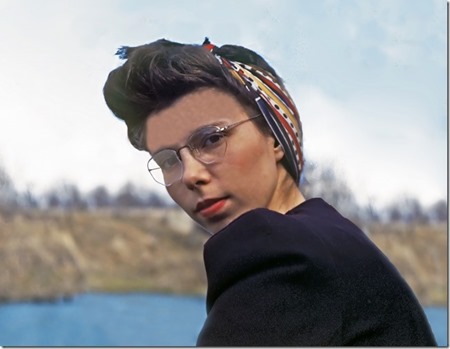
Marjie in scarf

The most beautiful (the same one) woman I ever met, with me, 50 years later:

Ben & Marje, 50 years later

I’ve led a wonderful life. 

I married the prettiest girl. My children, my grandchildren and my great grandchildren are good-looking, good-natured and brilliant.

I’ve had, and have some wonderful friends.

In a multi-faceted career, I’ve had some exciting, interesting and rewarding jobs.

I’ve shot the biggest deer I ever saw, caught the biggest salmon I ever saw, flown the hottest (in my day) bomber, and the biggest bomber, and done acrobatics in a fighter plane.

I’ve survived multiple encounters with the grim reaper in the air, on the highway and in the operating room.

Fortunately, I’ve had a few dull moments to round out the spectrum.

My life doesn’t owe me a thing.  It has already delivered more than I could possibly ask for.

Why am I telling you all this?  Because if I wait too long, I’ll lose the opportunity to express my awe and gratitude for a richly rewarding life!

Love,

Ben sigBen's Snoopy Plane

gDad


In that recent phone call he added, “I’ve done everything I was ever afraid to do except jump out of an airplane. I didn’t do that when I had the chance because I’d hurt my foot and was afraid I’d break my leg when I landed.” Reality-based fears like that are worth respecting!

At 187 words, this letter is a clear example of a mini or micro-memoir with a theme of gratitude. It’s also a love story and a celebration of life. It hints at obstacles overcome. It touches on triumphs with faint whispers of shadows, which he did not dwell on.

He wrote other stories too, but this is his capstone. It could have been his obituary if we’d remembered we had it. What a wonderful legacy he has left. I’m in tears all over again.

I hope this can serve as an example that less may be more. Pay special attention to his last words:

 Why am I telling you all this?  Because if I wait too long, I’ll lose the opportunity to express my awe and gratitude for a richly rewarding life!

It doesn’t need to take a lot of words. Now, get those fingers flying and write on!

How to Write About a Change of Perspective

Celebrate-not-celibate

The meme you see above has prompted millions of laughs, but can you imagine a more life-changing moment than a priest, monk or nun hearing this revelation after decades of devotion?

Misperceptions like this do happen, and they can shape lives. This meme came to mind recently when a woman told me how she spent her child and early adulthood terrified of burning in hell. She knew in the core of her being that ministers thundered messages of hellfire and brimstone “all the time.”

Eventually she discovered that her particular church believed that yes, the wicked did perish in “The lake of fire,” but they did not burn forever. The perishing was mercifully quick and permanent. The wicked were punished only by being deprived  of the multitude of blessings the righteous are due to receive. She did hear about a lake of fire. That was true. But the burning forever part must have leaked in from outside, according to her informant. “I assure you, that was never part of our teaching.”

By the time she heard this, she had moved away from that church. But learning this still angered her: I didn’t have to spend all those years so scared!

Now she’s wondering how to write about this: “I really did believe that. That is how I heard it. If I was wrong, and I only have that one person’s explanation to go on, I still totally believed it. But now things have changed. And I’d definitely never go back to that church. How do I tell this story?”

“That was your truth back then, and nothing has changed that,” I said. “Not even finding out you were, or might have been, wrong.” My advice to her was simple and four-pronged.

1) Write about what life was like back then. Explain what you heard and how that affected you.

2) Write about the whiplash you experienced when you heard the other point of view. Who told  you? How did you know to believe it? How did that affect you? How did you and do you feel about all this? What has changed?

3) Write with compassion. True, you may feel angry and betrayed. Own that and write it. Then consider the angles. Did any one purposely deceive you? Did you ever ask for help or tell anyone you were scared?

4) Sum it all up. By the time you’ve written through steps one, two and three, you will probably be feeling some closure, if you weren’t already there. Stories demand it, whether they’re still at the stage of self-talk or written down. Readers crave it.

Conflict or tension, especially the internal sort, is the meat of this and any story. Jump into the middle of the mud with both feet and let it all rip. Be brave. Write it real. Polish it to flow smoothly, but leave those emotions in place. They are the lifeblood of your tale. They add the juice and the glue that bonds reader to story and helps them gain their own insight from your message.

A Delicious Way to Eat Your Words

Eat-Words

Thanks to the efforts of his creative wife Vivian, on May 9 this year, about thirty people helped Don Duncan eat his words.

We were all gathered at the Whitehall Public Library in Whitehall, Pennsylvania to celebrate the conclusion of The Power of Memoir, an eight-week series of classes  that I had the pleasure of leading. Each week a dozen eager students gathered for two hours to learn a few pointers from The Heart and Craft of Lifestory Writing. During the class, they read stories based on their assignment for the week.

Each week we had a predictably wide spectrum of stories. Some, like the one about a woman’s first date with the undertaker who became her husband, had us howling with laughter. Stories about growing up in foster care touched our hearts. We shared memories of growing up around the South Hills region of metropolitan Pittsburgh, holidays, and other aspects of life.

At the conclusion of the class, students brought their favorite stories to a Saturday morning event at the library and read them to friends, family and library patrons. Mary Kay Moran, the librarian who arranged for the class, provided a magnificent continental breakfast, and the crown jewel of the occasion was the cake you see above.

Don Duncan had read a story, “Singing Brings Joy.” His wife, Vivian, surprised everyone with the cake you see above. She knew which story he planned to read. She took the story file to her favorite grocery store’s bakery and had them print the first and last pages on special edible rice paper with edible ink. She explained that this is the same process they use to print pictures and other messages not formed with the traditional piped icing.

“You put the icing on the cake and immediately put the printed rice paper on top. If you order a cake, they’ll do this for you. I bake my own. It’s important to put the paper on as soon as you finish spreading the icing so the oils in it ‘melt’ the rice paper right into the surface. If you wait too long, it won’t react correctly, and the paper just sits on top.” She told us they’ll print anything and just charge you for the printed page, as long as you assure them no copyright violation is involved.

We enjoyed each story we heard that morning, and then we enjoyed eating Don’s.

As predictably happens with such a class, the group wanted to keep meeting to write and read together. The library agreed to provide space and Mary Kay has taken the lead to facilitate the group. I look forward to stopping by for a visit once in awhile.

I was excited to hear last week that a similar group is underway at the Community Library of Allegheny Valley in Natrona Heights north of Pittsburgh, led by Caitlin Bauer, one of the librarians there. I was especially thrilled to learn that Caitlin is using a leaders manual I prepared a couple of years ago to help libraries around the county start these groups.

I published that manual under a Creative Commons license, making it available for free for anyone who wants to start a group. I put no restrictions on its use, though I hope all groups will be open to anyone who wants to participate without restriction based on gender, etc. I do realize that organizations like Senior Centers may have age restrictions, but beyond that, in my opinion, diversity is the key to the success of these groups. So far more than a dozen groups have validated that it works.

You don’t have to be a strong or experienced writer to lead a group. The manual includes an outline for a six week workshop to get people started. Beyond that, people learn from each other. The leader’s main role is making initial arrangements and keeping people focused on their written stories rather than reminiscing during meetings.

If you are interested in starting a group, send me an email and I’ll be happy to send you the pdf file and answer any questions you may have.

Write now:  1) Be adventurous. Send for the Leaders Manual and use the suggestions for finding a location and group members. This will be one of the most rewarding things you’ll do this year. Start planning now to start a group this fall.

2) Bake a cake and let somebody eat his or her words – or yours.

“I Could Write About My Sex Life”

Gparents-love2Soon after I began teaching lifestory writing, I met with a man I knew only slightly, I’ll call him Sam. Sam wanted my advice on how to write his lifestory. I was several years short of sixty,  and this crumpling man in his late eighties. As usual, I suggested he start with a story idea list and asked him what he might want to write about. I sat patiently for what seemed like an hour while he sat silently, slumped in his chair and lost in thought.

Suddenly he seemed suffused with high noon sunshine as his head lifted. A huge smile spread across his pallid, wrinkled face. “I could write about my sex life!” he said, sounding like a child who just spotted the carnival’s cotton candy stand.

I’m embarrassed to admit this – I remember recoiling in shock. I hope that  reaction was confined to my mind and didn’t show on the surface. Age difference was definitely a factor. It’s true that I would have been stunned to hear anyone say this, male or female, but I would have pursued the topic with someone my age. Generational differences made it unthinkable to pursue it with Sam. I knew that I would absolutely not, under any circumstances, want to read about my parents’ sex life, and he was older than my father. I assumed his children would feel the same way. I’m sure a psychologist could have a ball with my reaction.

“You could …” I demurred. “It might be a little hard for your children to read ….” I swallowed and took another breath. “Is there anything else you might write about?” He visibly deflated. 

The meeting was short. I never saw or heard from Sam again.

I’d answer him differently today. I’d return his radiant smile, maybe wink, and encourage him to write about those lovely memories that obviously gave him great pleasure. He could celebrate the good times and perhaps grieve their decline. I would still alert him to the fact that his children may not want to read those accounts and remind him that he should discuss things with his wife before sharing with anyone else. But I would definitely encourage him to write for himself.

I have no idea how deeply Sam was thinking of delving into those memories or how much detail he might have included. Although I’ve never had a student or writing group member focus a story specifically on sex, some stories do call for at least a mention of the topic. In such cases, observing good taste and privacy while still providing enough detail to retain authenticity can be a challenge. I’ll save that discussion for another time.

For now, suffice it to say that writing about your sex life will bomb if you aren’t comfortable doing so. Freewriting and journaling are the best way to come to grips with your memories and feelings and the heart of your story and message, whatever the topic. Write for yourself first, then make decisions about what, if anything, to share with whom.

Write now: Not everyone has or had a delightful sex life. If you do or did, write about the joy it’s brought you. Tell how it made your life fuller and better. If you don’t or didn’t, write about that. In either case, write privately. In a journal. On scrap paper. On a keyboard. Write freely, bravely. Try lots of points of view. Write about love and lovers. Write about fantasies and spurned pursuits. Write about how and when you learned the facts of life and all you know now. Explore what turns you on and anything else that comes to mind. I guarantee you’ll learn something, and it may be downright pleasurable and fun.

If you wish your writing would spontaneously ignite when you’re done and it doesn’t, head for a fireplace or shredder. If a piece passes the blush test, consider sharing, with trusted friends or your writing group first, then openly.

Ritergal’s Birthday

15-birthday-cakeHeavens to Betsy, today is Ritergal’s birthday, and  I just realized she is a teenager, In fact, she has been a teenager for a couple of years. That could explain a lot of things, but I won’t go into that. In honor of her birthday, she’s my guest today, sharing her flash memoir, previously unread and unedited by me:

That woman, the one whose fingers I’m using, thinks I’m only fifteen, and she thinks she calls the shots. Little does she know. I’m ageless. For several decades I lurked in a hidden closet of her soul, just beyond her awareness, waiting for the right moment to make my debut. In 2000, the time was finally right. The turn of the century signaled the coming of age of both the Internet and my lovely hostess’s relationship with it.

In 2000 She found the ThirdAge.com site and soon discovered that she could build her own website on it, for free. Back in that pre-Facebook era, people were leery of revealing their true identity online, and many adopted web names. She thought she made up the name Ritergal – sometimes she claims her muse Sarabelle gifted her with it. The truth is that I took that opportunity to step out of that closet and onto the Third Age stage she built for me.

The fun part of this story is that she thinks Sarabelle gifted her with an extra name, a costume of sorts. She wrote a post about that ages ago. I know Sarabelle well, and she was in fact in on this ruse. While it’s true that Sarabelle did introduce me, in a whisper as our hostess rightly proclaims, Sarabelle didn’t bestow the name on Her, she introduced me.

Sages that we are, Sarabelle and I have known the secret of Point of View for ages. We know what we know, and we know that it suits us to let Her believe her version of the story. I’m perfectly happy to let Her believe she is me or vice-versa. Let her enjoy this benign case of paramnesia. We all win.

But a teenager I am not, and that fact explains nothing about me. Considering the stage of our relationship, it might explain a lot about Her. But do understand, I am not complaining. She treats me well and we get along great. She’s a great sport when I decide to have fun – I think she’s secretly glad. I do what I can to help and support her. In fact, most of the time I enjoy acting like a responsible, mature (as long as that doesn’t mean stuffy!) human being. It’s a good cover.

She celebrates my birthday. I celebrate Liberation Day and my anniversary with Her. Hey, Sarabelle, party’s on!

Count me in on that party. Oh, wait … did anyone look at the calendar today?

Write now: in honor of April Fool’s Day, write a spoof of some aspect of your life. Make it an open-ended spoof so nobody’s quite sure at the end. Let them wonder. It’s not too late if you read this after April 1. Write it anyway and have fun doing it. Play is strong meat for anyone’s soul, and it’s essential for writers.

Respecting Your Writer’s Voice

Writer-Voice“It’s critically important to find an editor who will respect your writer’s voice and not try to change it into her own.”

Electric agreement surged through  the room during a Penn Writers self-publishing workshop offered last weekend by acclaimed Pittsburgh author Kathleen Shoop. Heads nodded, and a ripple of “Mmm hmm” rose and fell.

I exchanged nods with friends sitting on both sides. Then a memory tempered my thought. Ten years ago a group fondly referred to as “angel editors” banded together to help a mutual friend – I’ll call him Will – hammer a complex memoir into publishable shape..

Aside from structural concerns, as editors we faced a delicate challenge: Transforming Will’s voice from a stilted style with big words and convoluted, page-long sentences into something that flowed smoothly into readers’ eyes, ears and brains. Will finally agreed that we needed to streamline the language without compromising the message or completely losing his voice. The resulting book went into a third printing.

Will’s purpose for his book was to inform a wide, general readership. Thus his voice had to be changed for reader appeal.

Conversely, when compiling a vast array of drafts and notes my mother left behind, I changed only documented factual mistakes, a few flagrant grammatical errors, and typos. Since she was no longer around to discuss style and voice, I left things like her strings of dots and signature clichés so it sounded like a letter from Marje.

Marje’s purpose for writing was to leave a legacy of personal and family history for posterity. Leaving it in her words and phrasing was an additional way of documenting the writing style of her generation of women.

Where is the balance? These are two extreme examples. In general, when I edit a story, I find ways to smooth rough edges and make words flow more smoothly. My edits are only suggestions. My fix for a phrase that sounds awkward to me may grate on the author’s ear.

The extent to which I change things depends in large part on the author’s purpose. If I’m helping a friend finish a family project, I’m less inclined to tinker. In my opinion, a bit of colloquialism and cliché lends authenticity. If an author hopes to sell truckloads of books to the public, buckets of red ink may flow.

So, you see, how much an editor (that includes friends and critique groups) should mess with your voice depends on your purpose. If you plan to appear on stage, appropriate makeup will emphasize your message. Stage makeup is out of place on a mountain trail.

Experience and practice are additional factors. A polished writing voice is not necessarily the sign of an expensive editor. Writers follow a learning curve much like musicians. Beginning piano students do well to tap out Chopsticks. Ten years later, they may perform Beethoven sonatas with ease. In between lie thousands of hours of practice with gradual improvement.

Your writing voice will likewise gain tone and force as you seek constant feedback and work to improve. That does not make your voice less authentic. It reflects the years of practice you put in and becomes natural and authentic for you.

As you continue down your writing path, you’ll discover that each story has a unique voice. Some are humorous, some sassy, some sad or mournful. Let your stories whisper their way, and your voice will grow in range.

Write now: if you have some, read a few unchanged stories you wrote several years ago and consider how you might change them today. Even if you’re a beginner, start a practice of keeping versions of stories to help keep track of how much your writing has developed. If you change a story after more than a year has elapsed, rename it to preserve the old version so you can compare. Think of this as your growth chart and celebrate your continuing improvement!

Happy Blogiversary to Me

Nine-candleIt’s time to stop and celebrate nine years of blogging, 640 posts, (that’s a little over 70 per year), countless thousands of comments, and I have no idea how many hundreds of thousands of viewers from all over the world. But what are statistics among friends?

I will point out one small thing derived from those stats: writing steadily, even a relatively small amount (word count average for posts is close t0 700), six times a month will add up to a pile of 650 stories over nine years. Even one story a month will add up to 108 stories in nine years. You can do the math. On the other hand, waiting until the right moment to start can add up to … an empty book.

How persistent are you?

Don’t think these posts have been a completely steady flow. In the beginning I wrote three times a week, sometimes more. Never on a schedule, but reliably often. Later, they slowed to twice a week. The last few months of last year they were more like twice a month, with even longer intervals at times. On several occasions I was tied up with travel or other obligations that left large gaps. Life happens, and that’s okay.

At the beginning of this year I decided nine years was enough. I sat down to write a post saying “It’s been nice, but I’ve said it all, several different ways. Please continue to use and enjoy the archives and similar sites. I’m moving on to other projects now.”

As my fingers fumbled for those words that flow easily in retrospect, I couldn’t do it. I kept thinking of things I have not said yet, or new ways of saying old things. I realized afresh that

  • I love sharing new thoughts and discoveries
  • View stats show that despite relatively low comment rates (something Janet Givens blogged about recently), viewer count has actually climbed.
  • Although blogging gurus insist successful blogs must post on a rigid once-a-week at the same time every time, my results suggest that’s not entirely true. Despite my irregular, sometimes infrequent posting schedule, viewer count has climbed.

So I wrote 2015 Writing Resolutions instead. I will not be bound by Expert Advice to post compulsively at 5 a.m. every (Tuesday) morning, come  hell or high water. I’ll continue to follow my sense of what works for me – and apparently also for readers – and post when I have something to say.

That is my gift to you: no posts written to a deadline. If I ever post more than once a week, you’ll know it’s important!

So there you have it. The Heart and Craft of Lifewriting will continue for the foreseeable future.

Write now: consider a long-term project – writing or something else – that you are feeling burned out on. Write a story about dropping it. Write about what you’ve learned. the rewards (tangible or otherwise) you’ve received, and why it’s time to stop. Is the last part hard to write? If it is, you’ll know it’s not time to stop.